The island of Kythira [Cythera] is not actually part of the Peloponnese, it’s part of the Ionian island group despite it lying only 28km away from the Peloponnese but I think it makes sense to include it here.
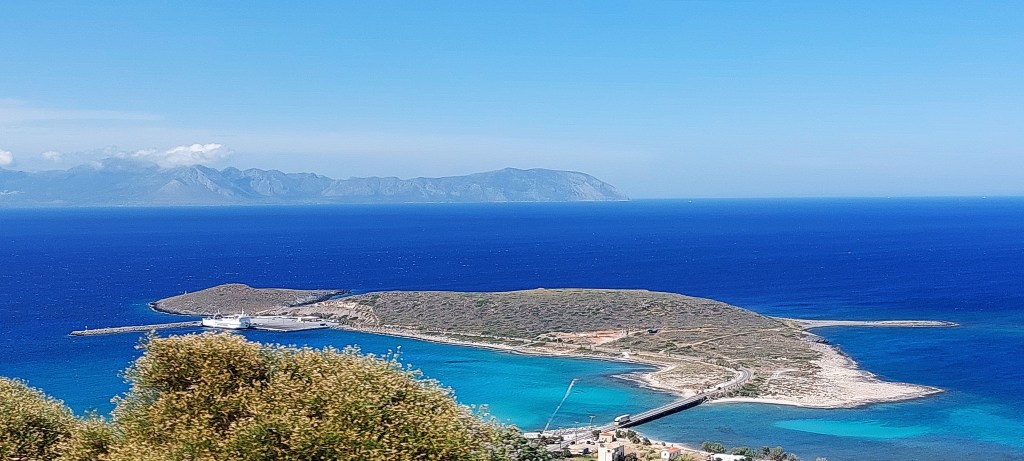
Kythira, the birthplace of the goddess Aphrodite has intrigued me for some time and I was looking forward to my first visit in the early summer of 2026. The island which is about 18 miles long and up to 11 miles wide has a population of under 4000,.The ferry from Neapoli takes an hour and fifteen minutes and docks in Kythira at Diakofti on the east side of the Island. There are also direct flights to Kythira from Athens that takes 50 minutes.
Around 60,000 Australians have their roots based in Kythera and it’s not unusual to hear English or Greek spoken with an Aussie accent. I met loads of Aussies, but sadly didn’t see any kangaroos!

Chora
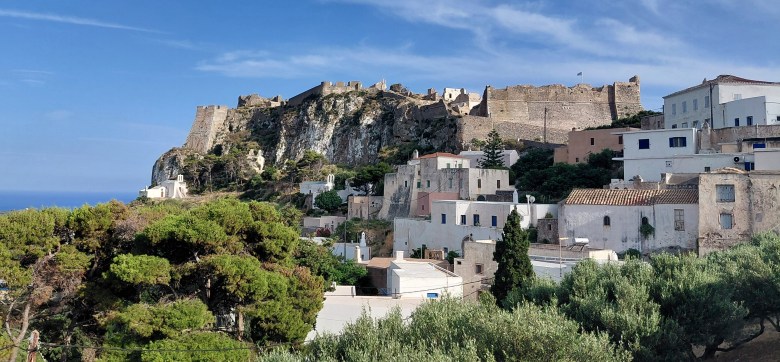
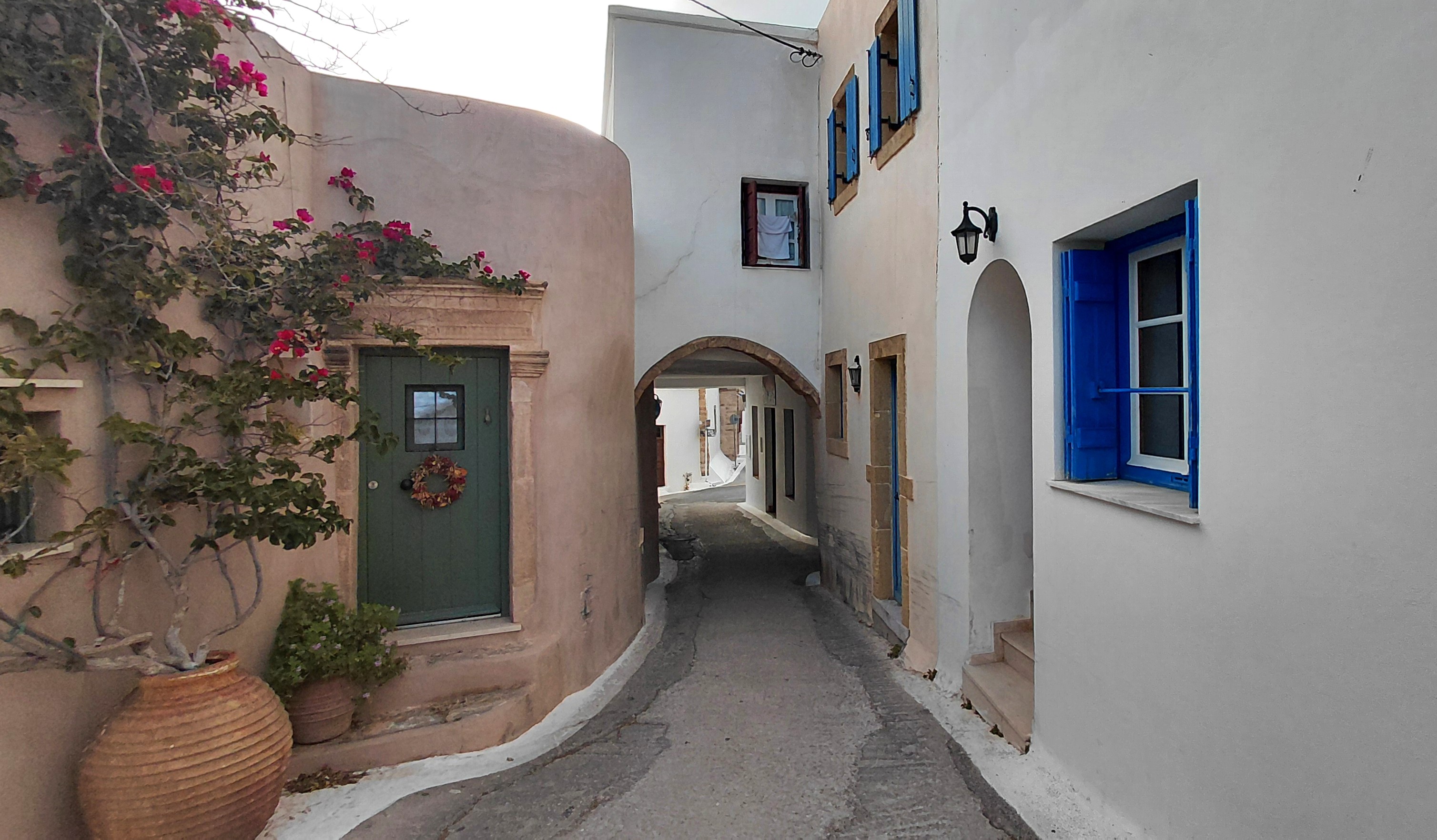
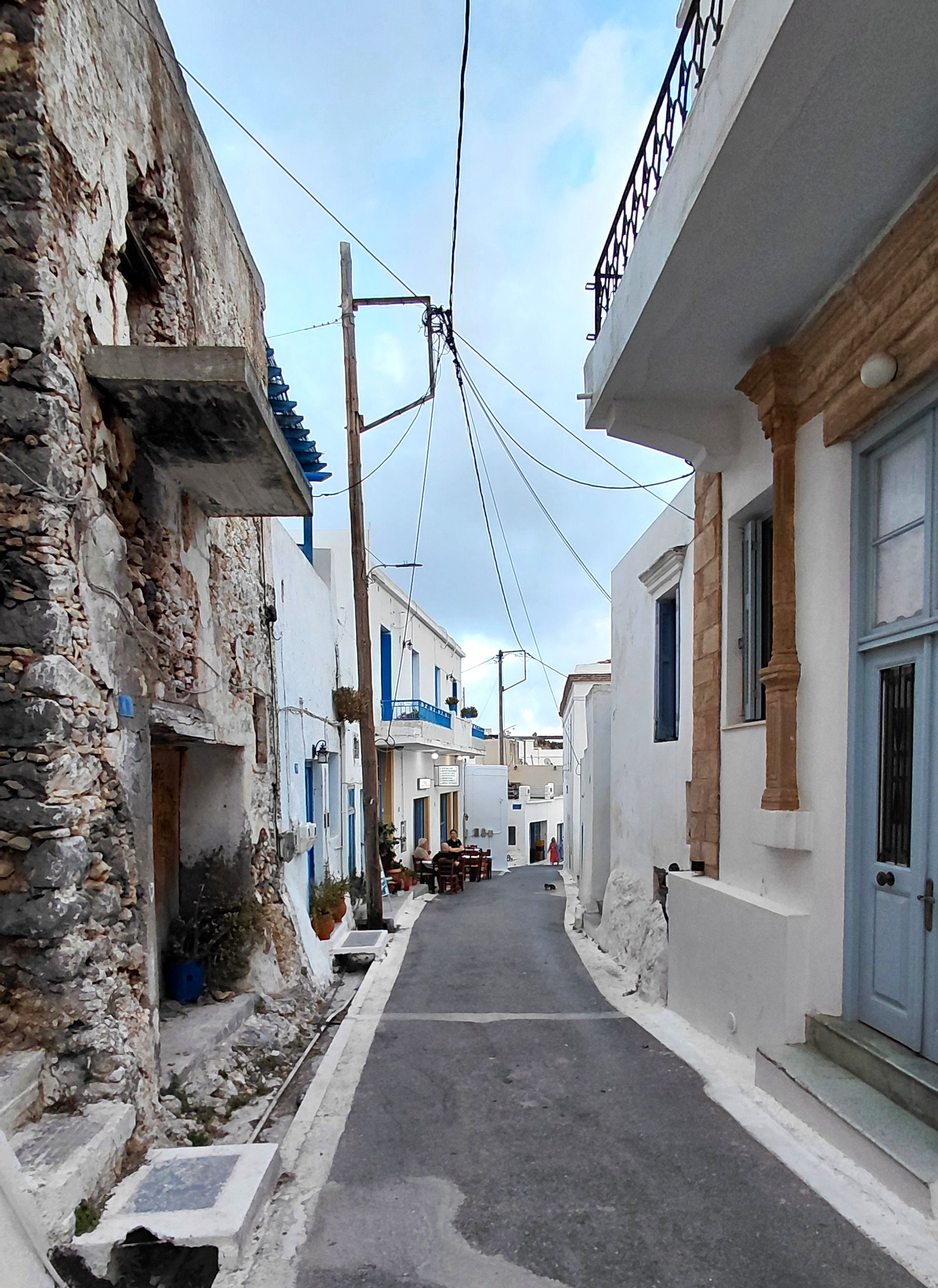
Kythira’s capital looms over Kapsali and this is where we stayed for four nights. The roads are quaint and narrow and it has a distinct village feel, certainly not a capital city vibe. There are a few craft and tourist shops and a small supermarket that appeared to sell everything! The town is dominated by the the ruins of a Venetian castle.
The Castle
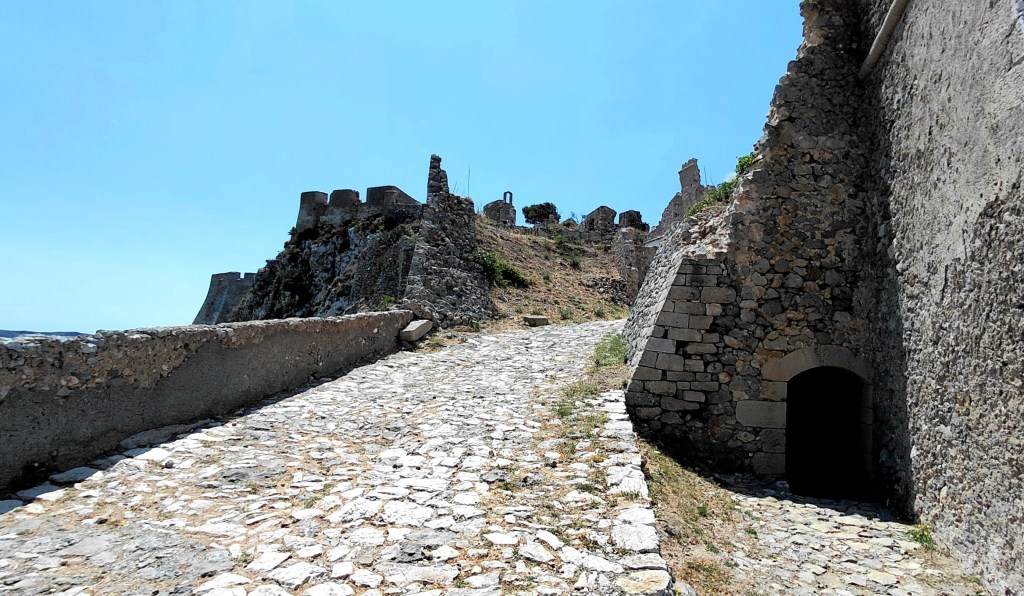
The Venetian castle was built in stages, starting in the 13th century, the huge walls are mainly from the 15th century. The ruins are well worth exploring and it’s free to enter. Inside the walls are the remains of dwellings and so many churches in various states of [dis]repair that I lost count! The view over Chora and Kapsali are wonderful.
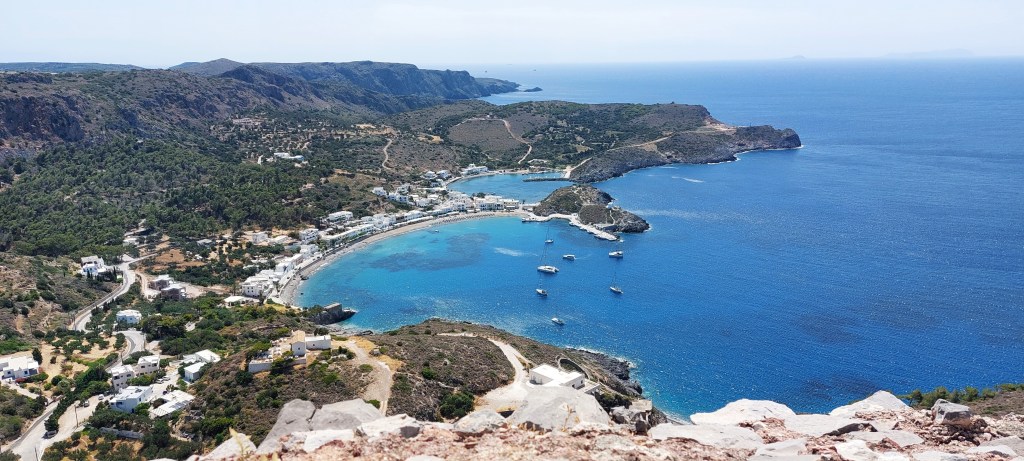
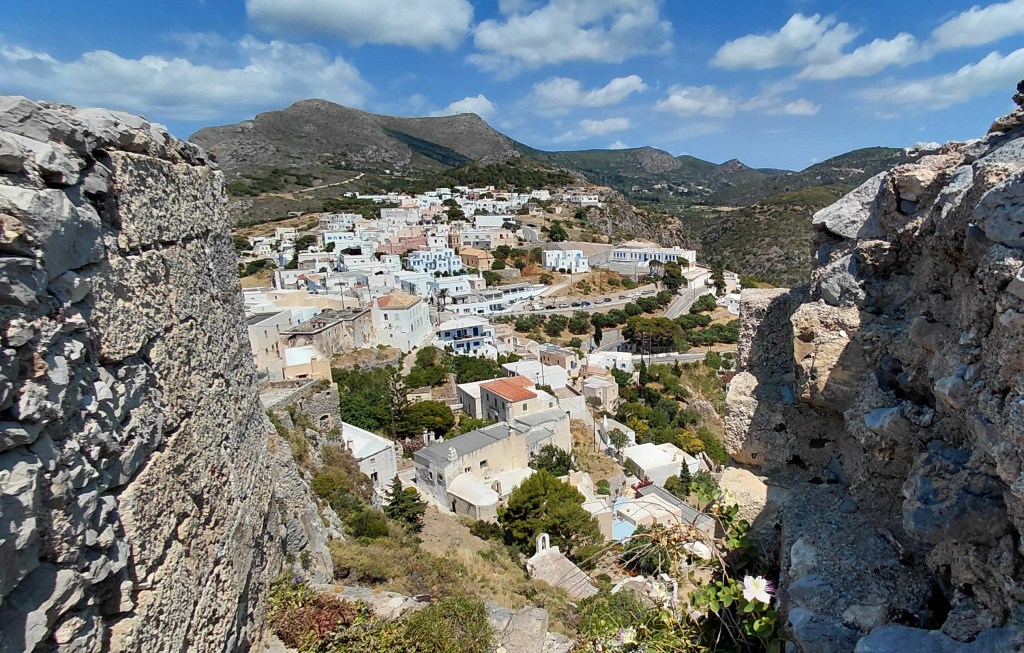
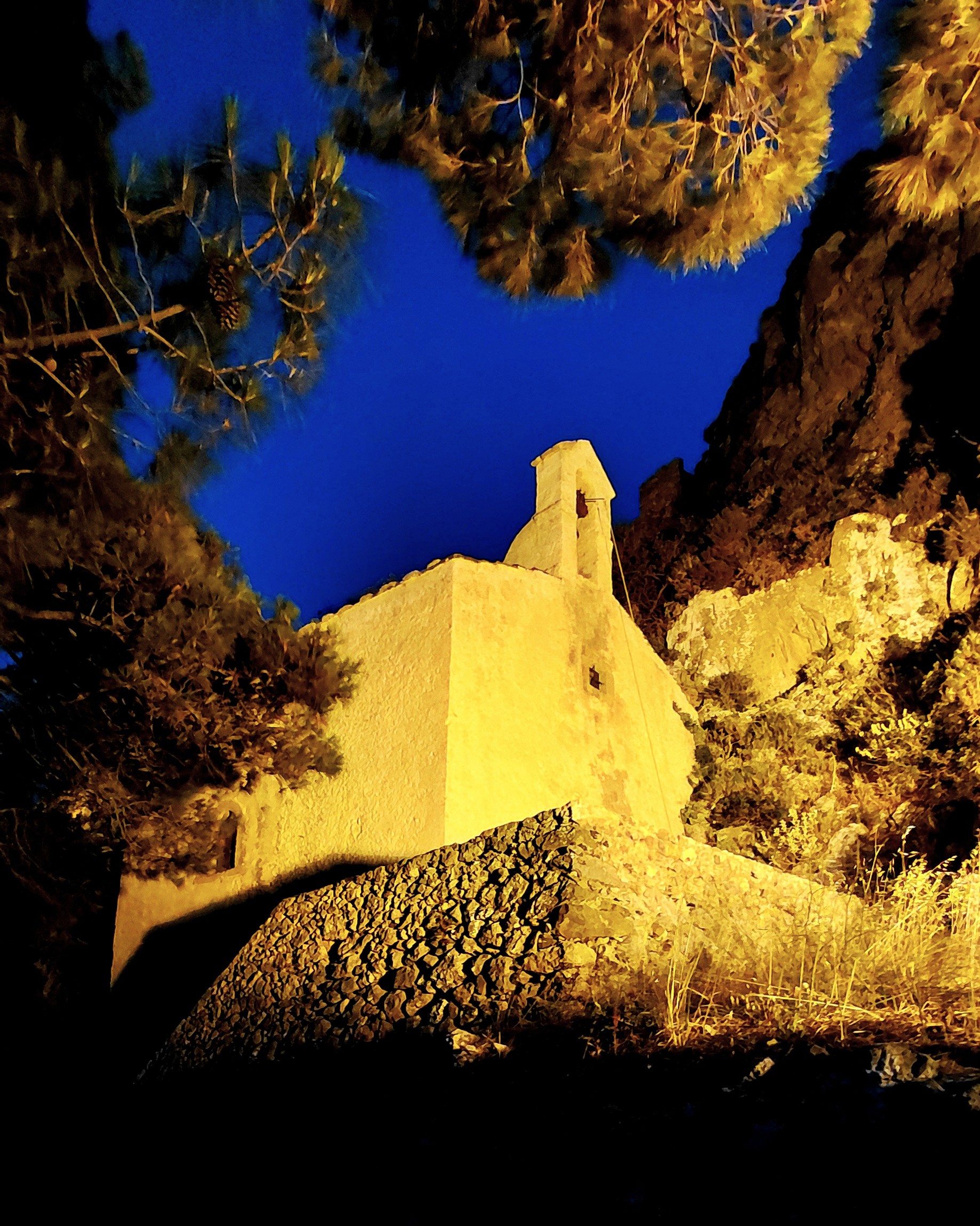
Below the castle are a couple of churches and the short walk to them takes you past a ruined tower and there are more lovely views over the bay. We took this walk at dusk and the illuminated ruins and churches looked lovely.

Eating and Drinking in Chora
Dinner options in Chora are a bit limited, there are only three restaurants and two of them are Italian. We had a decent Souvlaki at Zorba’s but they did not have any red wine which was disappointing. Pizza on the terrace at Tony’s was also good but they only offered expensive bottles of wine, so I opted for beer. We chose to eat in Kapsali a couple of times where there was wider choice of restauarants.
The path to Kapsali [from Chora].
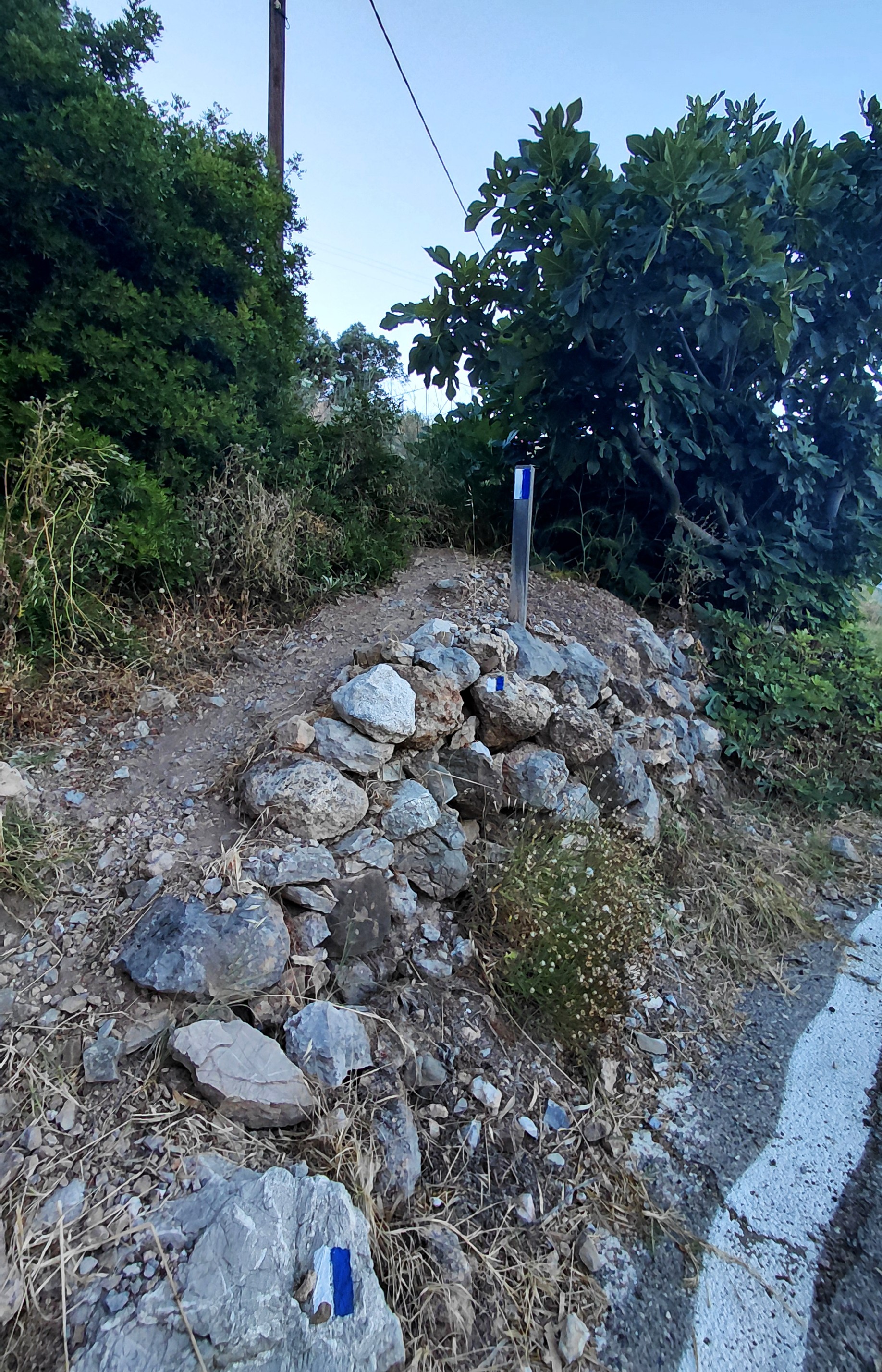
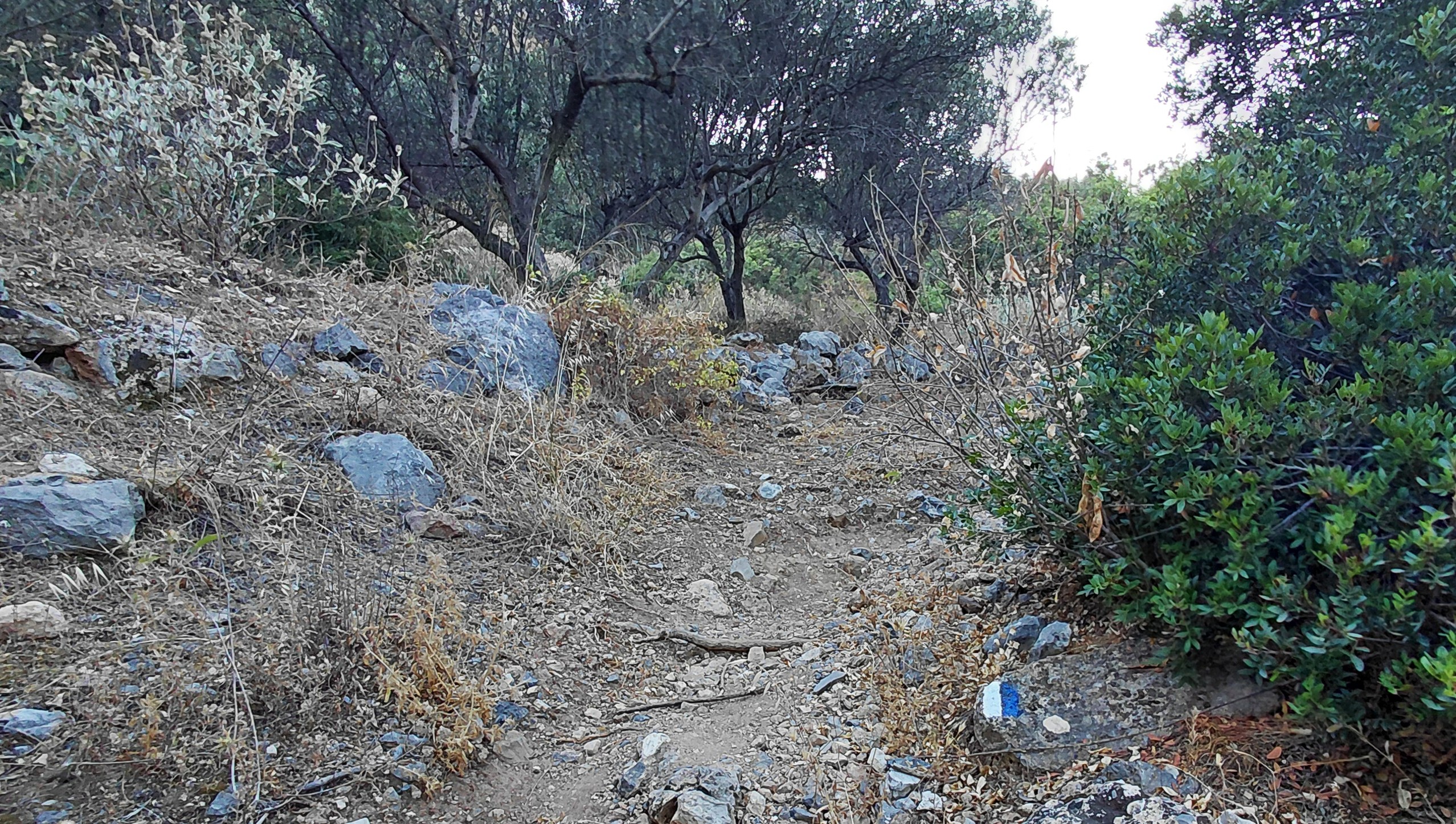
The walk to Kapsali takes about 40 minutes and there is a marked path to follow that keeps you off the road most of the time, [just follow the painted blue and white flags]. It is a bit steep at times and well dodgy in places so getting a taxi back at night is a good idea.
Beaches
Kapsali
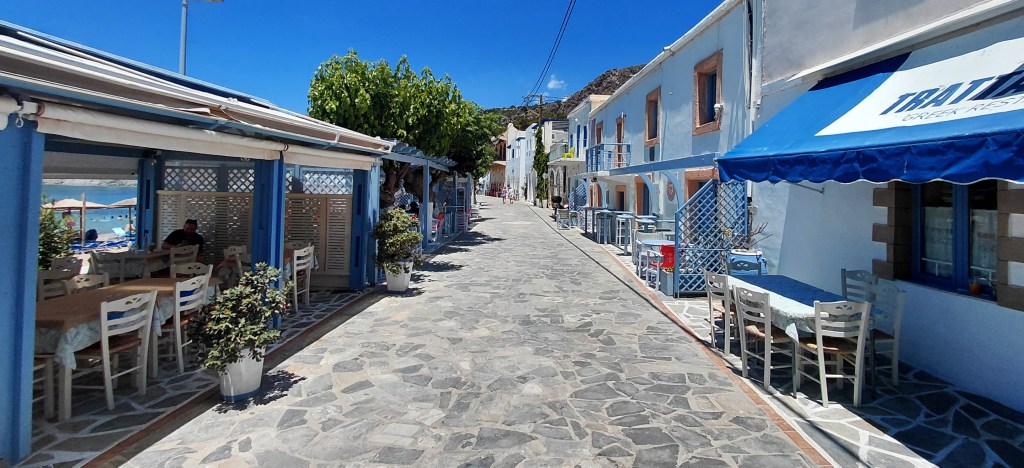

Kapsali is a small port town below Chora with tavernas, bars and accommodation options lining the beach front. The sandy beach is very pleasant but you will have to pay for the privilege of using a sunbed. The tavernas all looked inviting, many specialising in locally caught fish. We went to Trattamento on one night and Alateria on the other and both were great.
Diakofti
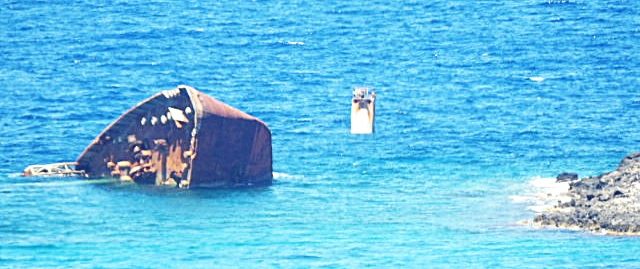
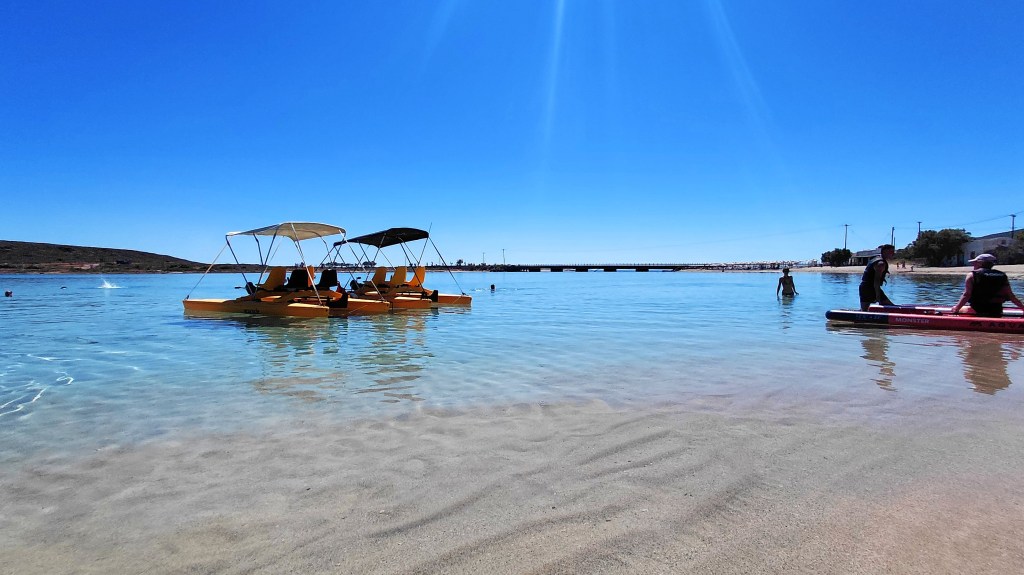
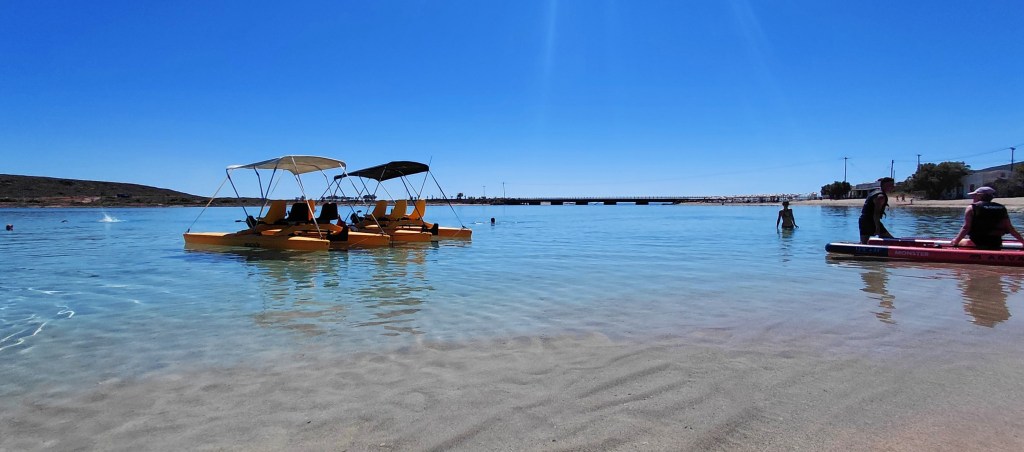
The beach at Diakofti is lovely. There are a few tavernas here, we went to Cafe Minas a couple of times and their lunches were great. Their sunbeds are free if you spend some money with them which was fine by us. There is a changing room and a shower near the road. On the right hand side of the bridge linking the island to the port is the wreck of the Russian cargo ship Nordland that ran aground in the year 2000 [AD !].
Kaladi Beach

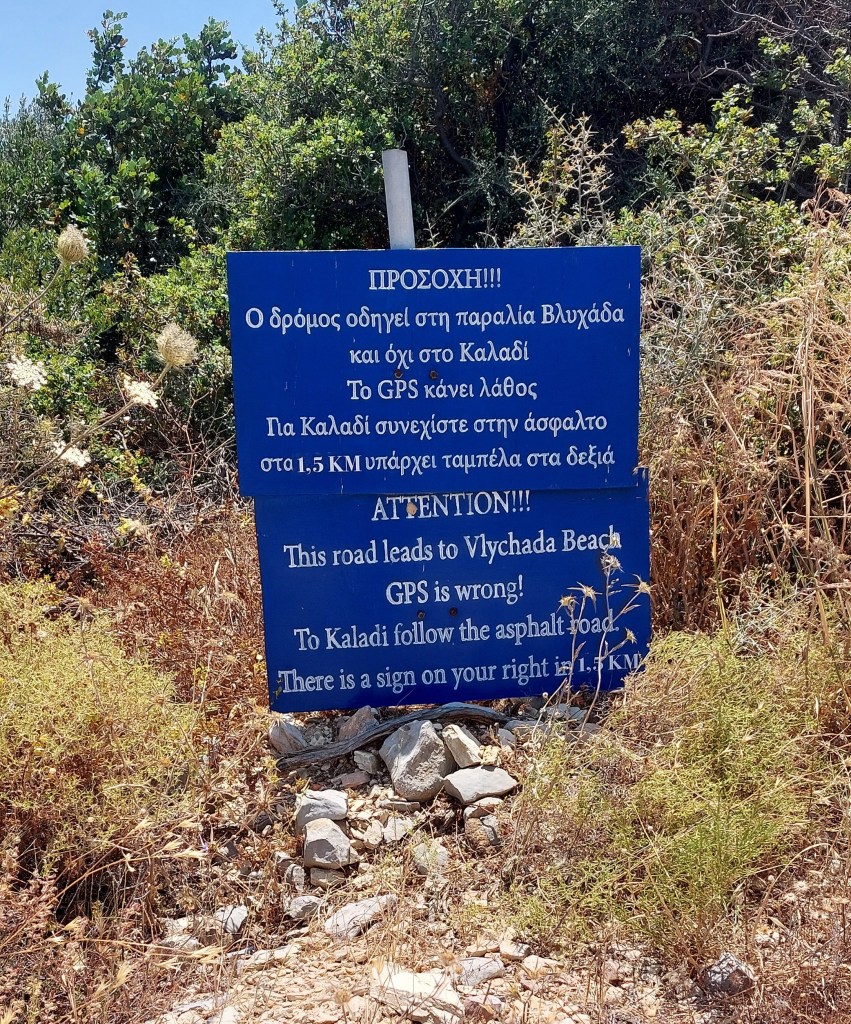
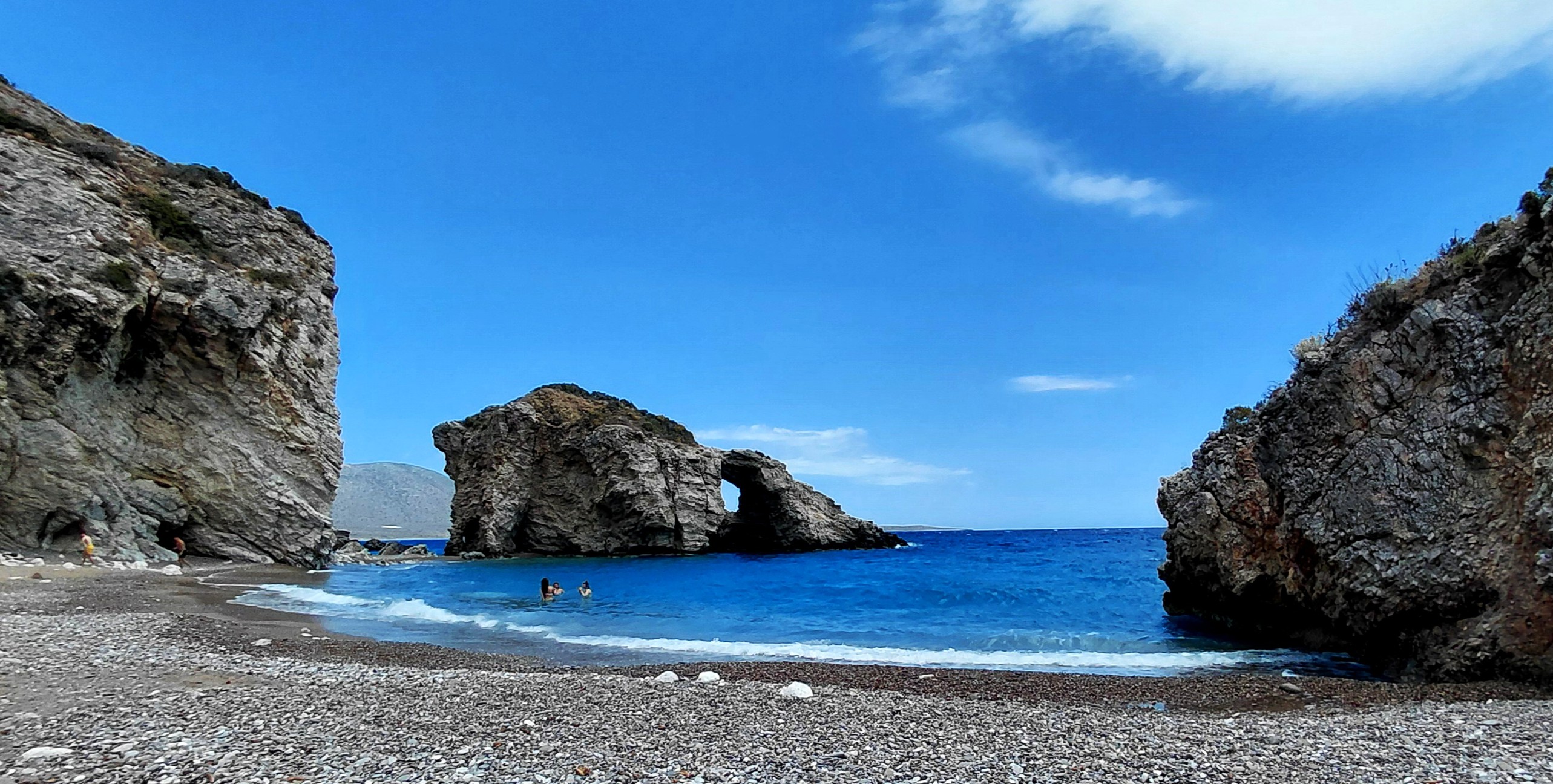
Kaladi Beach on the south east of the island is delightful. There are 162 steps that lead down to the bay and a canteen near the top that may [or may not] be open. There are no facilities on the beach itself. The beach has two stone and shingle coves and a third small cove that you access via a tunnel in the cliff. It’s a lovely setting. Don’t rely on GPS to get you there, follow the road signs!
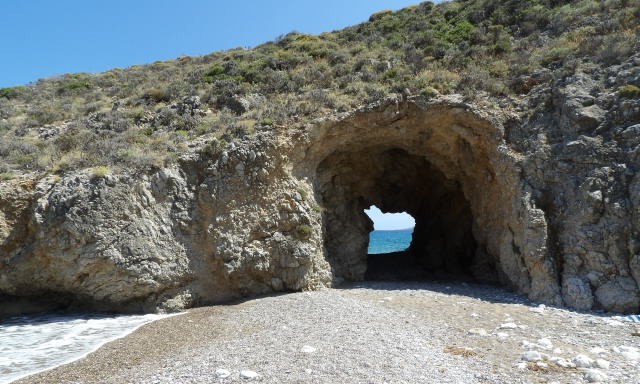

Avlemonas

North of Kaladi is the village of Avlemonas where there is a rocky cove where you can swim from platforms and there are tavernas there to keep you happy.
Kalami Beach

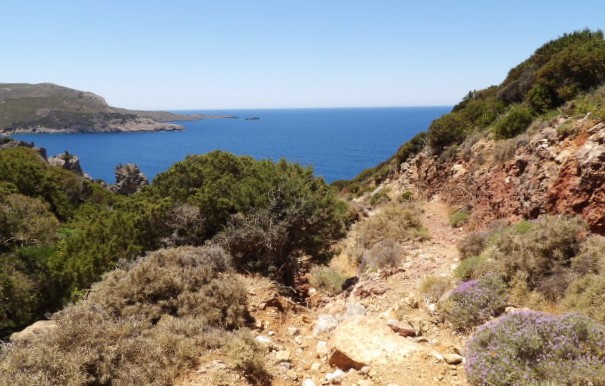
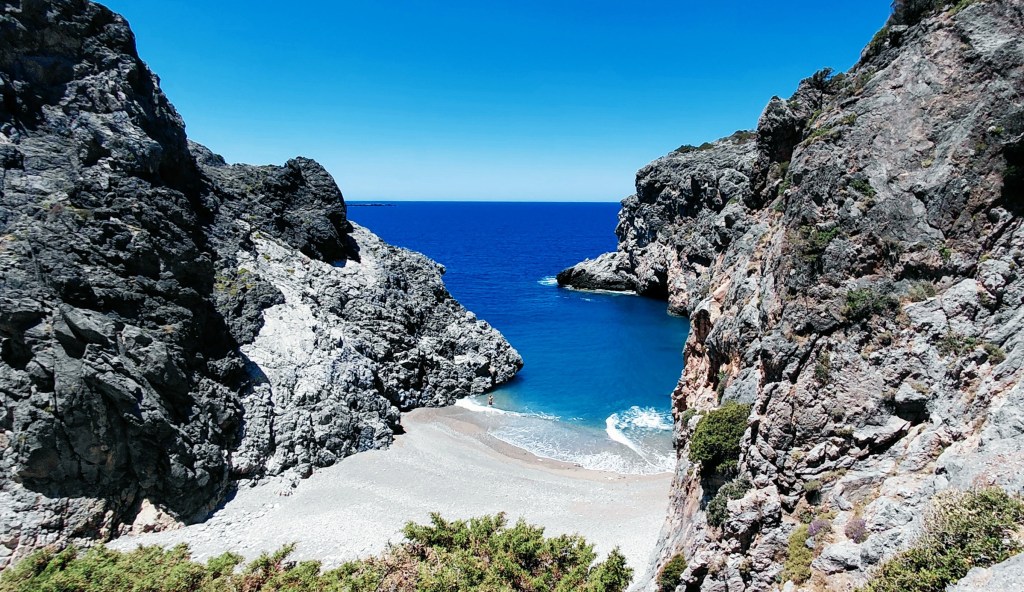
Ooh, this one requires a bit of an effort to get to! You can park by the small church and from there is a track along the side of a gorge that soon deteriorates into a path which in turn further deteriorates into a climb to a secluded bay, [ropes are provided]. You will get sweaty getting there, possibly even more getting back to your car. Take lots of water and nibbles.
Potamos
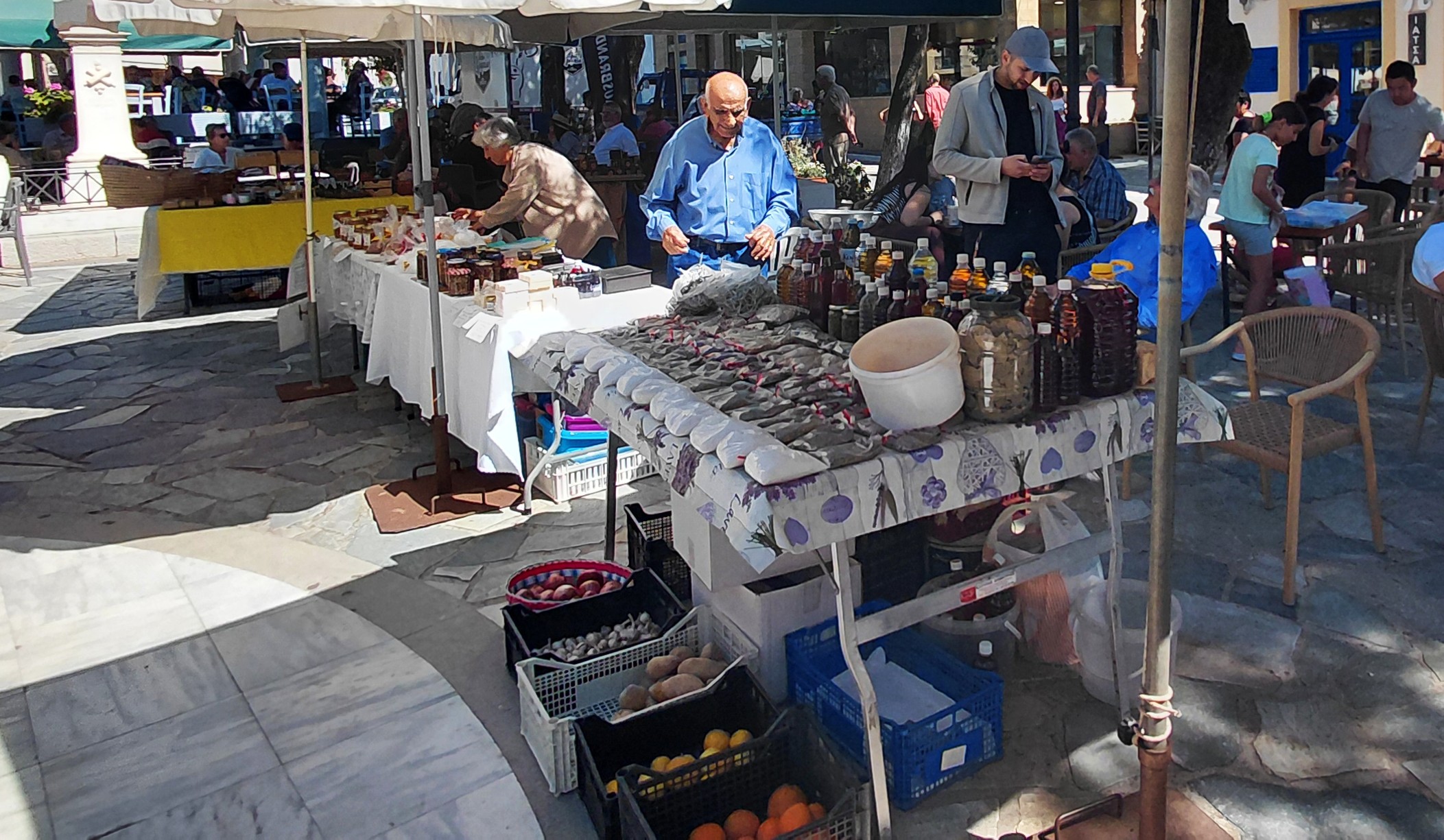

Potamos is a small town that’s worth a visit, especially on a sunday when it springs to life with a small and busy market selling a range of local food and delicacies. We popped in before heading on to visit the castle and waterfall which are in the vicinity.
Mylopotamos Castle / Settlement
Not far from Mylopotamos is the abandoned medieval settlement also known as Kato Hora. It was inhabited until the 1950s and it’s possible to walk along the empty streets and enter some of the buildings [with care]. Entry is free.
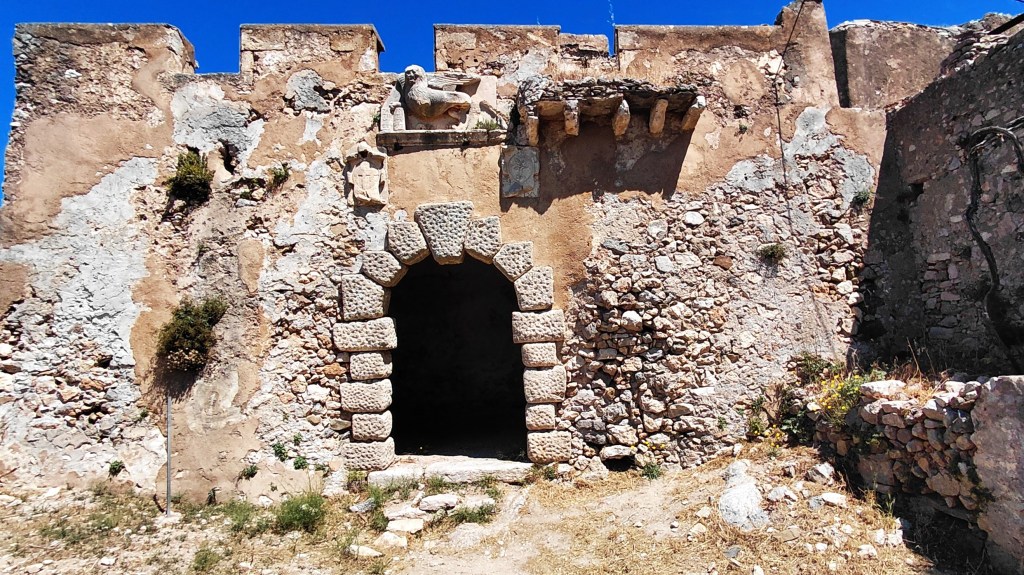
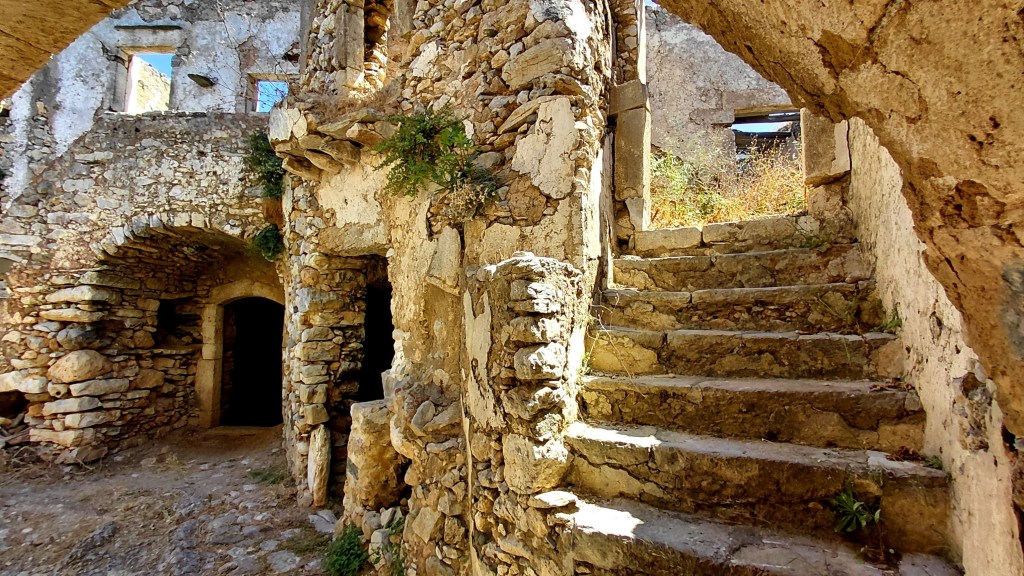
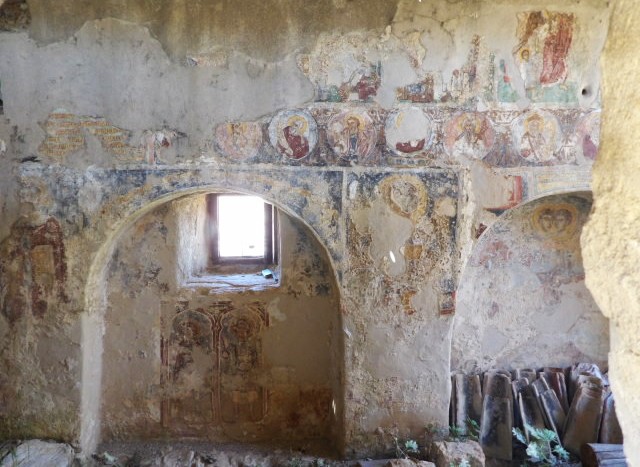
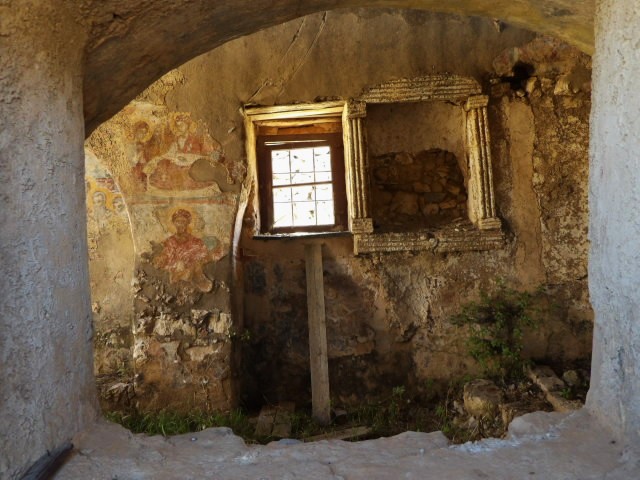
There are several small churches on the site, all of them were locked on our visit but you can see the frescos in the church Ayios Ioannis Prodromos through the windows.
Mylopotamos Waterfall
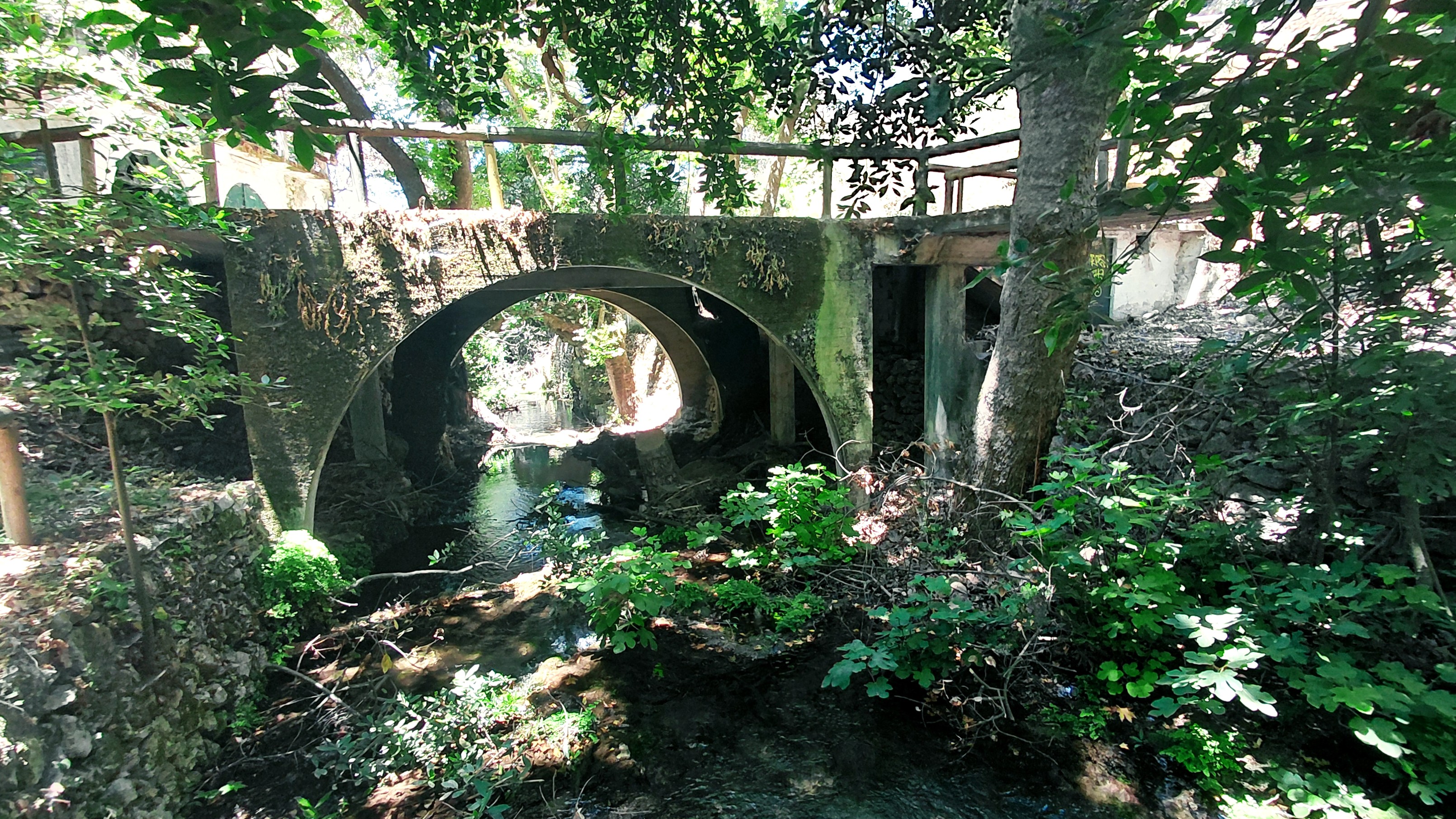
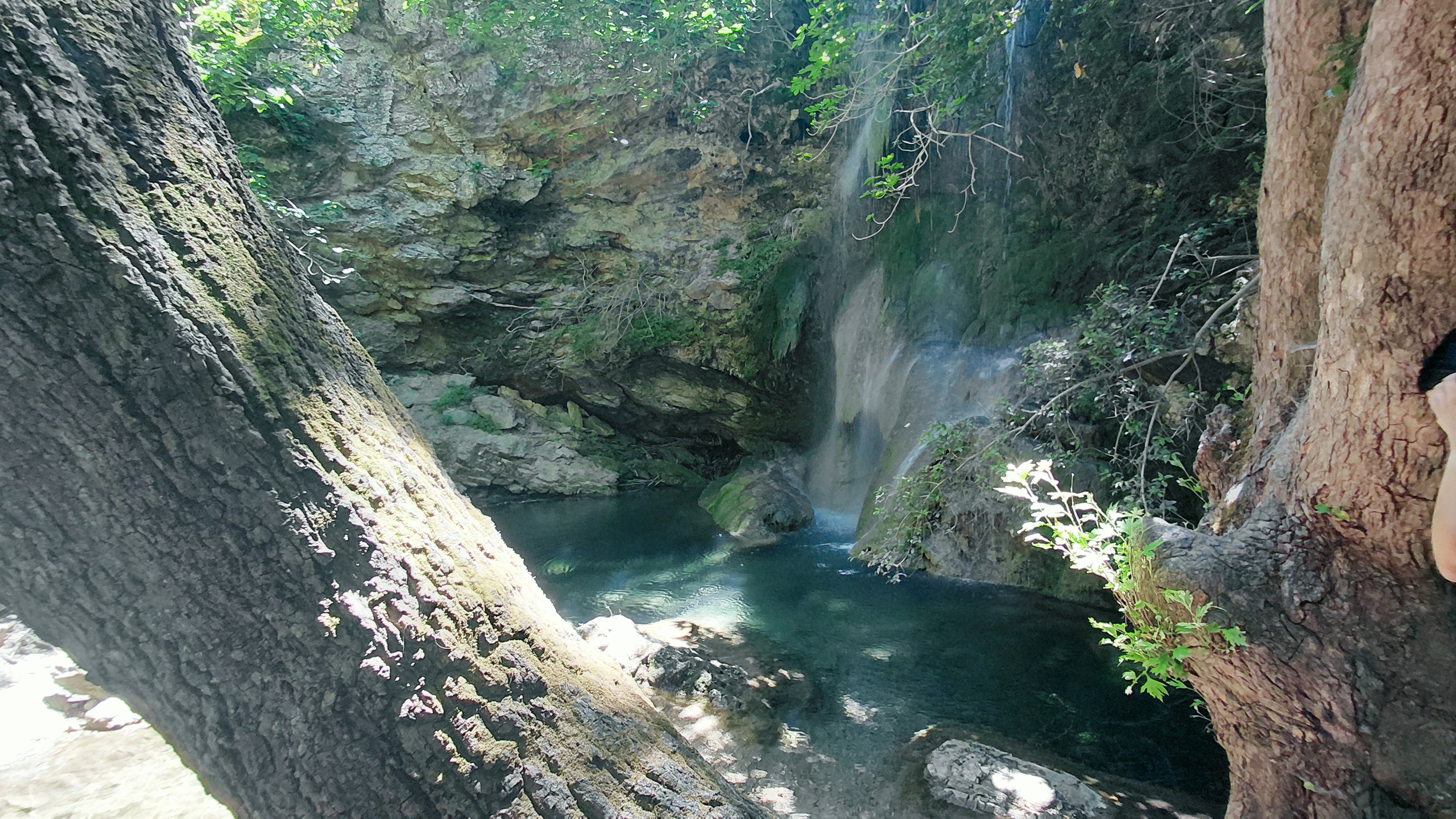
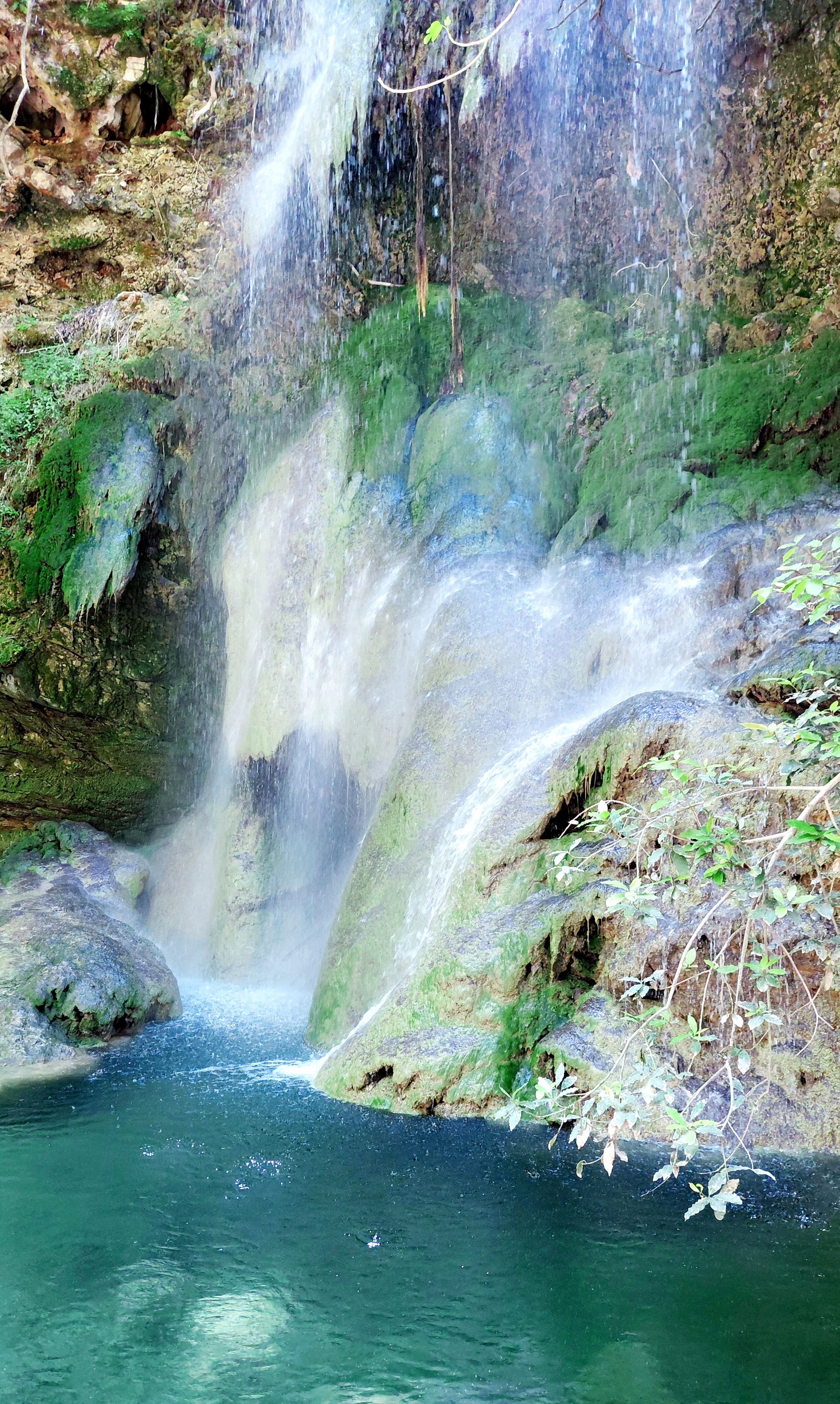
Just a short drive north of Mylopotamos is a small but attractive waterfall, sometimes called Neraida or Fonissa. The water is freezing but it’s possible to have a dip if you don’t mind sharing it with the ducks. I contented myself with a paddle. A trail from the falls leads to some ruined watermills.
Agia Sofia Cave

The caves are well signposted for miles around and mentioned in the Bradt guidebook. However when we got there they had clearly been closed to the public for some time – gah!
Quick Links:

