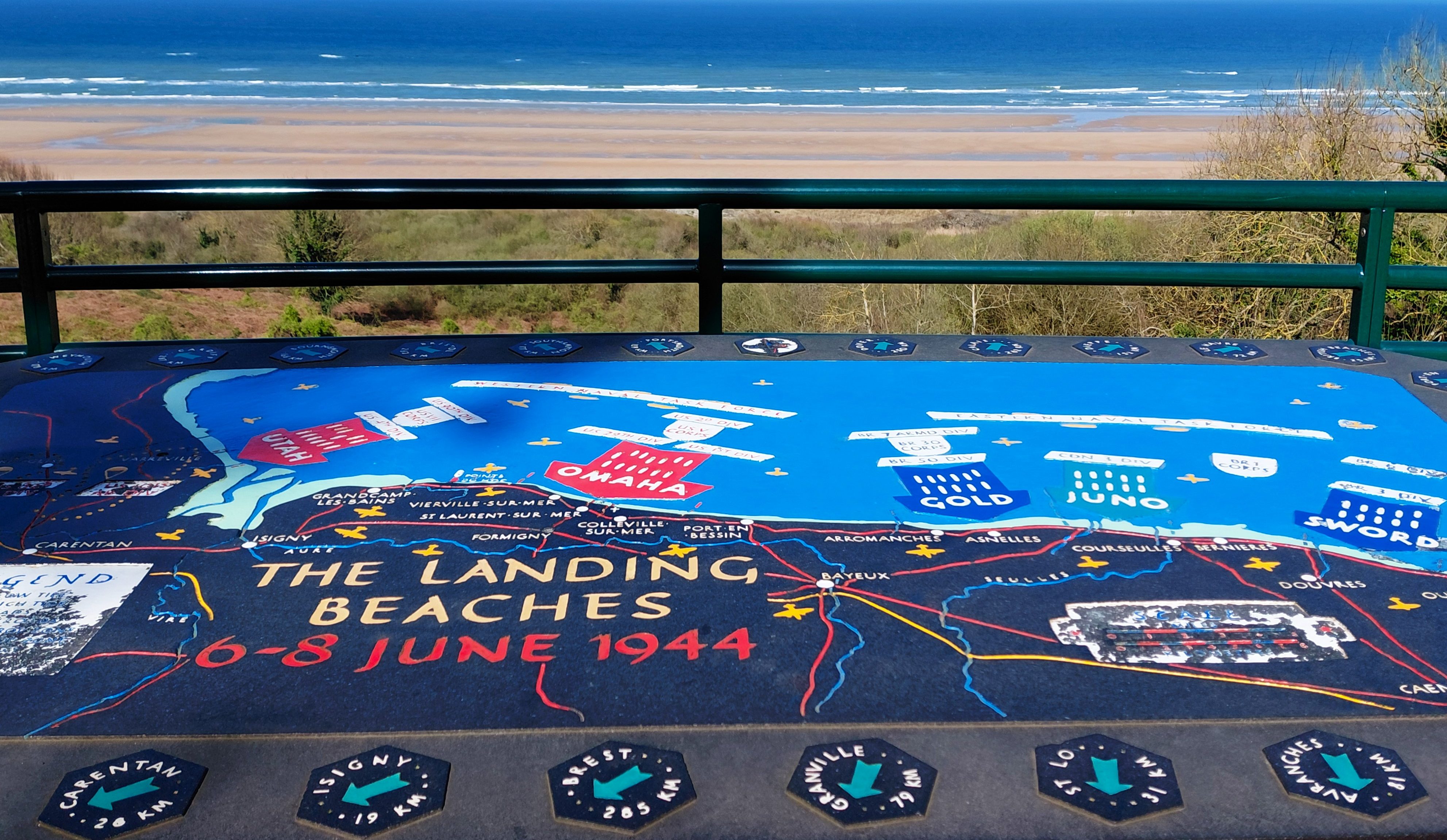
There are many D-Day tours to choose from. We chose a tour run by the Gold Beach Company which had excellent reviews and with the pick up and return point being in Bayeux, it was ideal for us. We booked through Tripadvisor but they do have their own website, to find out more click here.
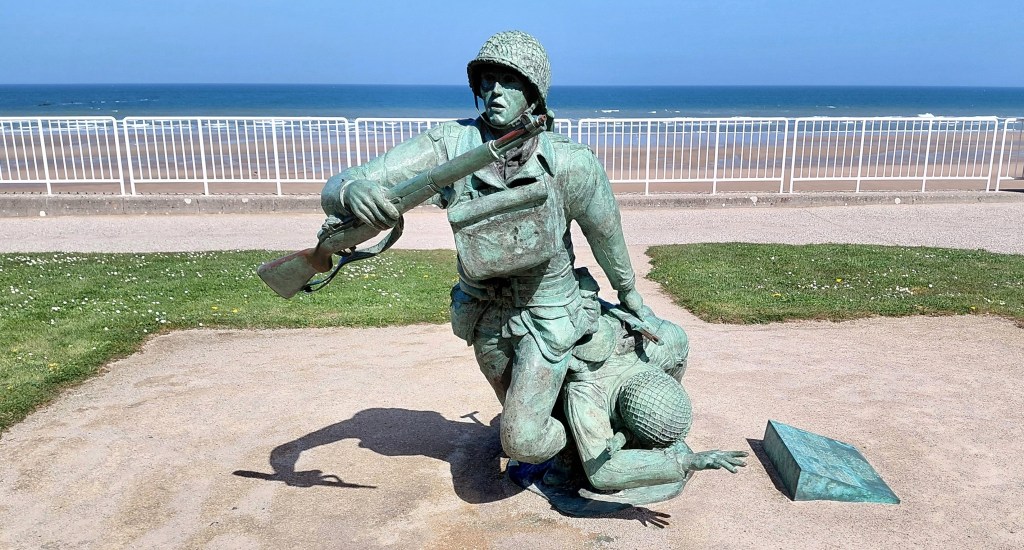
The title of the tour was Normandy American D-Day Beaches Full Day Tour from Bayeux and was a nine hour tour taking in: Omaha Beach, Pointe du Hoc, the American Cemetery at Colleville-sur-Mer, Utah Beach and Museum and Sainte-Mère-Église. The meeting point was Place du Québec in the centre of Bayeux at 8.30am and sharing the minibus were a small group of English, Americans and Canadians. I think we were the only people on the tour who had not seen the TV series Band of Brothers [which has now been rectified], several of the places that we visited were featured in this excellent series.
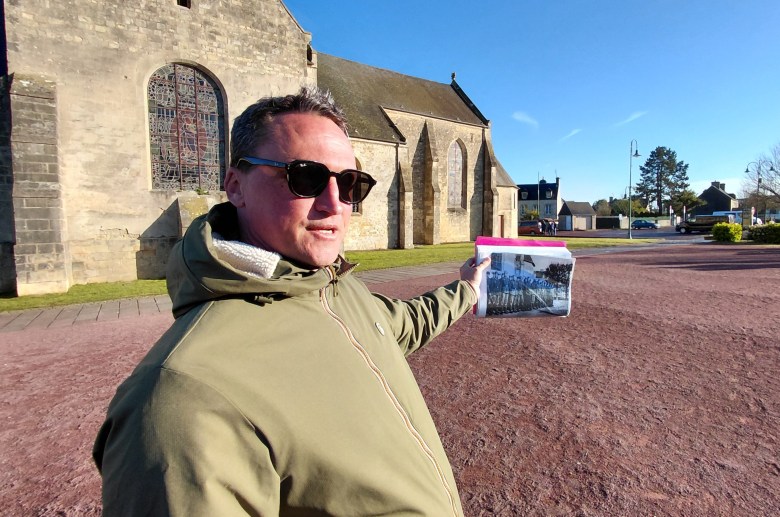
Our guide Matt was brilliant, he brought the places we visited to life with stories of incredible bravery but never hiding the fact that this war, like all wars, was brutal with unimaginable suffering and tragic loss of life on all sides.
Our first destination was Sainte-Mère-Église which was about 40 minutes from Bayeux.
Sainte-Mère-Église
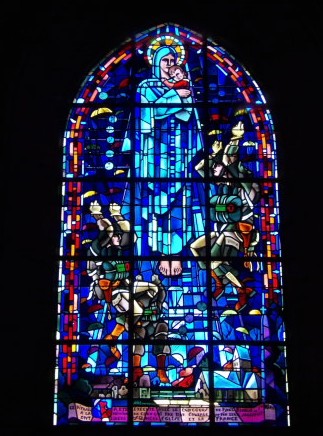
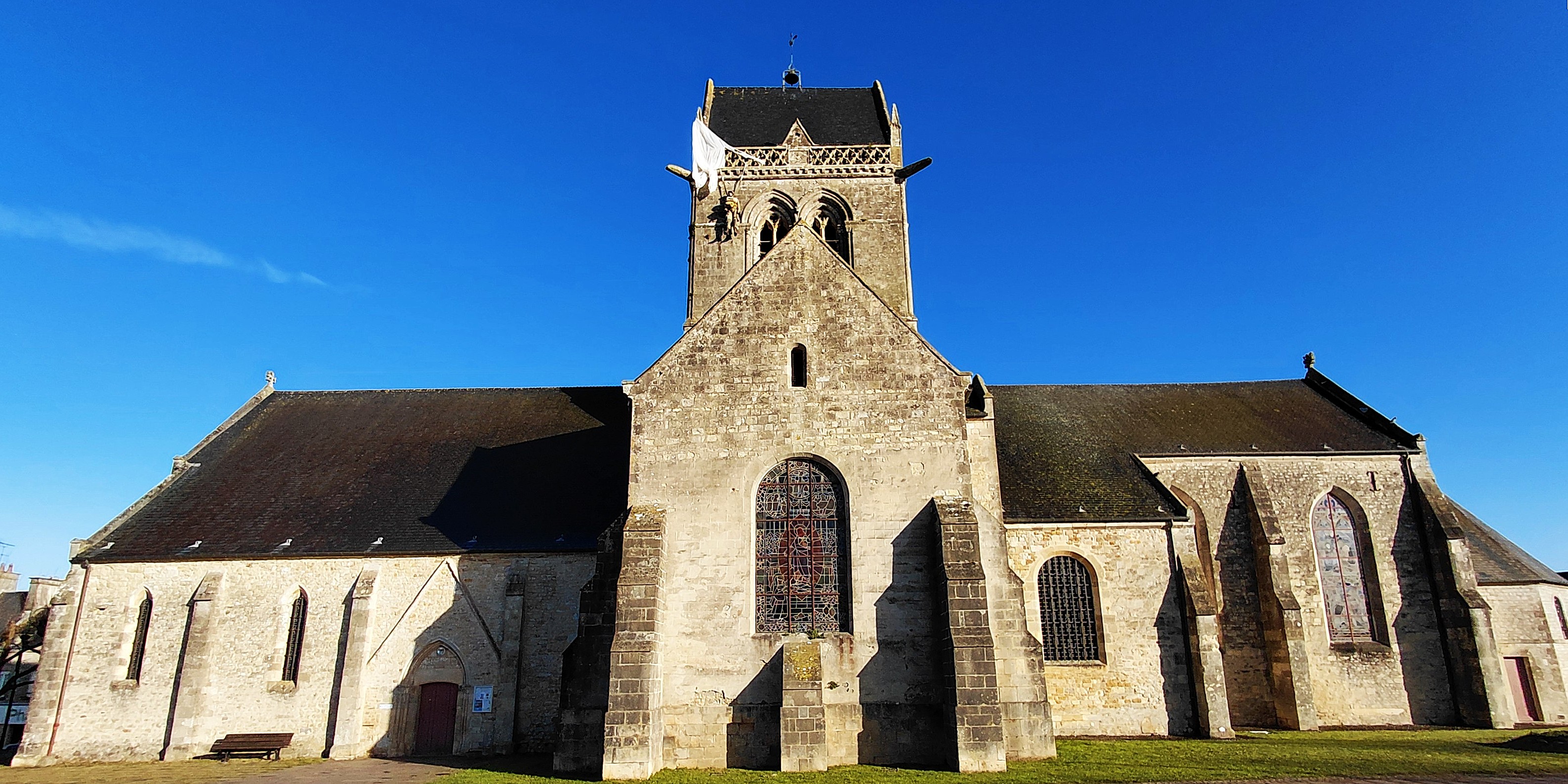
This small town near Utah Beach was the first town to be liberated by the American 82nd Airborne Division on June 6th 1944. The church is famous for being the place where John Steele, the paratrooper allegedly became entwined and very stuck, dangling from the church tower. He played dead before being captured by the Germans but managed to escape his captors within four hours and rejoin his division. This scene was recreated in the classic 1962 film, The Longest Day.
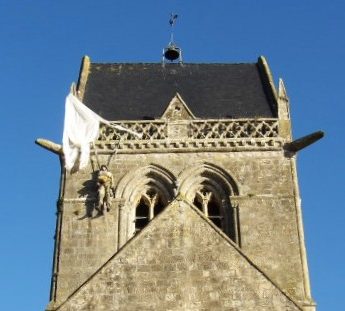
Another paratrooper – Ken Russell also landed on the church roof but managed to cut himself free. A memorial to John Steele dangling from the church can be seen today to commemorate this event. The stained glass window also depicts paratroopers in their honour.
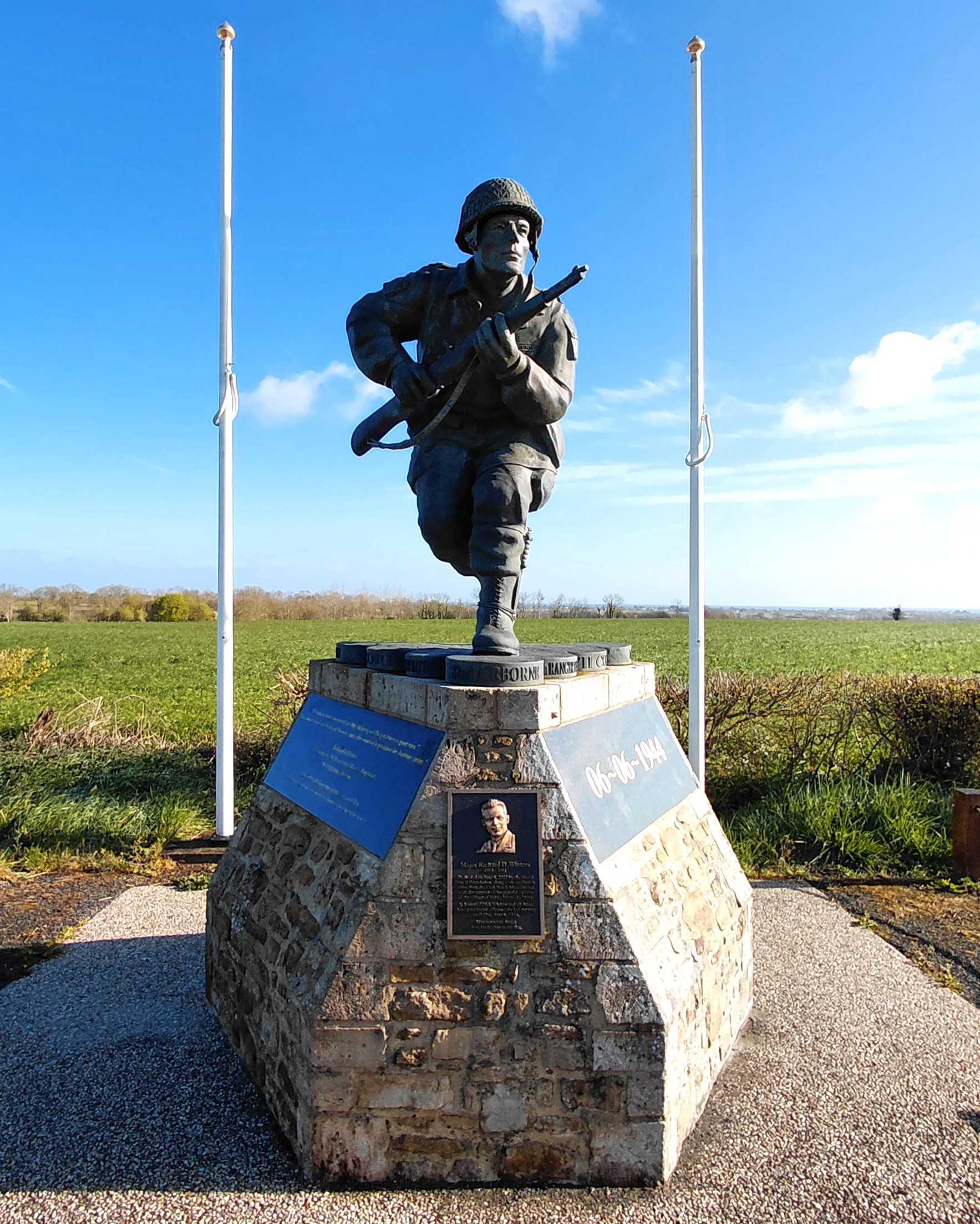
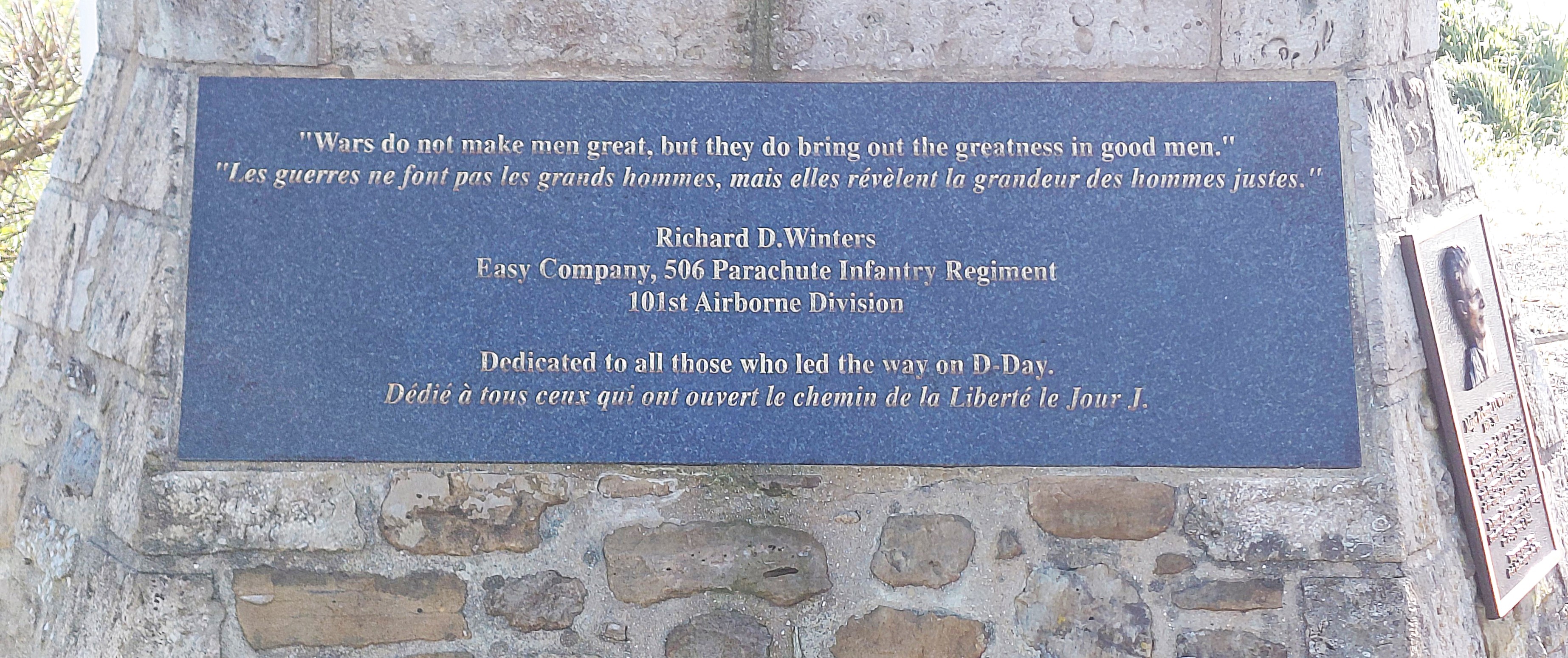
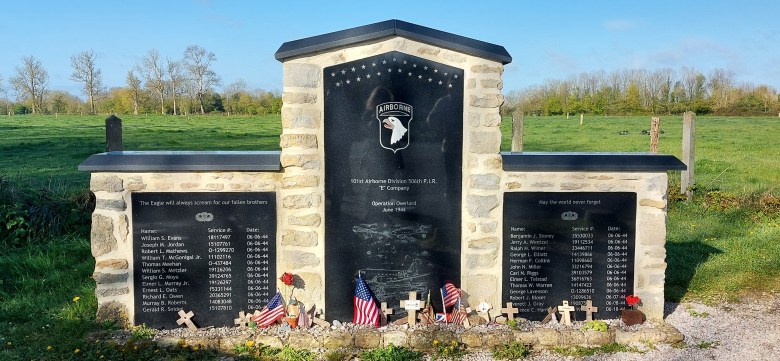
We then stopped at some monuments including a poignant memorial to Richard [Dick]Winters of Easy Company, the focus of the TV series Band of Brothers. Our next destination, Utah Beach was about twenty minutes away.
Musée du Débarquement de Utah Beach
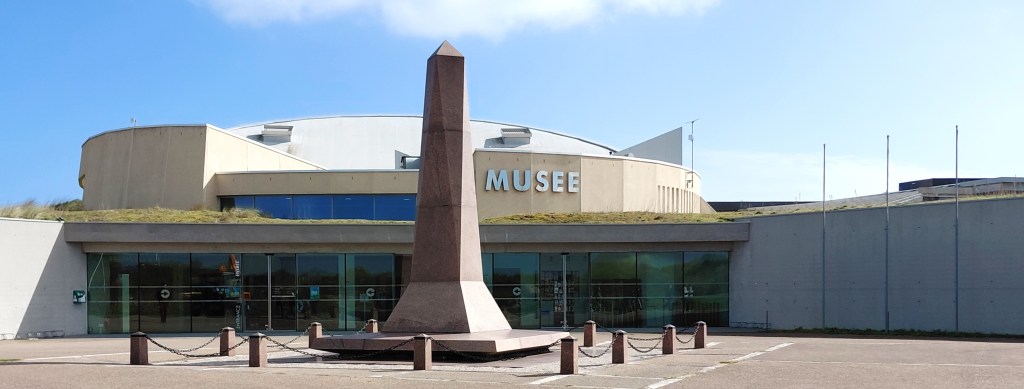
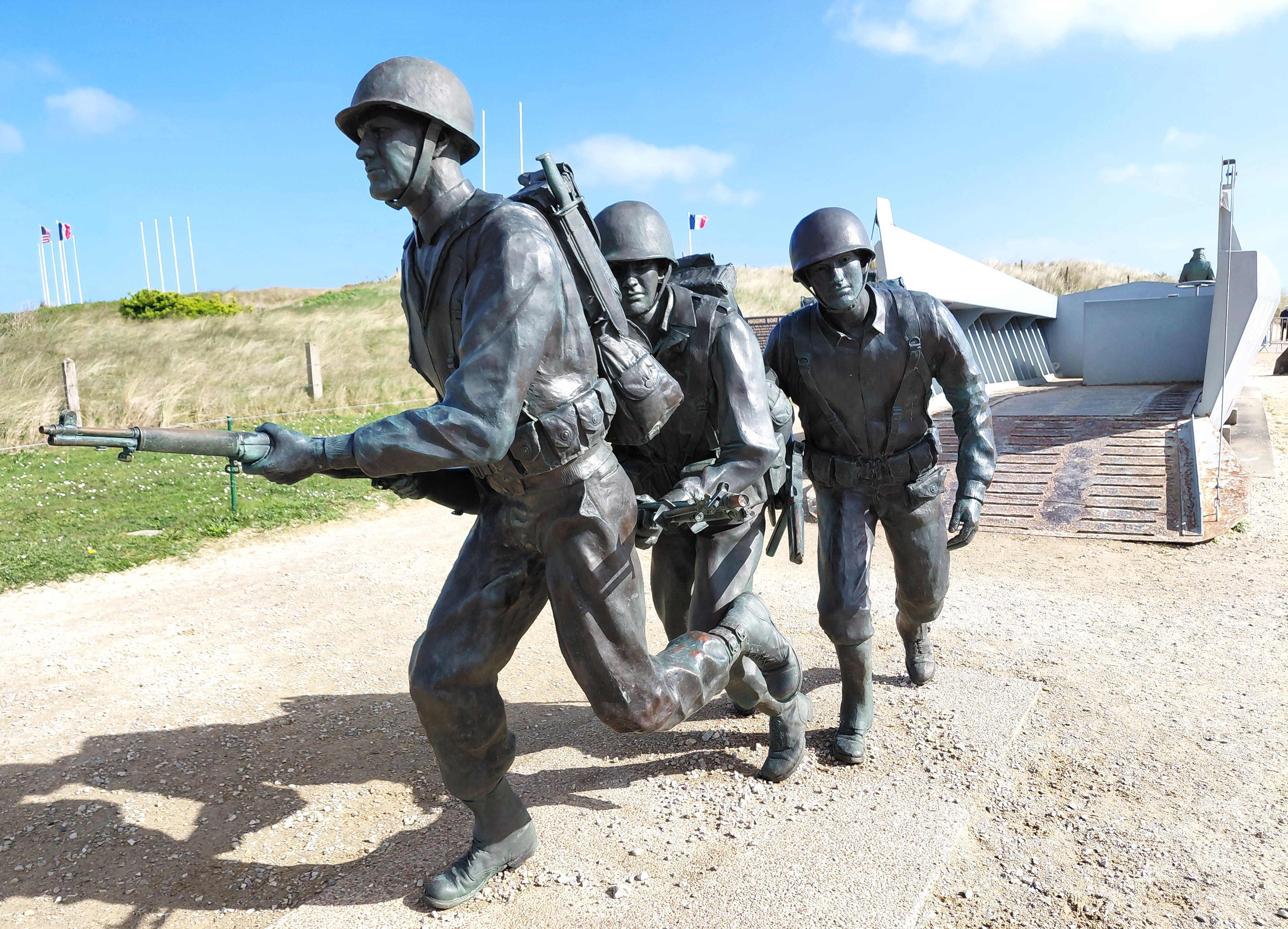
Utah Beach was the first beach to be attacked by the American troops in the early hours of June 16th 1944. The Utah Beach Landing Museum is right in front of the beach and the upper level has large windows overlooking the beach and the sea. The museum documents the events of the attack and the resistance movement through film and a wide range of photographs and exhibits.
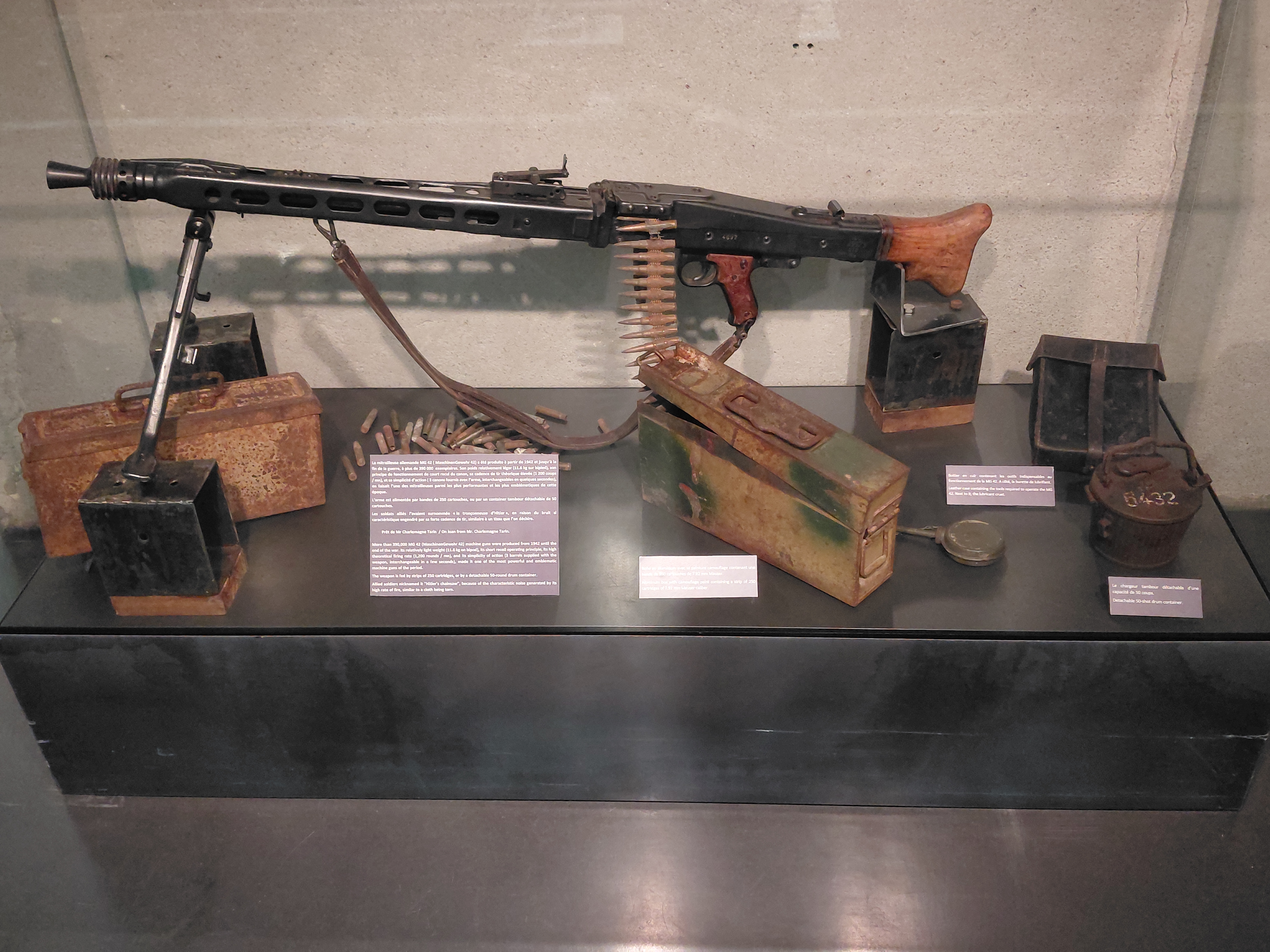
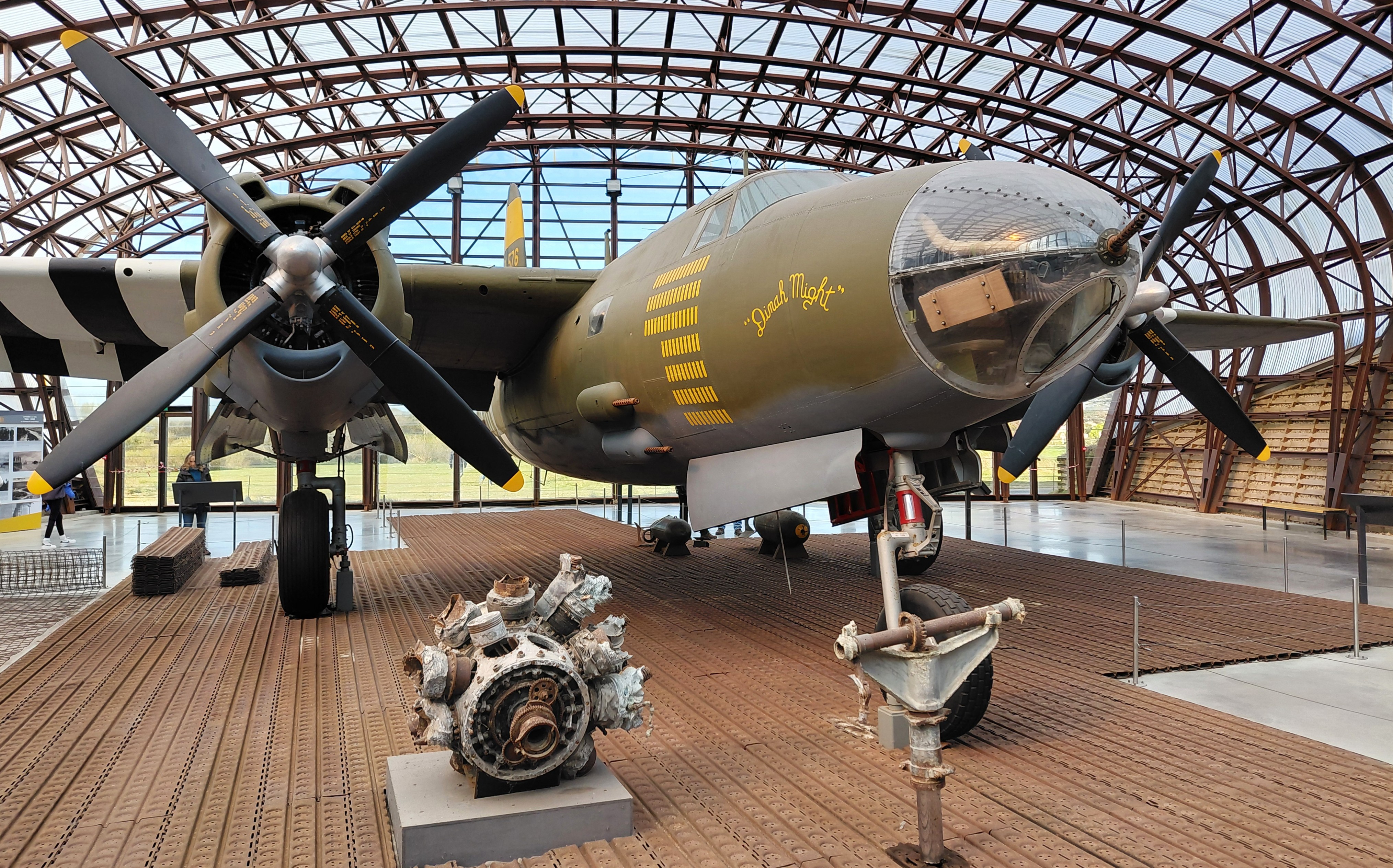
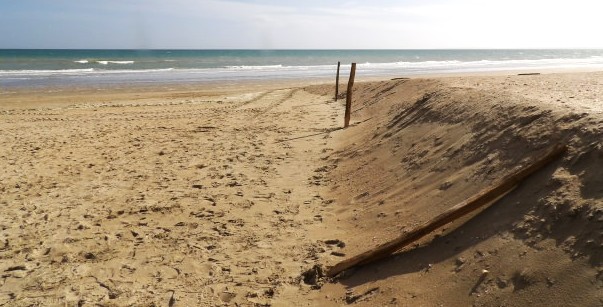
It was just a short walk from the museum to Utah Beach which is so peaceful now, so different to the scene in 1944 when 23,000 men landed there in the early hours of 16th June.
Angoville-au-Plain
The hamlet of Angoville-au-Plain was ten minutes from Utah Beach and it was the scene of fierce fighting between the Allies and the Germans.
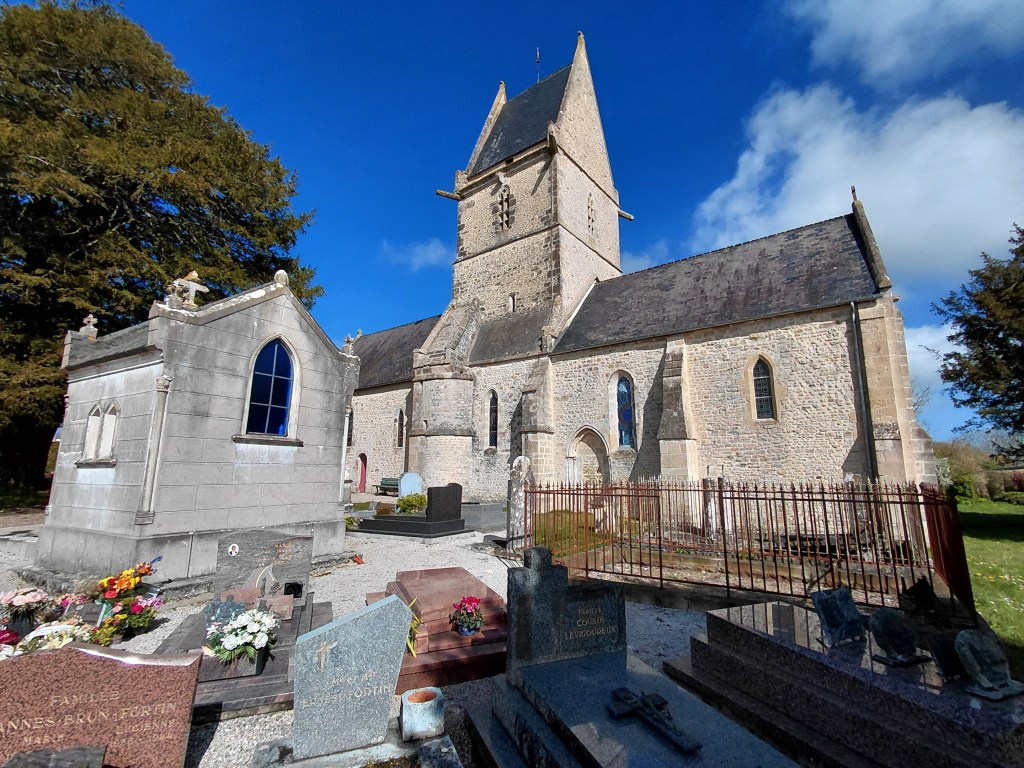
The church was used by two US medics, Robert Wright and Kenneth Moore as a medical centre where they treated wounded from both sides. There are several memorials to them within the church.
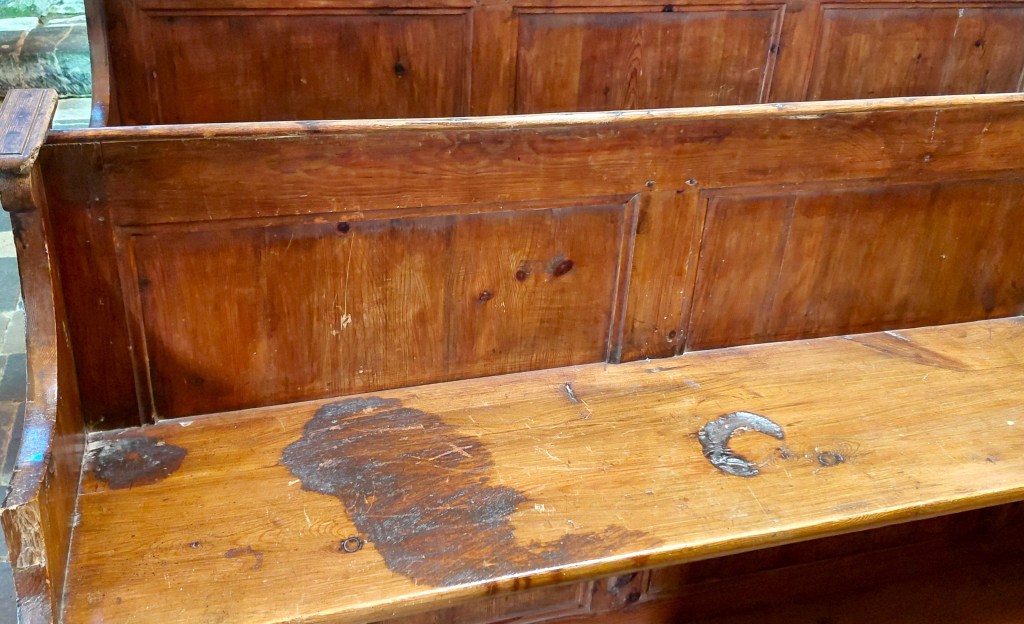
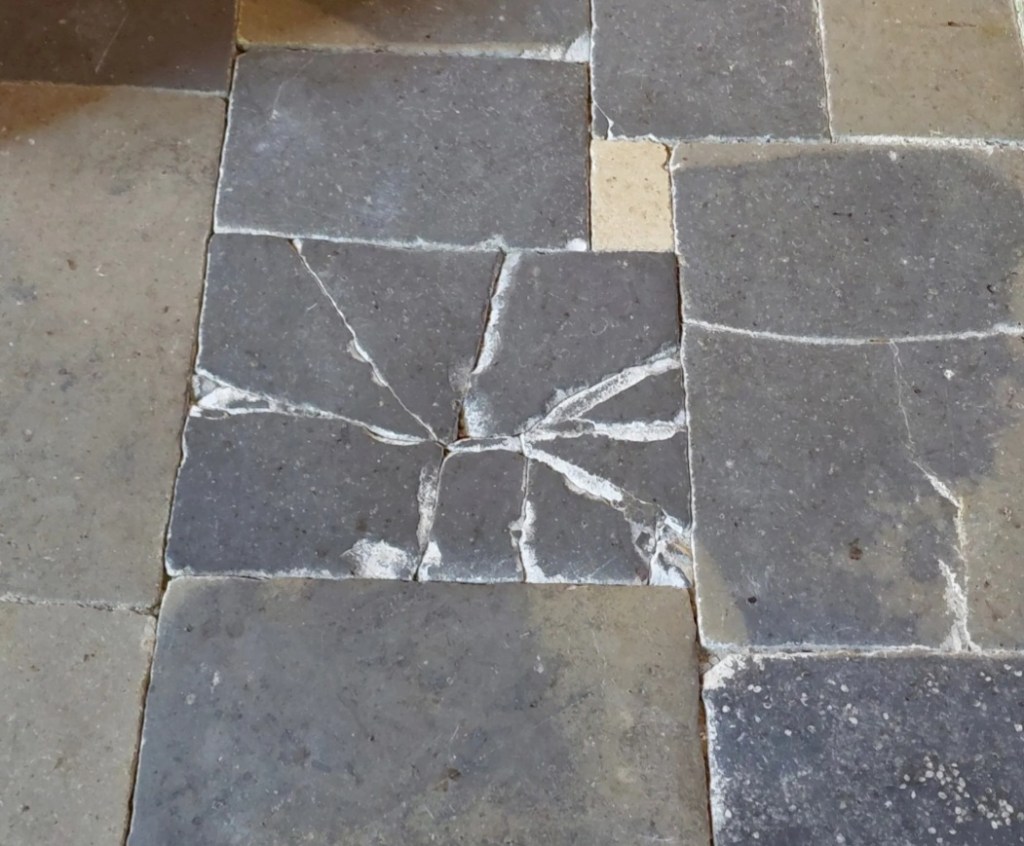
The Germans adorned the church with a Red Cross flag in order to offer them some protection. The damage to the floor caused when part of the ceiling collapsed from a mortar shell and blood stained pews are still visible today. [see photos above].
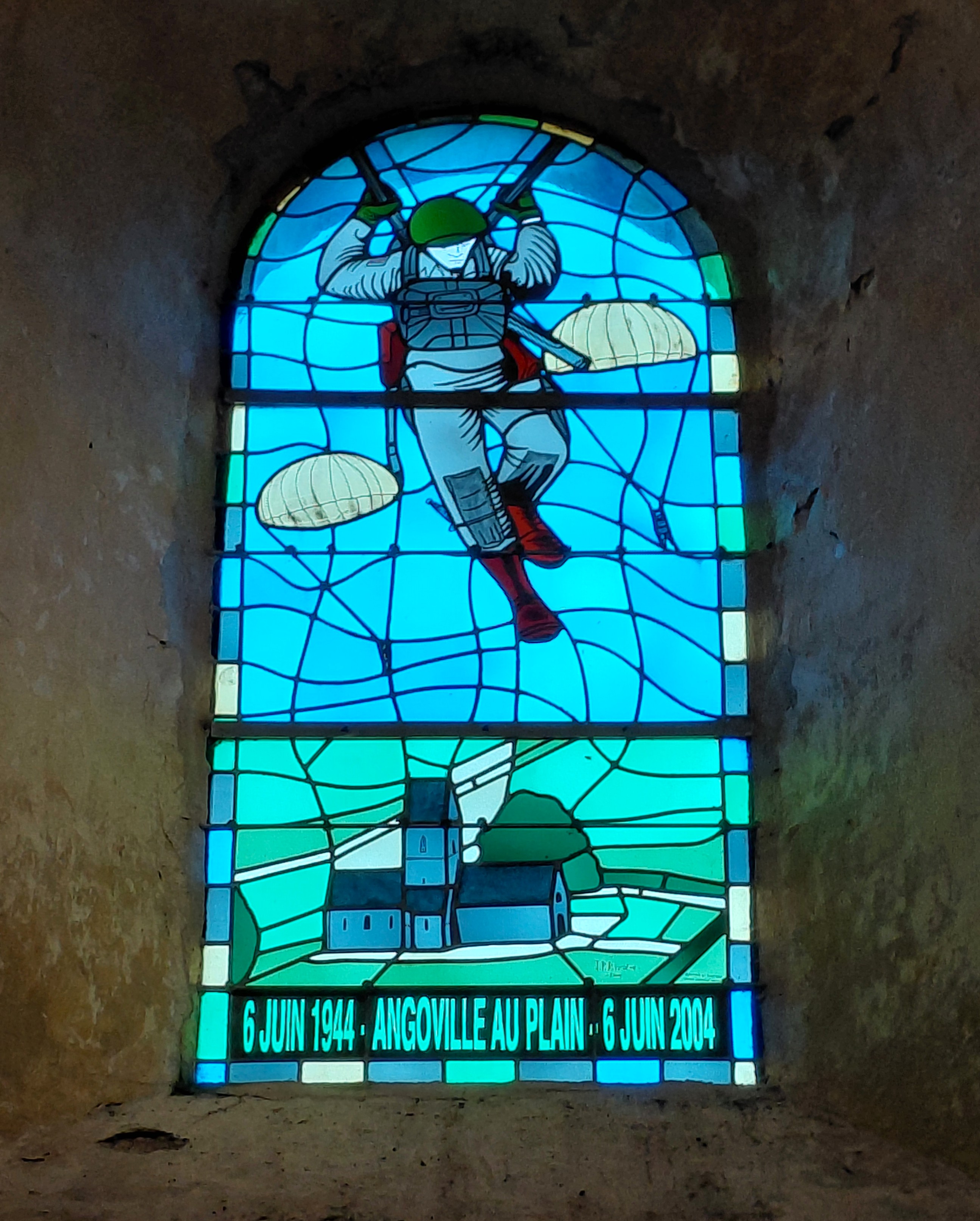
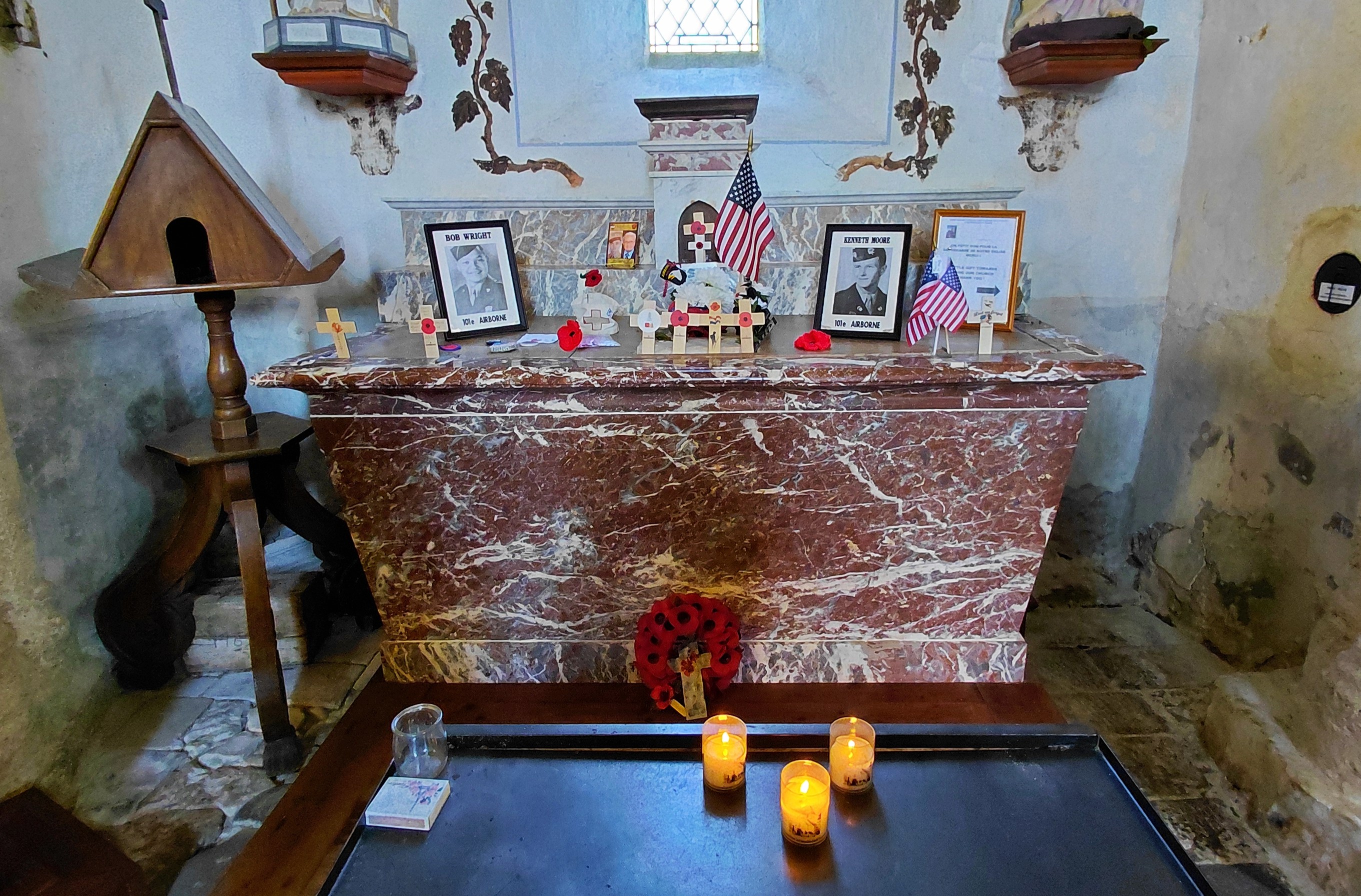
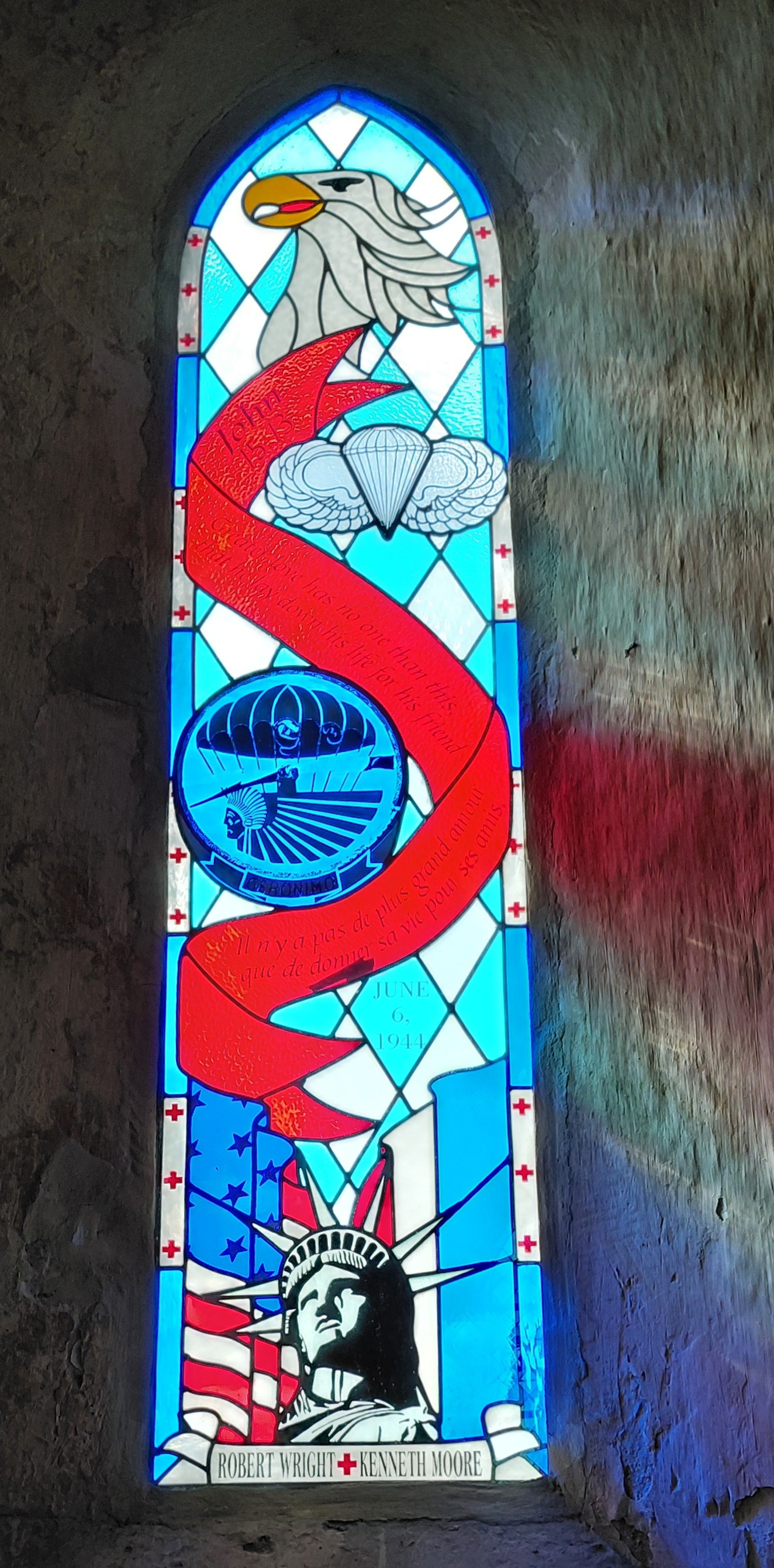
Matt then took us to an excellent boulangerie for lunch before we continued our tour.
Pointe du Hoc
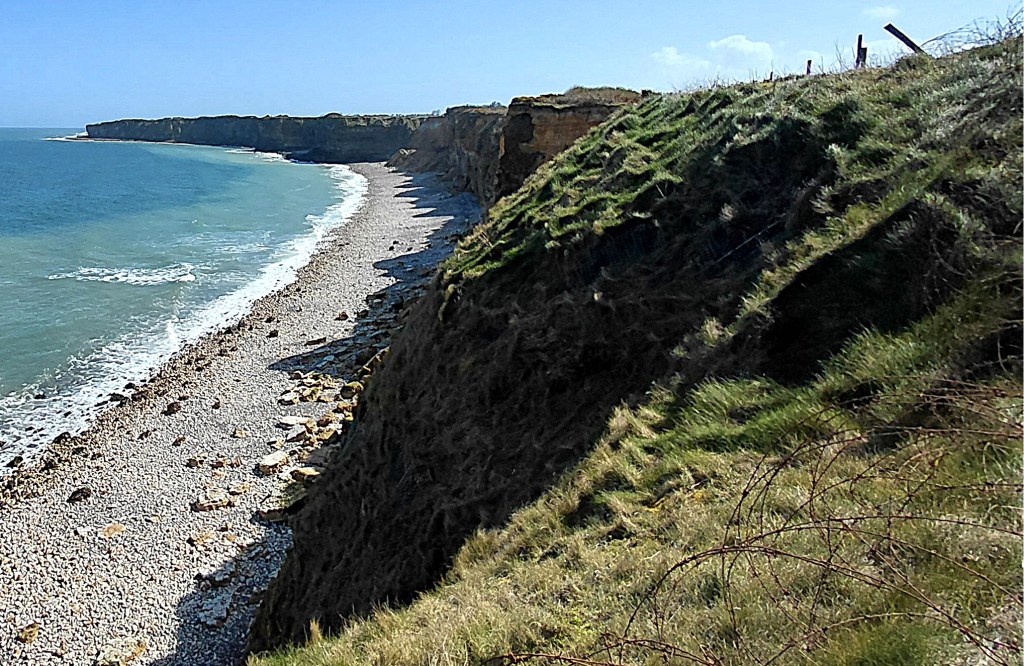
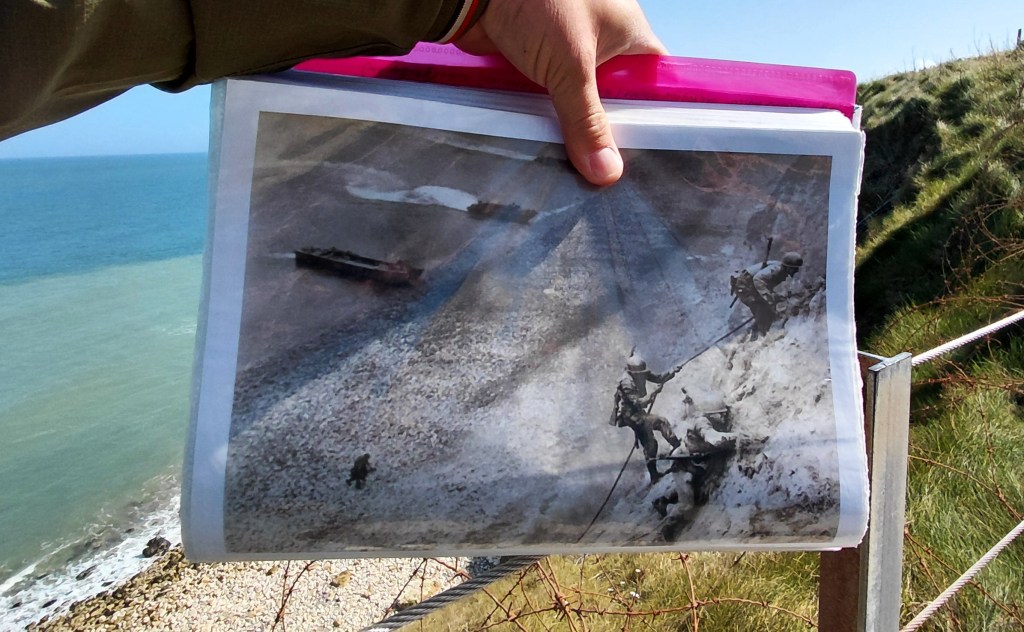
Our next stop was the scene of an incredible feat. On D-Day, 225 Elite US Rangers scaled 100 foot cliffs in order to destroy a German artillary battery. The heavy guns were threatening troops landing on Omaha and Utah beaches and it was crucial to put them out of action.
The area had already been battered by the RAF and the Navy, the craters can still be seen and they helped provide the Rangers with cover during their assault once they had scaled the cliffs.
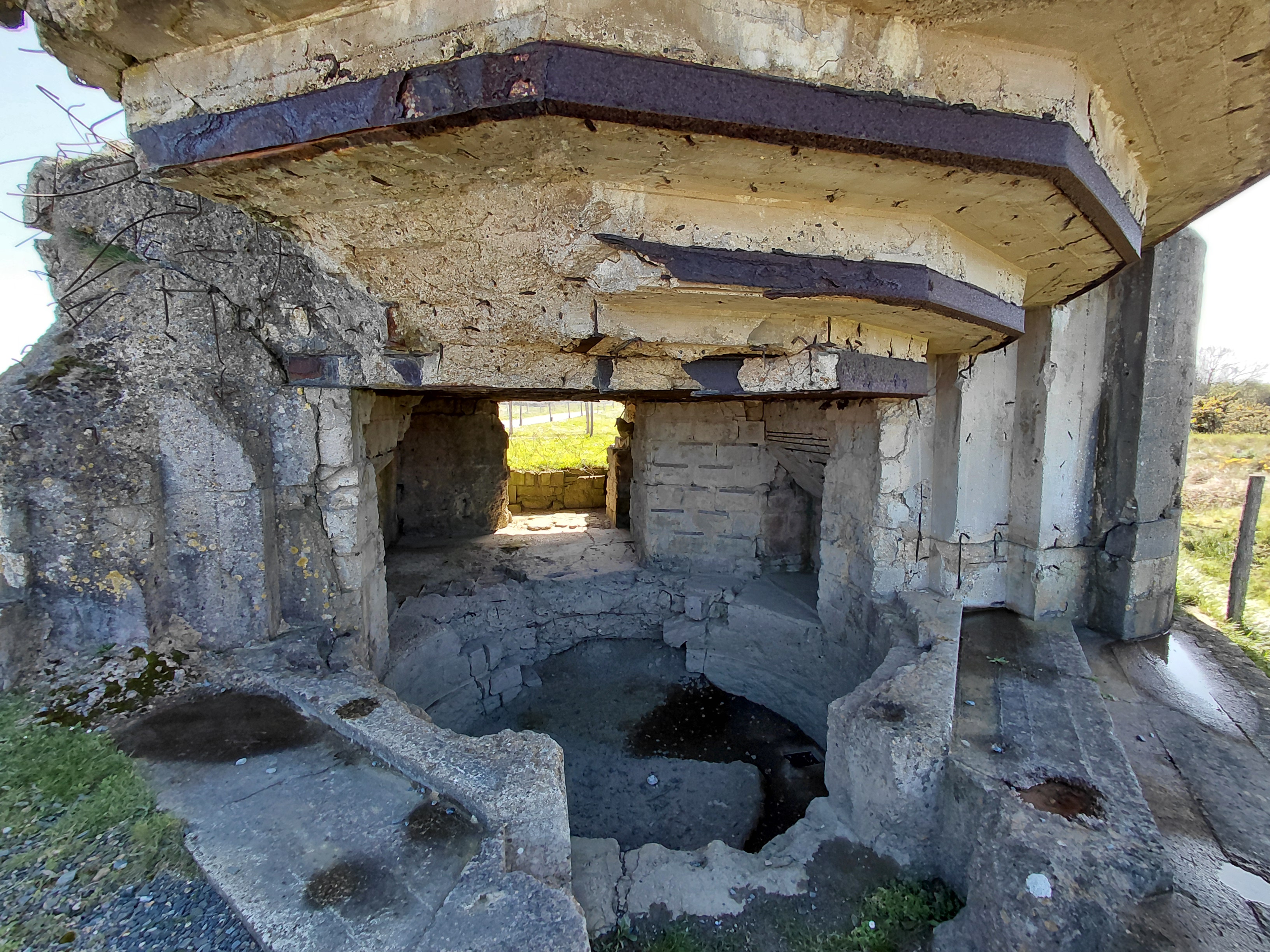
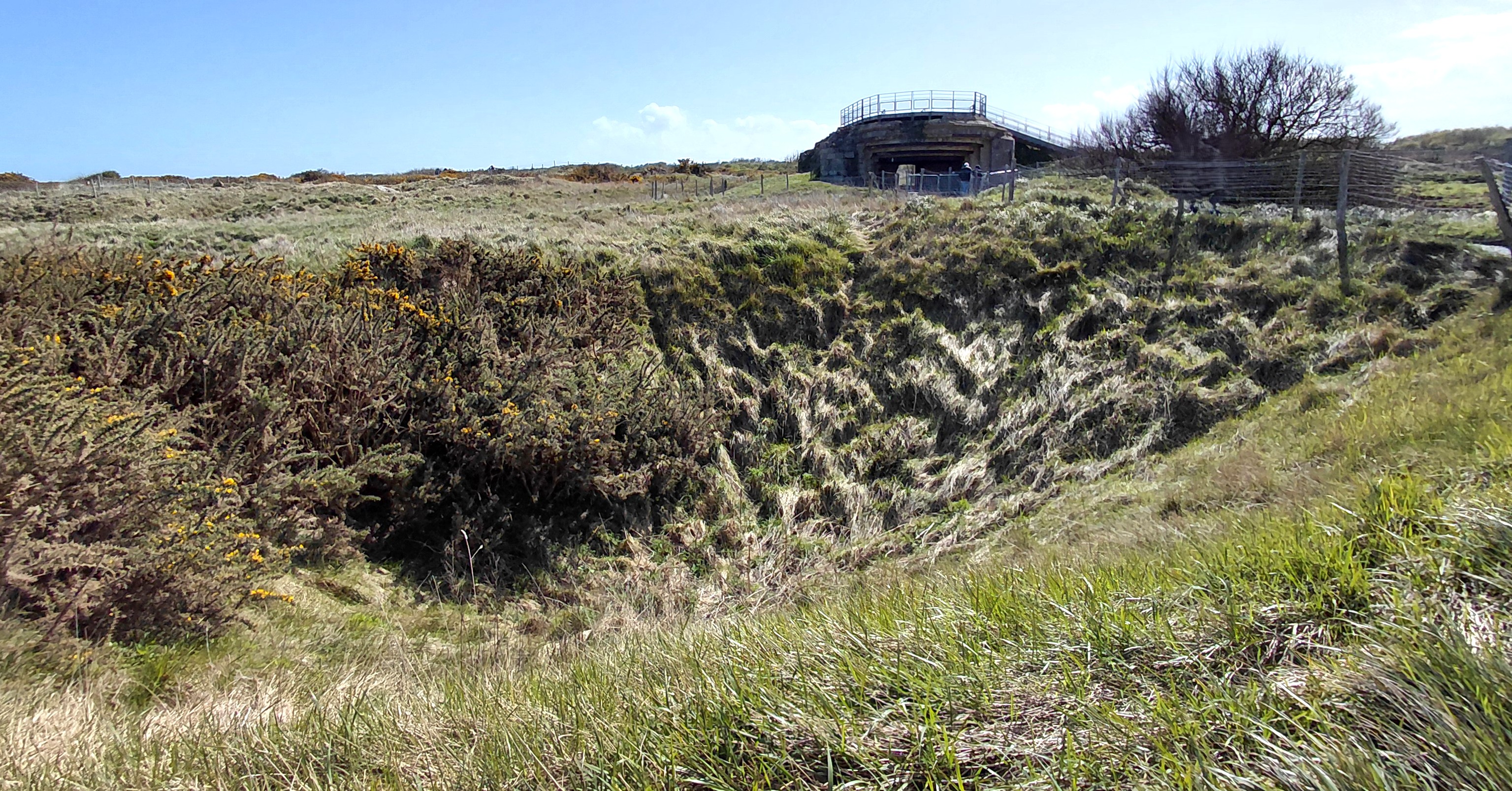
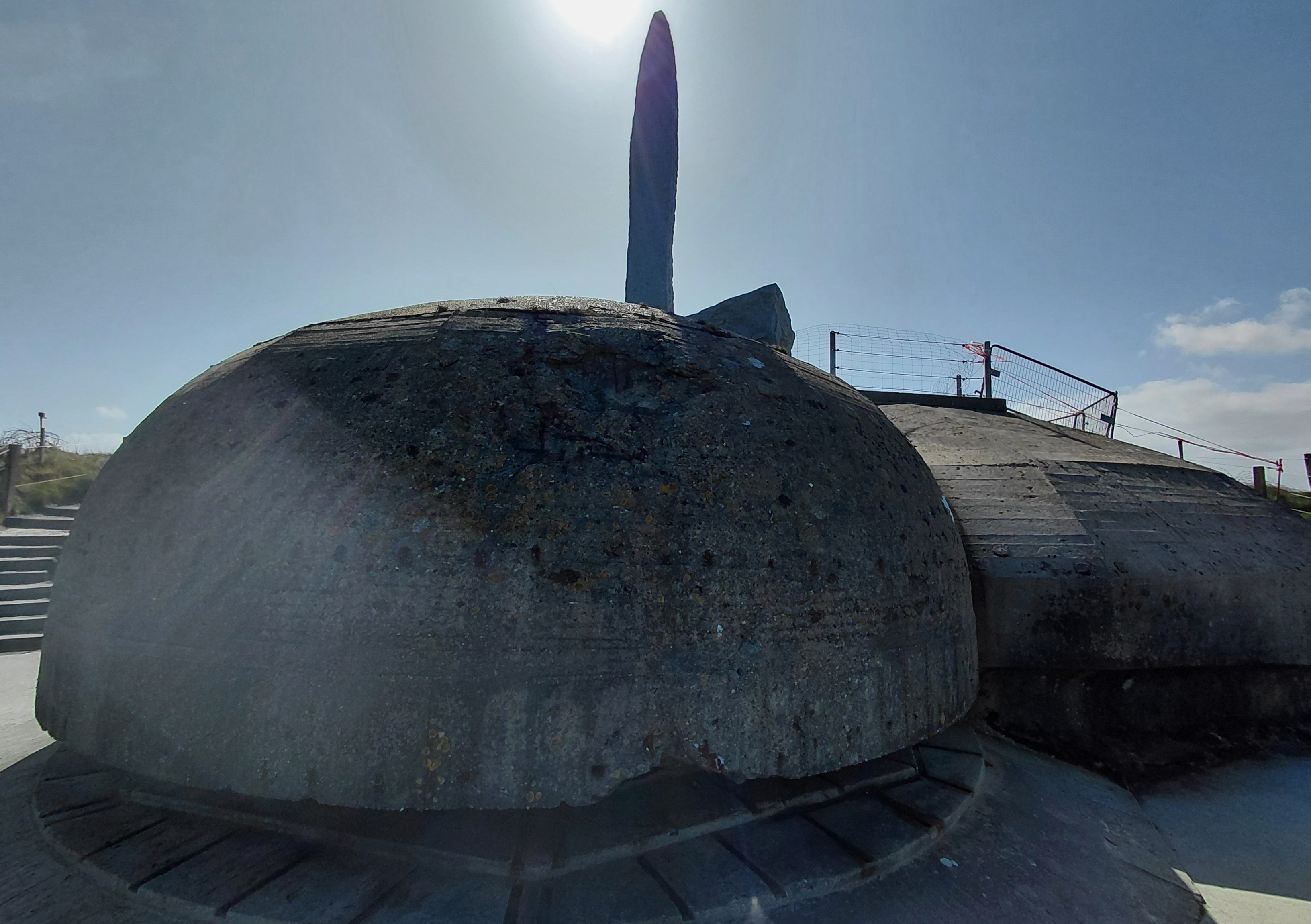
The Rangers, despite being under fire scaled the cliffs in 20 minutes, forcing the Germans into their concrete bunkers. They then discovered that the guns had been removed and were camouflaged in a field and were still able to hit Utah Beach.
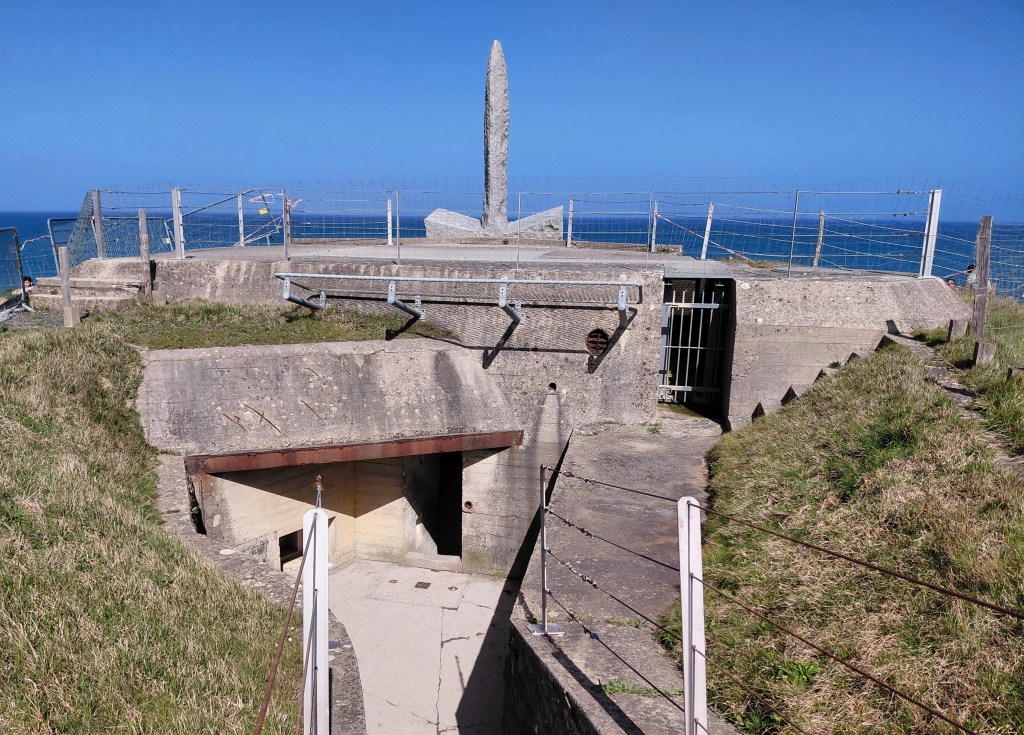
The Rangers managed to destroy the guns with thermite grenades [which create an intense heat and melted the gun mechanism] but then had to withstand two days of German attacks before reinforcements came to their aid. By that time there were only about 90 Rangers still alive and able to fight, over 130 were killed. Today there are the remains of the concrete bunkers and the original concrete gun installation.
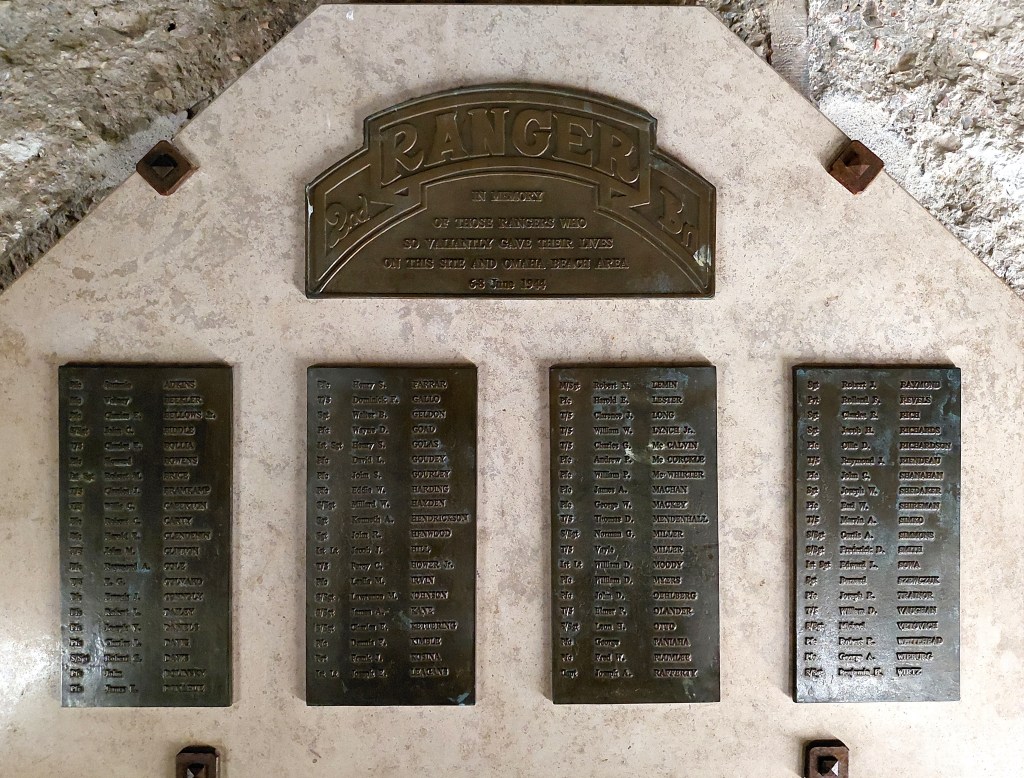
The American Cemetery
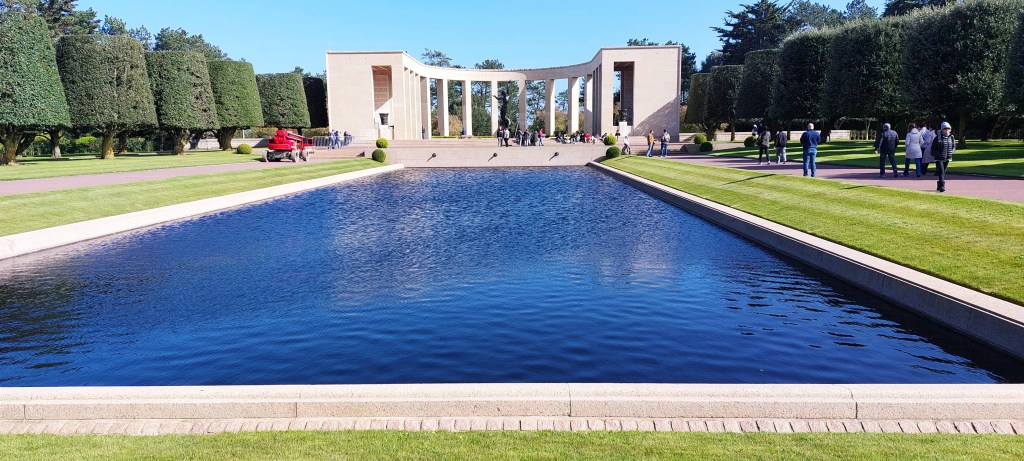
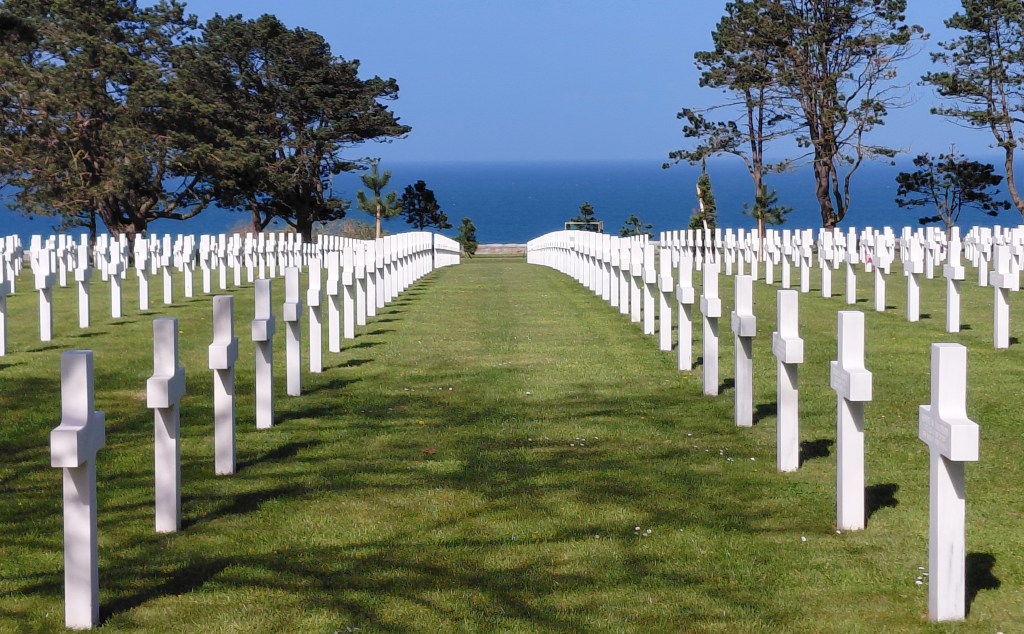
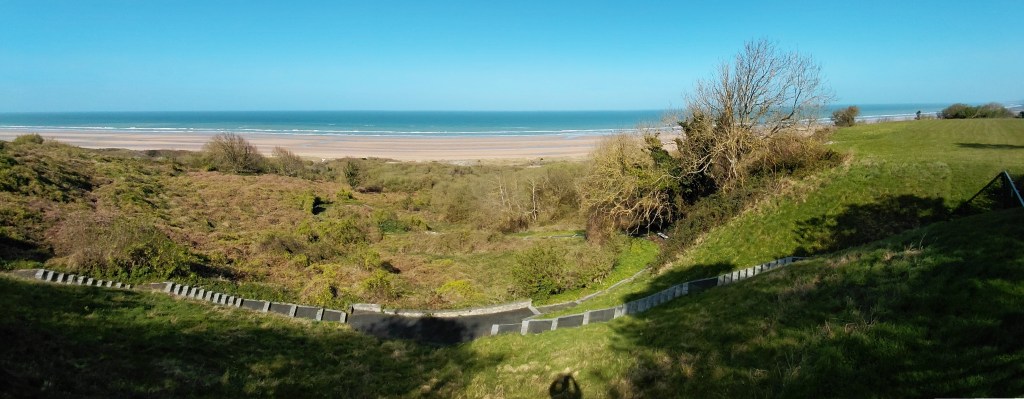
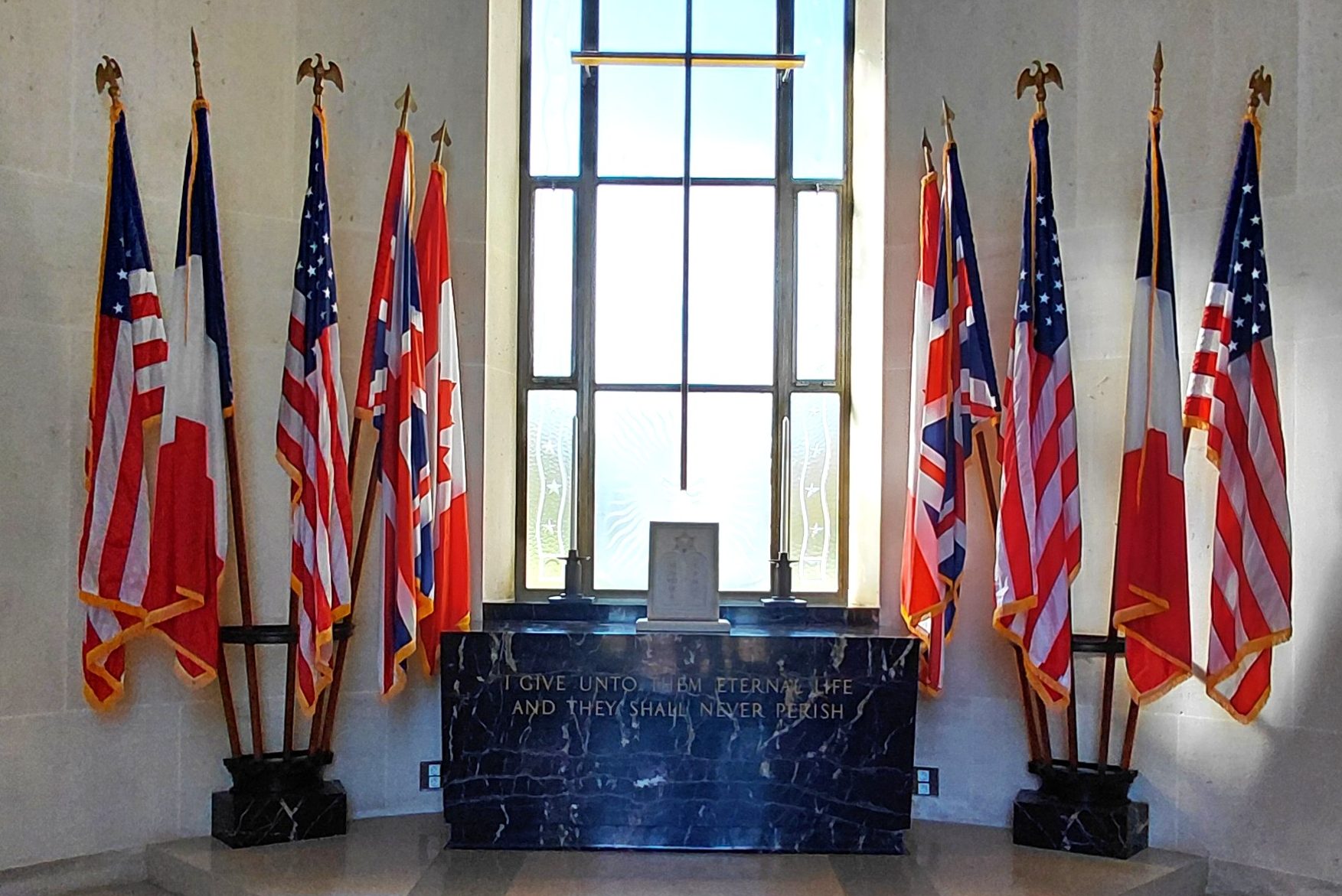
The American Cemetery at Colleville-sur-Mer above Omaha Beach was our last stop on the tour. It is the last resting place for nearly 9,400 American soldiers who died in action during or after D-Day.
The site was huge and seeing that many graves in one place was hard to comprehend. Unlike the British Cemetery and memorial that we had visited the day before the American Cemetery was busy with visitors so it was not such a tranquil experience.
We spent some time wandering around the graves and looking out over Omaha Beach and we witnessed the lowering of the flag ceremony which is held daily at 4pm.
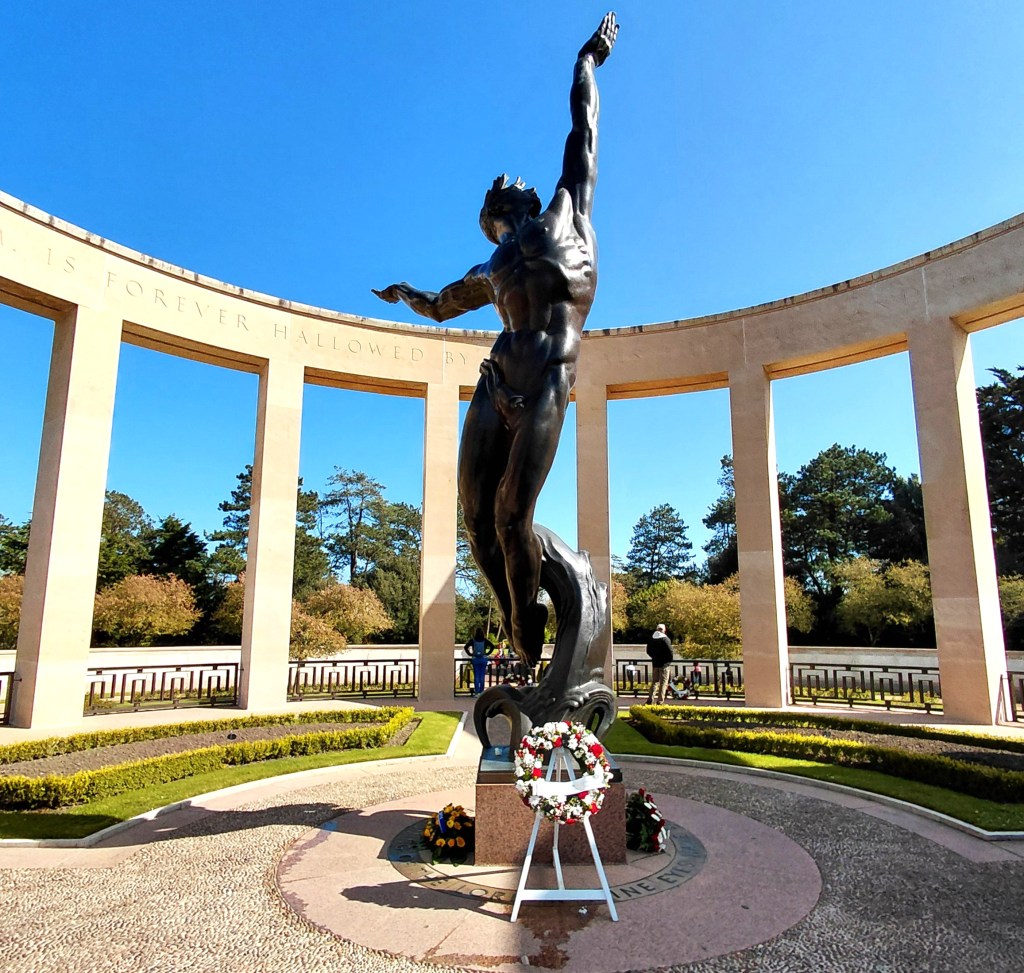
There is a large semi-circular memorial colonade with the statue called – Spirit of American Youth Rising from the Waves in the centre.
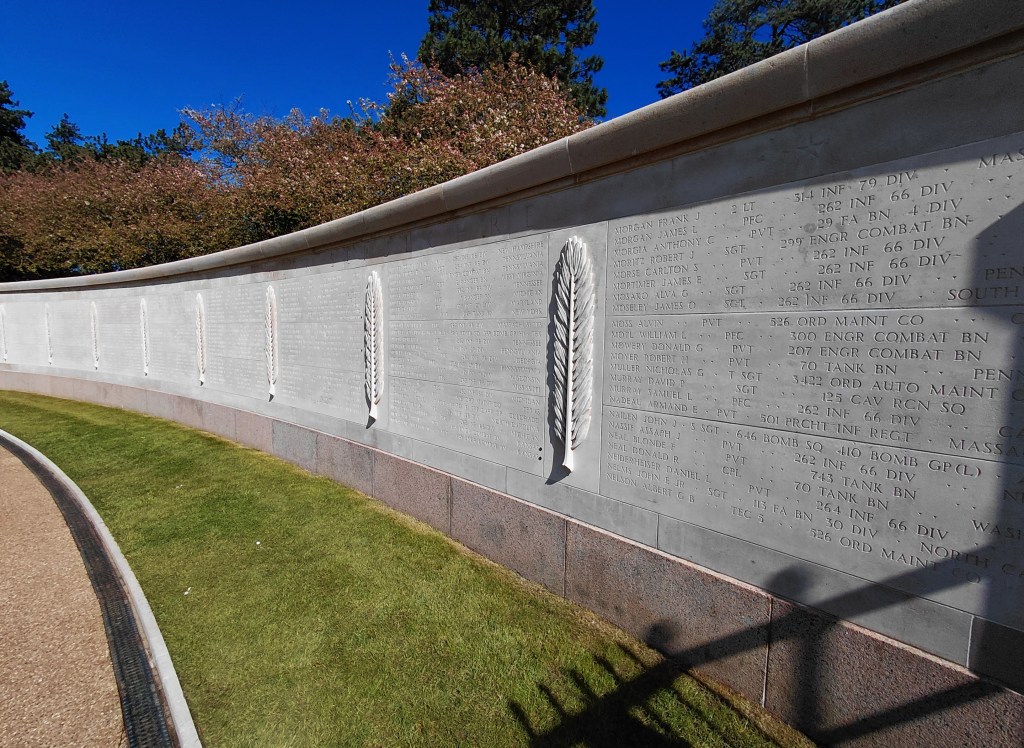
The Garden of the Missing contains a large semi-circular wall inscribed with the names of over 1500 soldiers who’s remains have never been recovered. Matt then revealed to us what he does in his spare time – he helps to trace and locate soldiers missing in action.
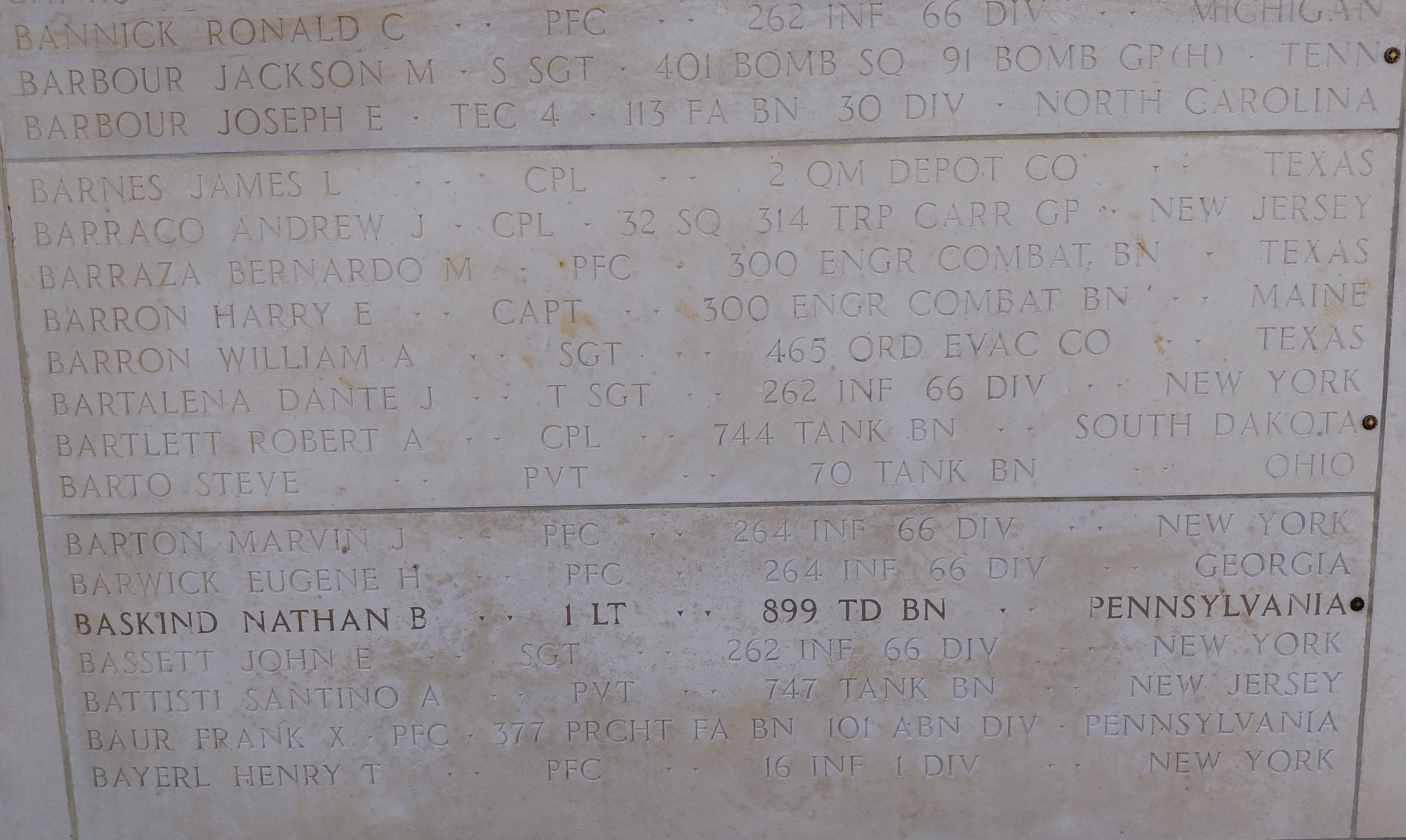
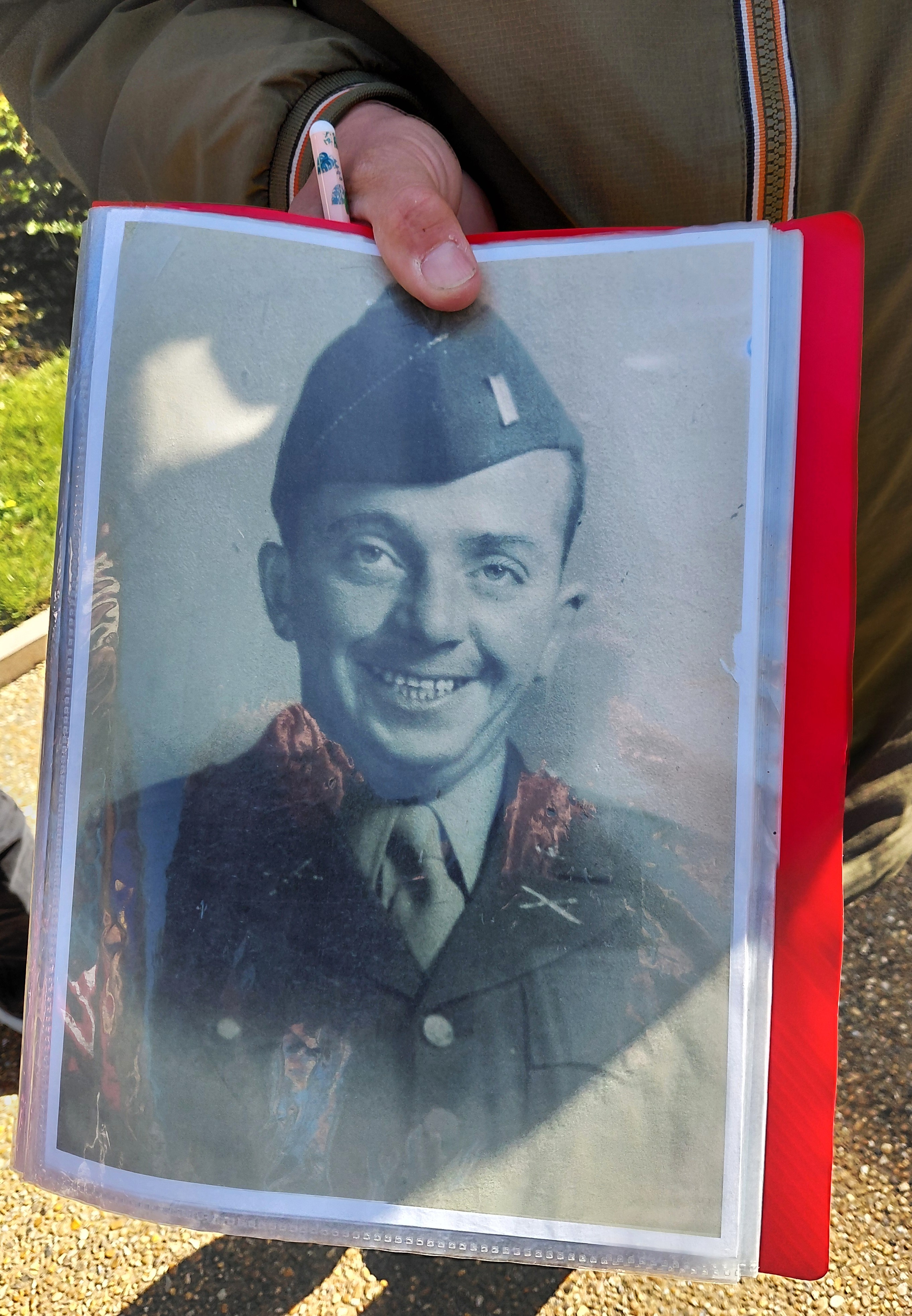
Matt told us that just the week before, as part of a team and after many weeks of investigation, they had finally tracked down the remains of Lt Nathan Baskind and had also met with his family. As he told us this story tears were welling in his eyes and ours too.
It was time to return to Bayeux. We were emotionally drained.
A day we will never forget.
Quick Links:
Days 10-16, The Loire to Bordeaux Coming soon!

