The pinnacles of rock that are dotted around Kalabaka [or Kalambaka], several adorned with monasteries, are truly extraordinary. To get the best out of visiting the monasteries I would recommend staying locally and make sure you start early as the sites do get busy once the tour groups arrive in their droves. Despite this, when I mention the name Meteora to people back home I get a blank look.
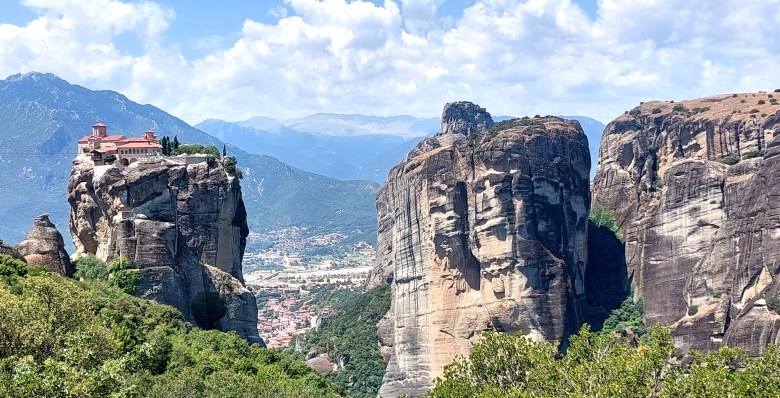
The two obvious places to stay are either the village of Kastraki or the larger town of Kalabaka. We chose Kalabaka and stayed two nights. It was the perfect choice for us with a good range of restaurants and a wonderful and eccentric museum as well as a Cathedral with stunning frescos. So I will start with Kalabaka before moving on to Meteora.
Kalabaka [Kalambaka]
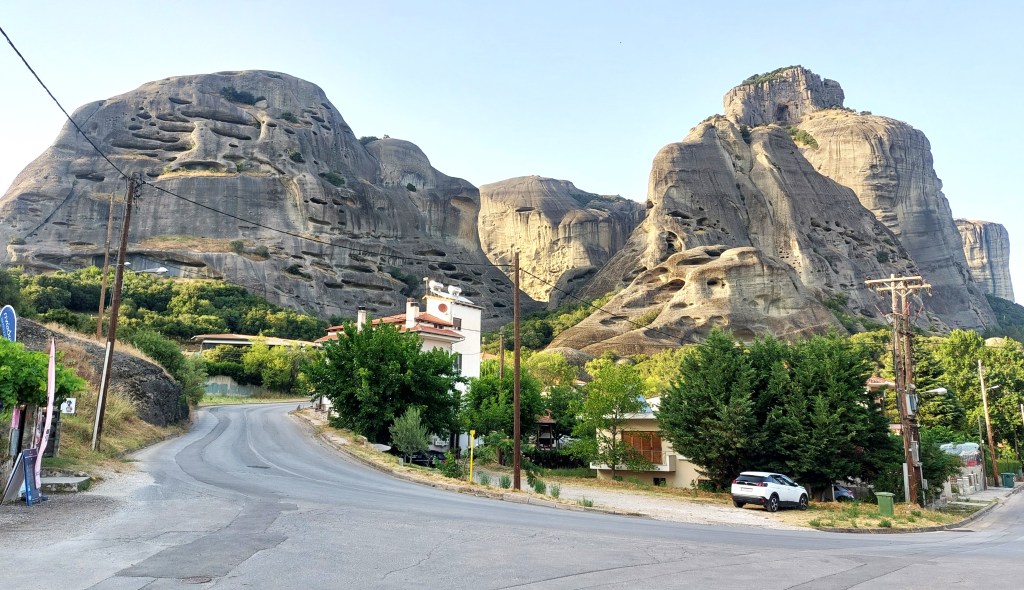
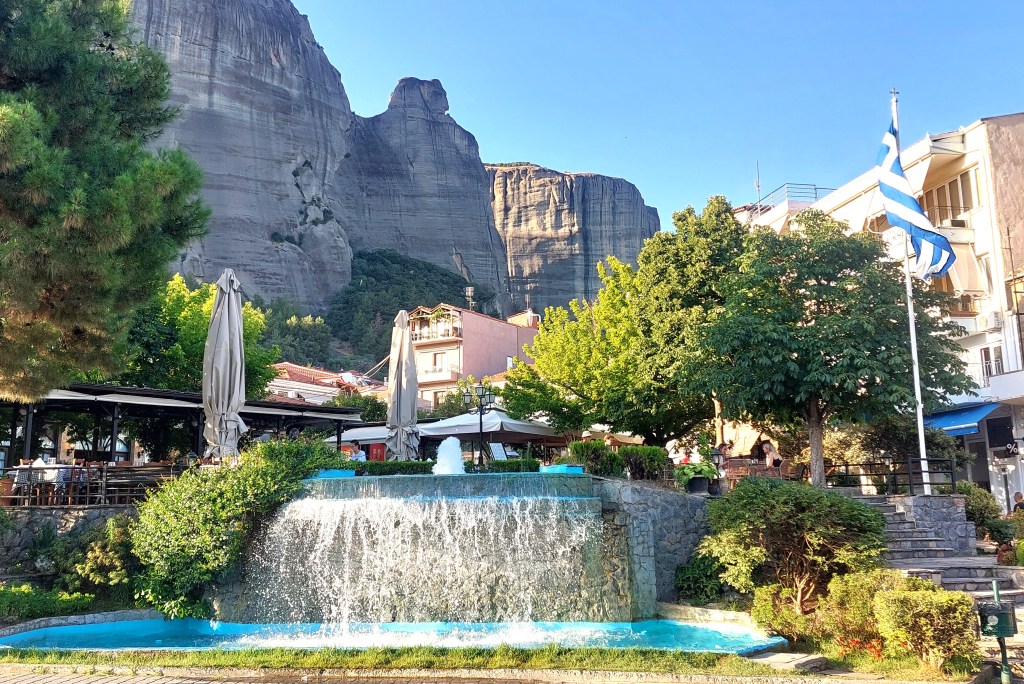
The bustling town of Kalabaka is dominated by the rocks of Meteora. The town centre has a good range of bars and restaurants. It caters for the tourists well without feeling too touristy.
Natural History and Mushroom Museum
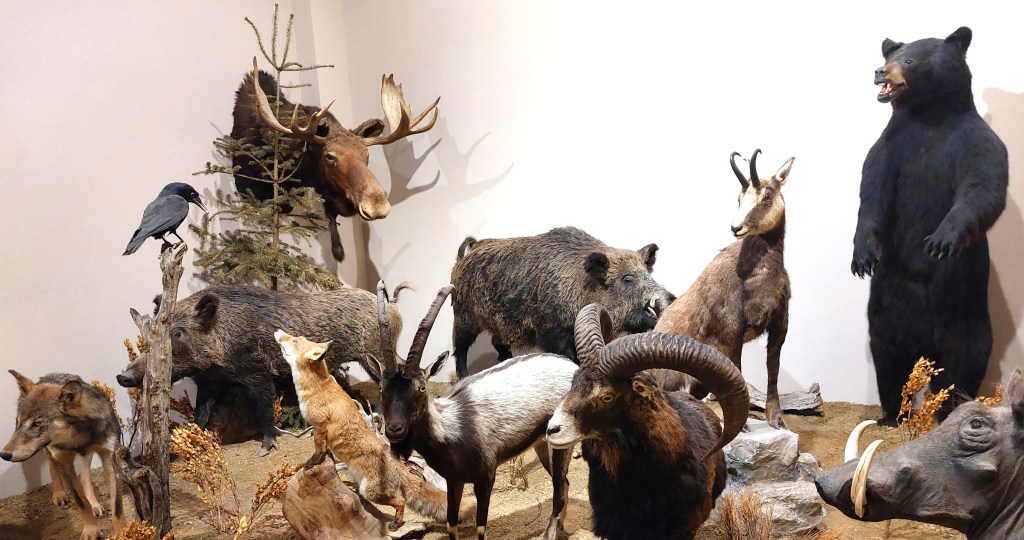
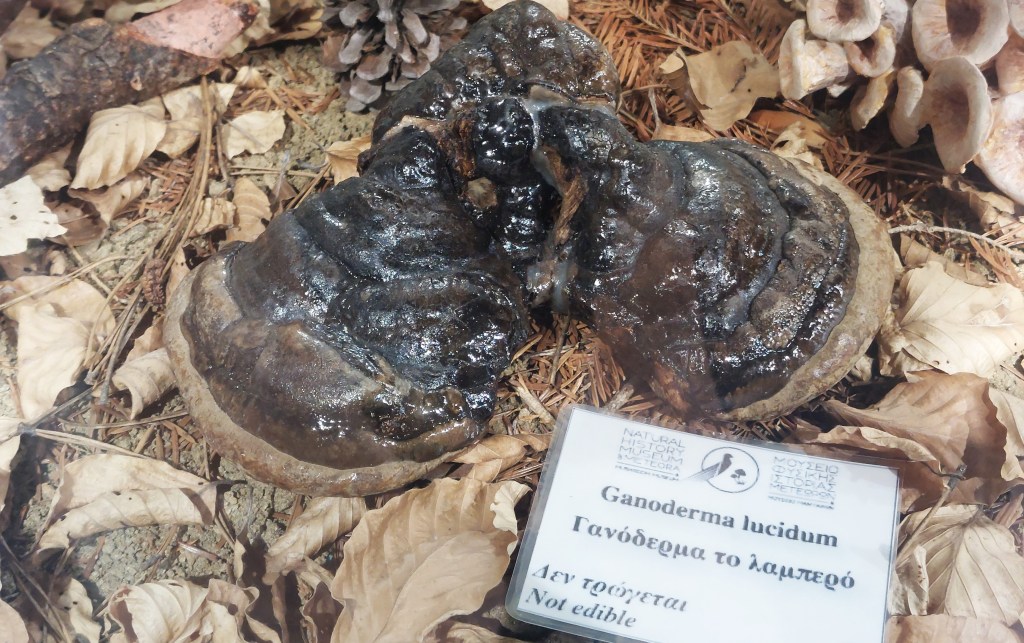
This slightly surreal musem with the ground floor full of stuffed dead animals and the upper floor dedicated to all things mushroomy is actually really great and worthy of a visit. The stuffed animal bit reminds me of the Booth Museum in Hove that I used to go to as a child, [it’s still there]. The museum does its bit for the environment and no animals were murdered for our viewing pleasure. There is a cafe and shop on the upper floor.
Kalabaka Cathedral [Mitropoli]
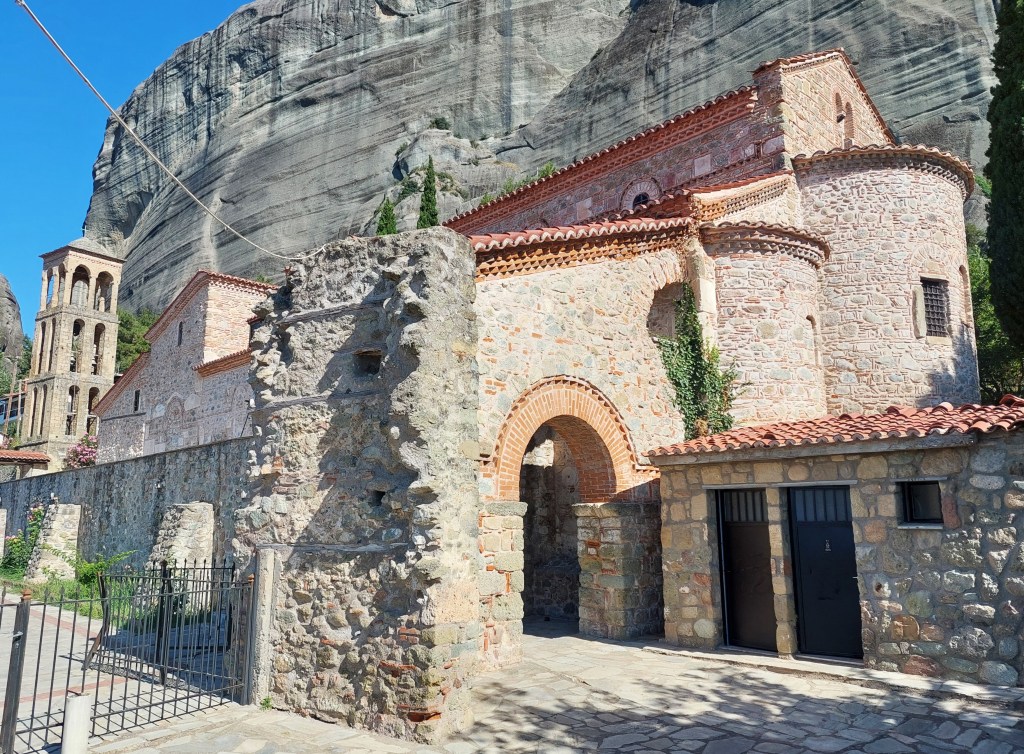
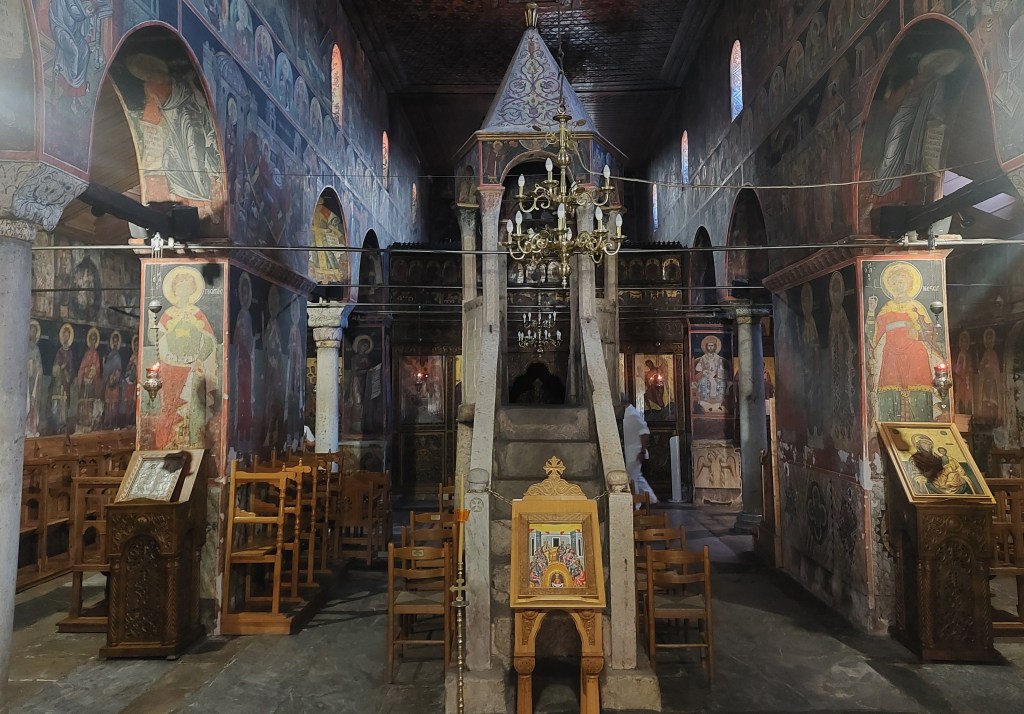
The 11th century Cathedral is on the edge of the town so it’s easy to miss. The 13th century frescos inside are truly spectacular and worth the small entry fee.
Meteora – The monasteries.
If you don’t have a good head for heights you are going to struggle with the pricipitous steps and bridges which are unavoidable when visiting some of the monasteries. [Leashia and I were very brave!]. Luckily there is no need to be hauled up in a basket on a rope to the monasteries which was the way until the the 1930’s. However, you do need to make sure you are appropriately attired to visit a sacred site.

The monastaries are also museums and do command a small entry fee which you need to pay in cash. Most of the sites also have a small shop selling touristy stuff and religious items. Photographs of the inside of the churches are forbidden and this rule is strictly enforced. They all have different opening times and are closed at least one day a week.
Great Meteorou [Megalo Meteoron]
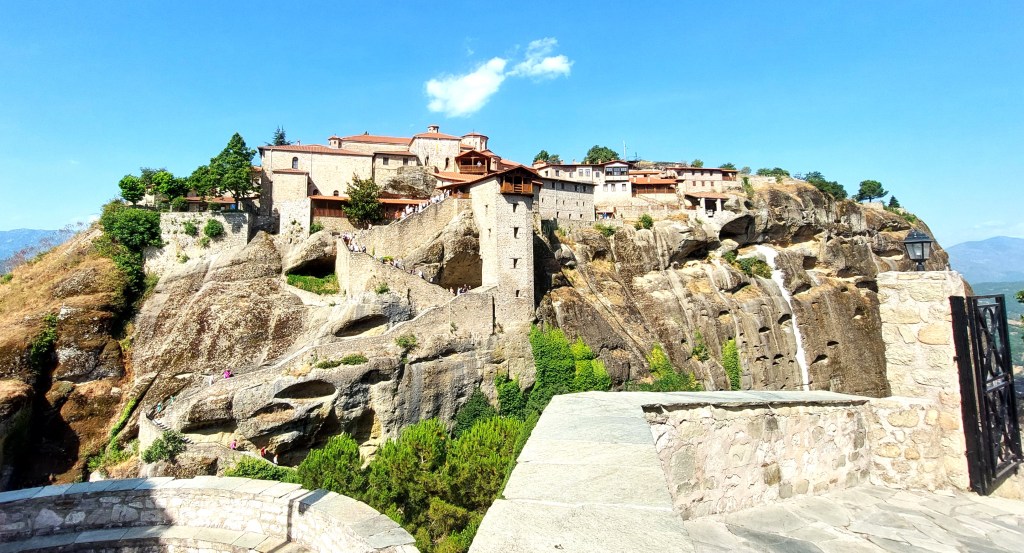
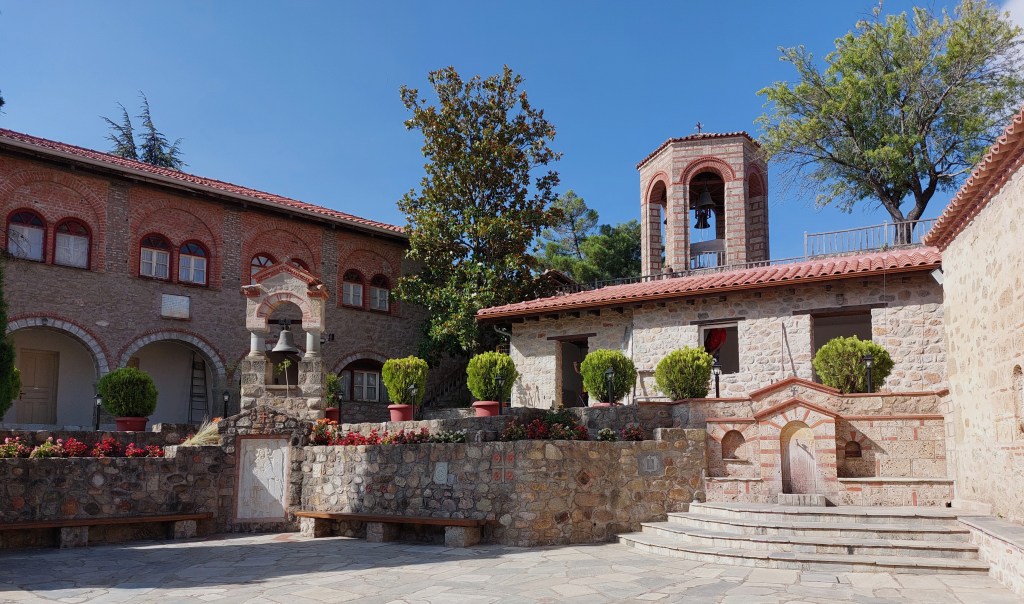
We visited the Monastery of Great Meteorou first and were in a small queue waiting for the doors to open. There are around 300 steps to the entrance of this one so perhaps that was a good thing as it was not too busy or too hot. It’s one of the larger monasteries with a delightful courtyard. It is also the highest, so you get great views looking down on the other rock pinnacles and adjacent monasteries. On display are an exhibit of a traditional kitchen and a small museum of religious relics.


Varlaam

There are around 150 steps to the main entrance of Varlaam Monastery after you trot over a bridge from a neighbouring column. You are rewarded with spectacular views of course and a small church adorned with frescos from the 16th century.
Roussanou
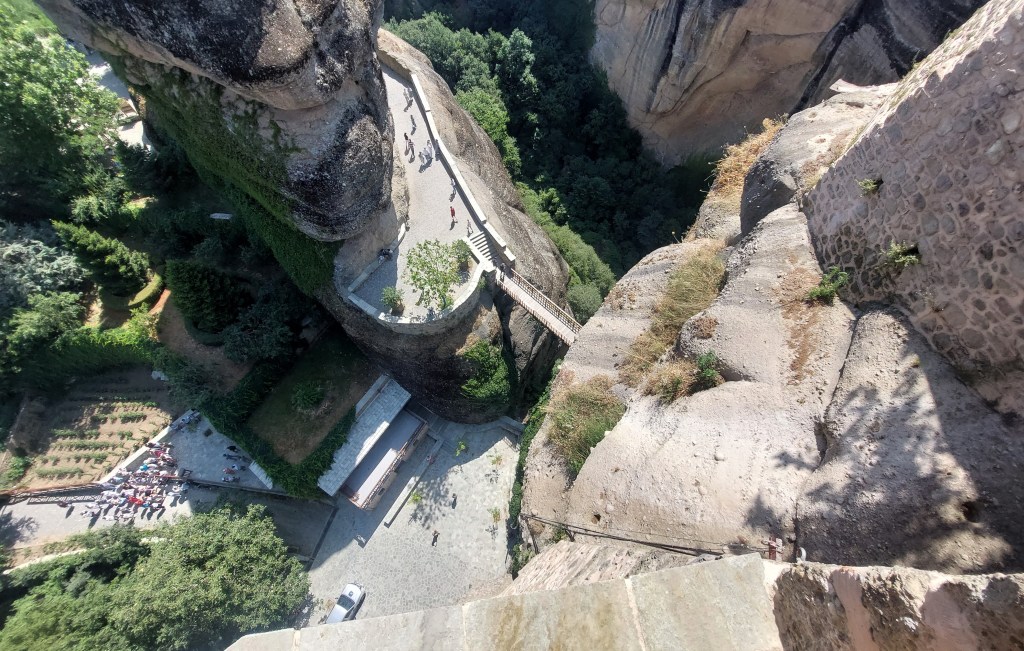
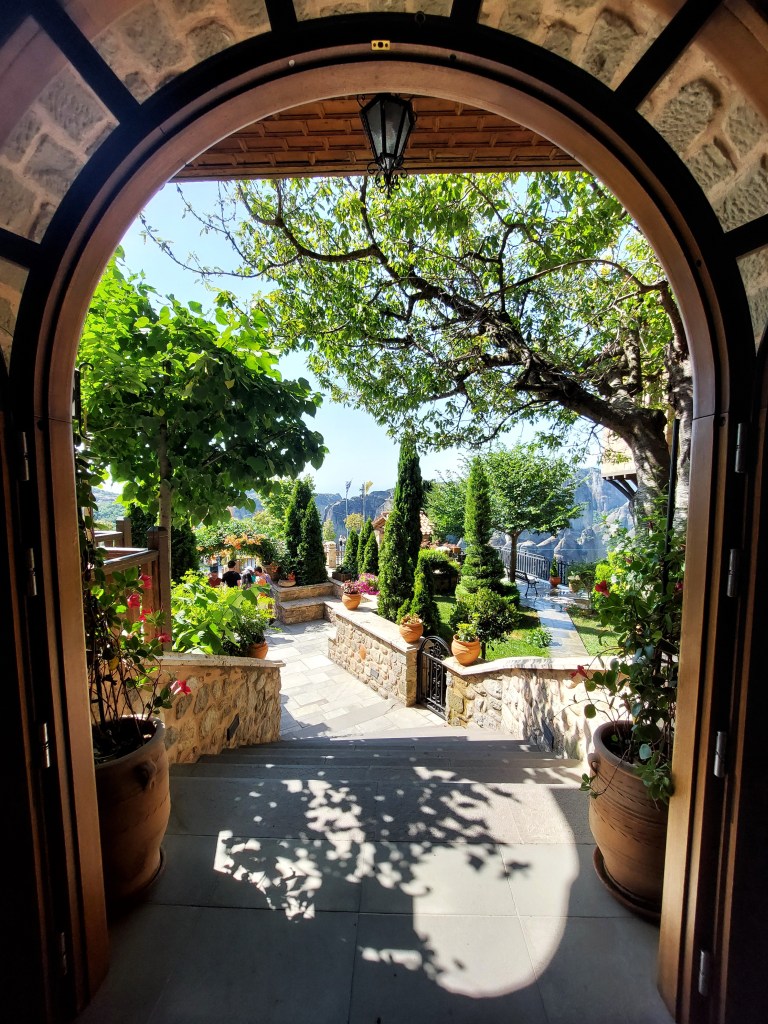
Roussanou is a Convent, founded in the 16th century which is approached via steep steps and a scary bridge. The chapel is covered in delightful frescos from the 16th century depicting death and mutilation from a wide variety of unnatural causes.
St Stephen [Agios Stefanos]
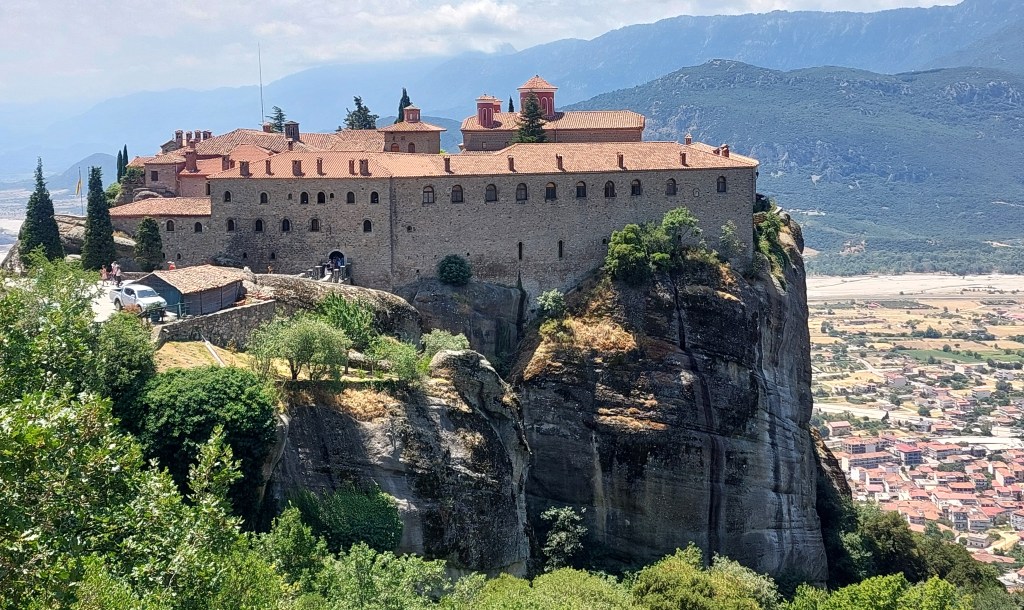
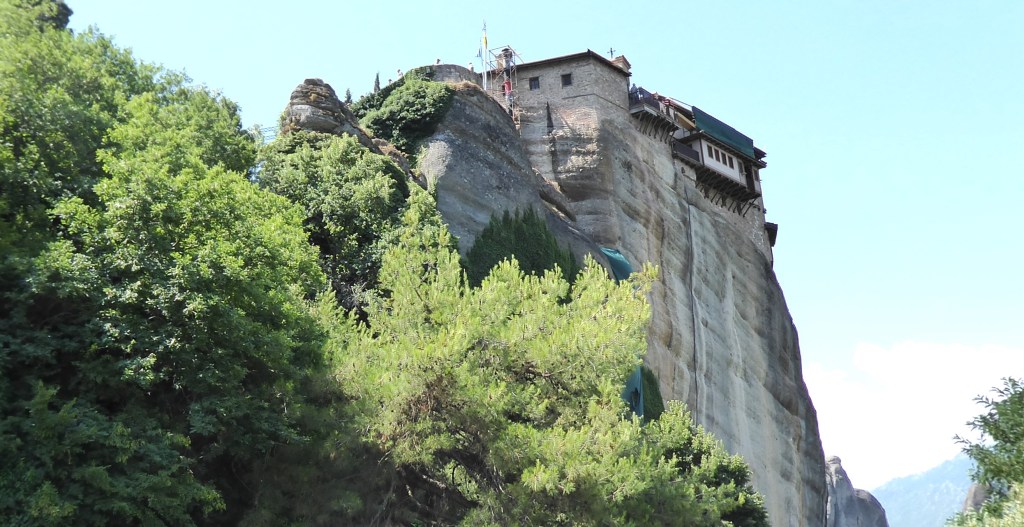
St Stephen looks more like a fortress from the outside but has pleasing courtyards inside. There are no steps to the entrance for this one so that was a relief! It’s run by nuns and there is a museum, a 15th century refectory and a chapel. The building was heavily bombed in the 2nd World War so much of it has been rebuilt.
St. Nicholas [Agios Nikolaos of Anapafsas]
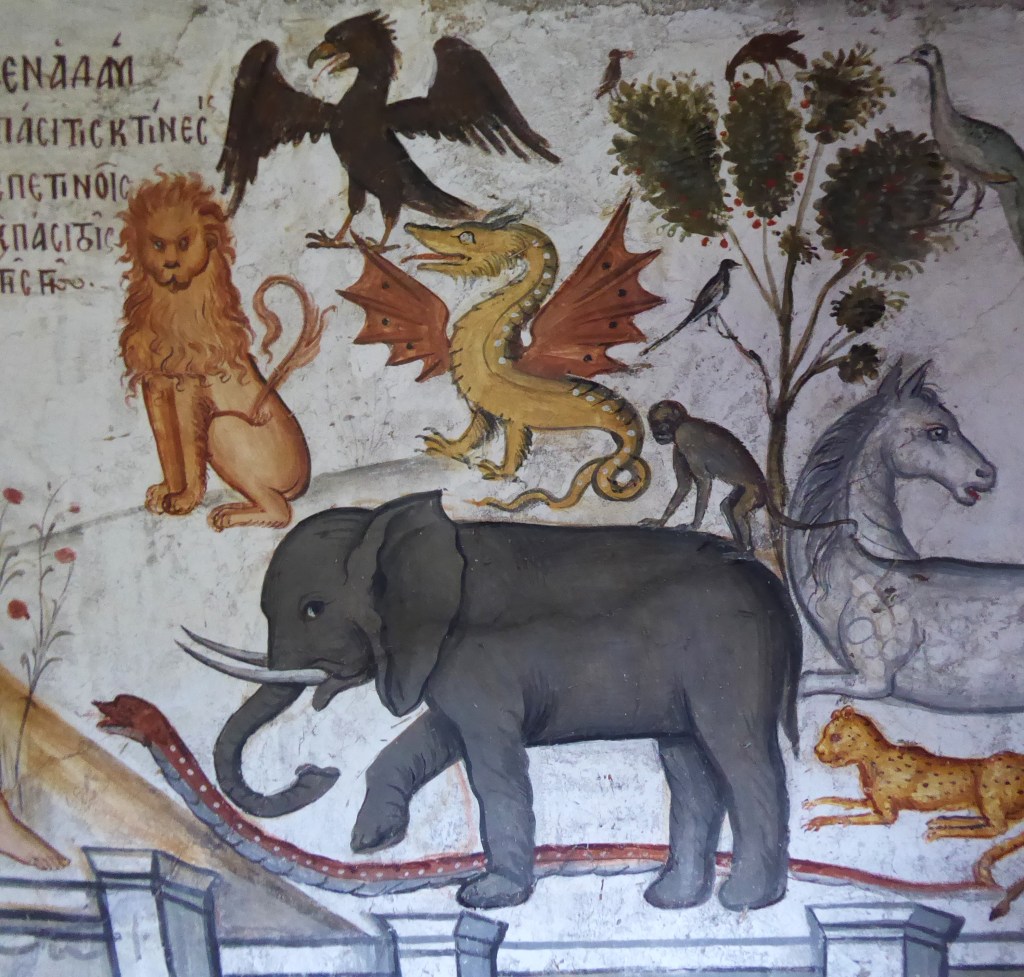

We visited the Monastery of St. Nicholas last and as we were tired we found the steps in the heat most gruelling. There did not seem to be any parking for the coaches for this one so it was also the most peaceful. It had a stricter dress code than the others and I had to wear very heavy [and hot] cotton trousers over my shorts which they kindly gave me at the entrance. The monastery may be small but it has several levels and wonderful views from the top. The main chapel has wonderful frescos from the 16th century and there are also other small chapels with vivid frescos from the modern era which are not so gruesome as some of the medieval ones on show elsewhwere.
Agios Triados [Holy Trinity]
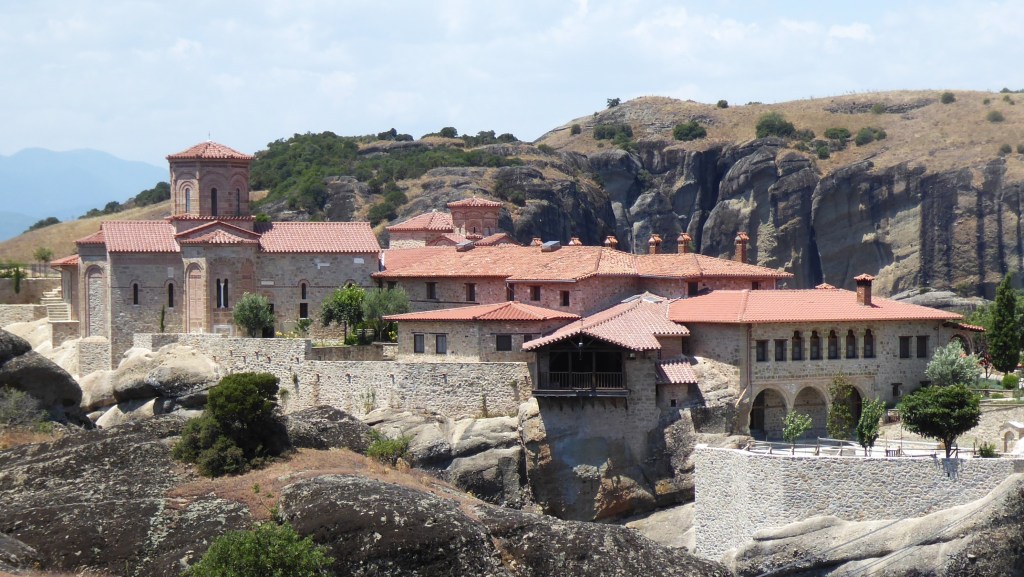
This monastery was closed on on the day we visited but we had time to have a look from the road. You may recognise it from the James Bond film – For your eyes only.
Quick Links:
 Gruntie's Travels