This page covers the North coast of Achaia in the Peloponnese from the Rio- Antirrio Bridge in the west to Aigeira to the east.
Rio- Antirrio Bridge
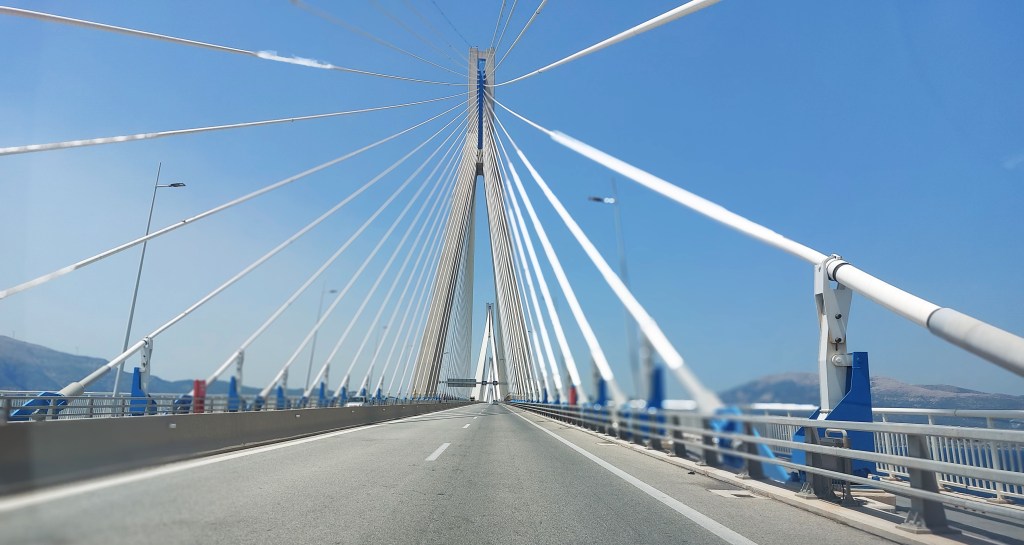
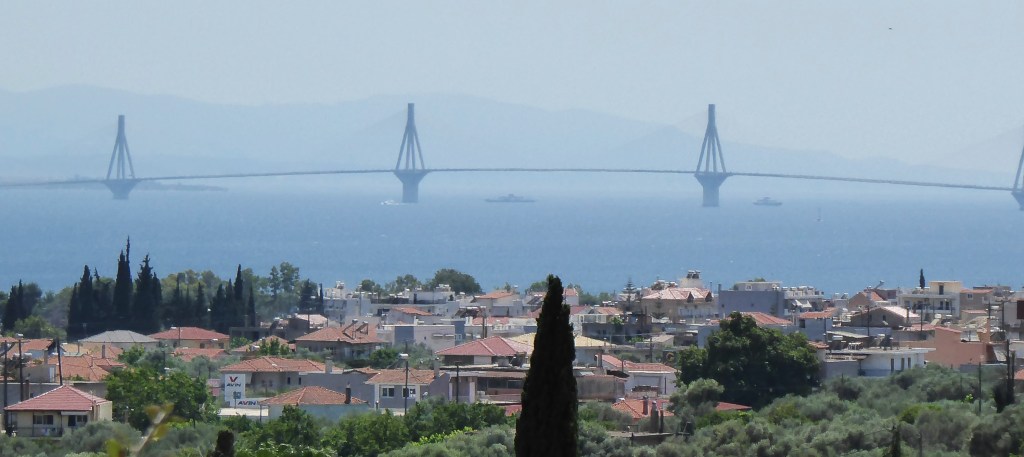
North of Patras is the spectacular Rio-Antirrio Bridge that links the Peloponnese over the Gulf of Corinth to mainland Greece. It is one of the longest multi-span cable-stayed bridges in the world. There is a sizeable toll if you want to drive over it. The cheaper [and slower] option is to take a ferry.
Aigio [Egio]

Aigio is a bustling port town on the northern coast of Achaia which is now connected to Athens by rail. The city was severley damaged by the earthquake of 1995 and there are several memorials around the city. We drove there and found the one way system as well as parking in the centre of the town a bit of a challenge. There are parking lots dotted around the town where there was a fee but it was not extortionate. Aigio has a city vibe and has an Archaeoligal Museum, Foklore Museum and plenty of bars, boutiques, deli’s and shops.

The town is built on three levels with the centre of the town being the upper level and the port the lower. So there are steps and/or slopes between the levels. We had a lovely dinner at Eprepe with views of the port and the sea which was a pleasant walk from our accomodation in the town centre.


Oracular Cave of Heracles
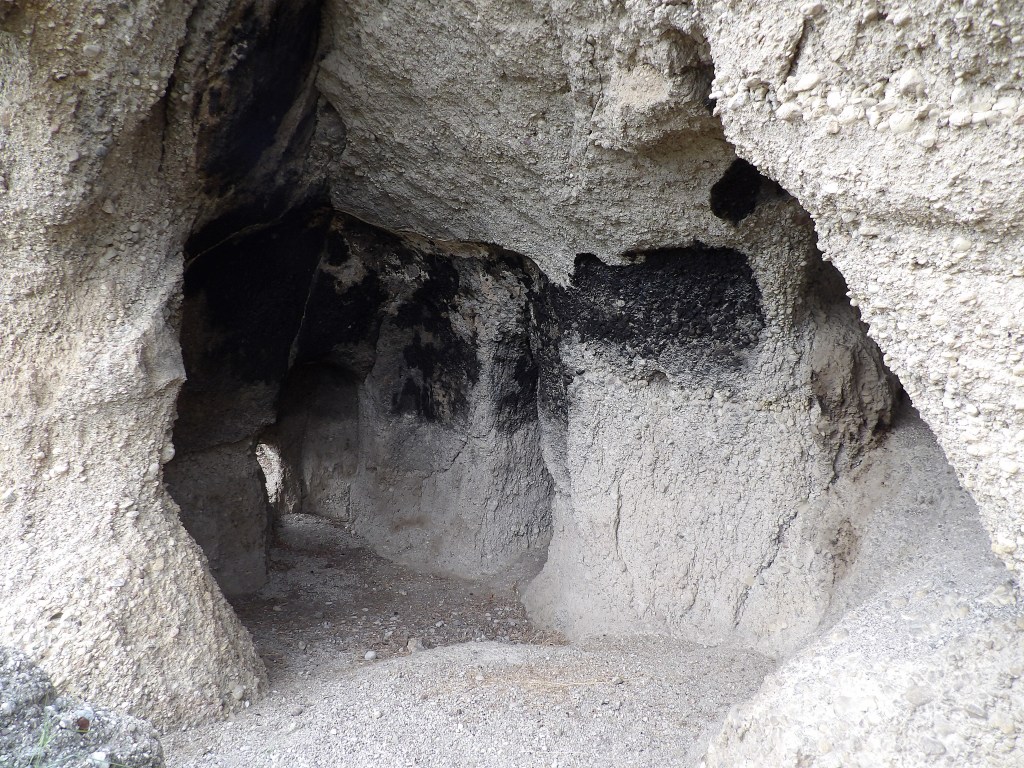
The Bradt Guide to the Peloponnese mentions this cave which is a few miles from Aigio, near Diakofto and in 2024 we went looking for it. After a couple of hours scouring the area and looking at Google maps we gave up. We suspected the sign for it had disappeared. We returned in 2025 in another attempt to find the elusive cave. Leashia thought that she had worked out where it should be and we found it – Yay! There’s nowhere ideal to park but we parked on the side of the of the road next to the bridge. The cave is to be found over the road up the hill. The brown sign had indeed fallen down but the white information board was still visible which signified the start of the ‘path’. [see photos below].
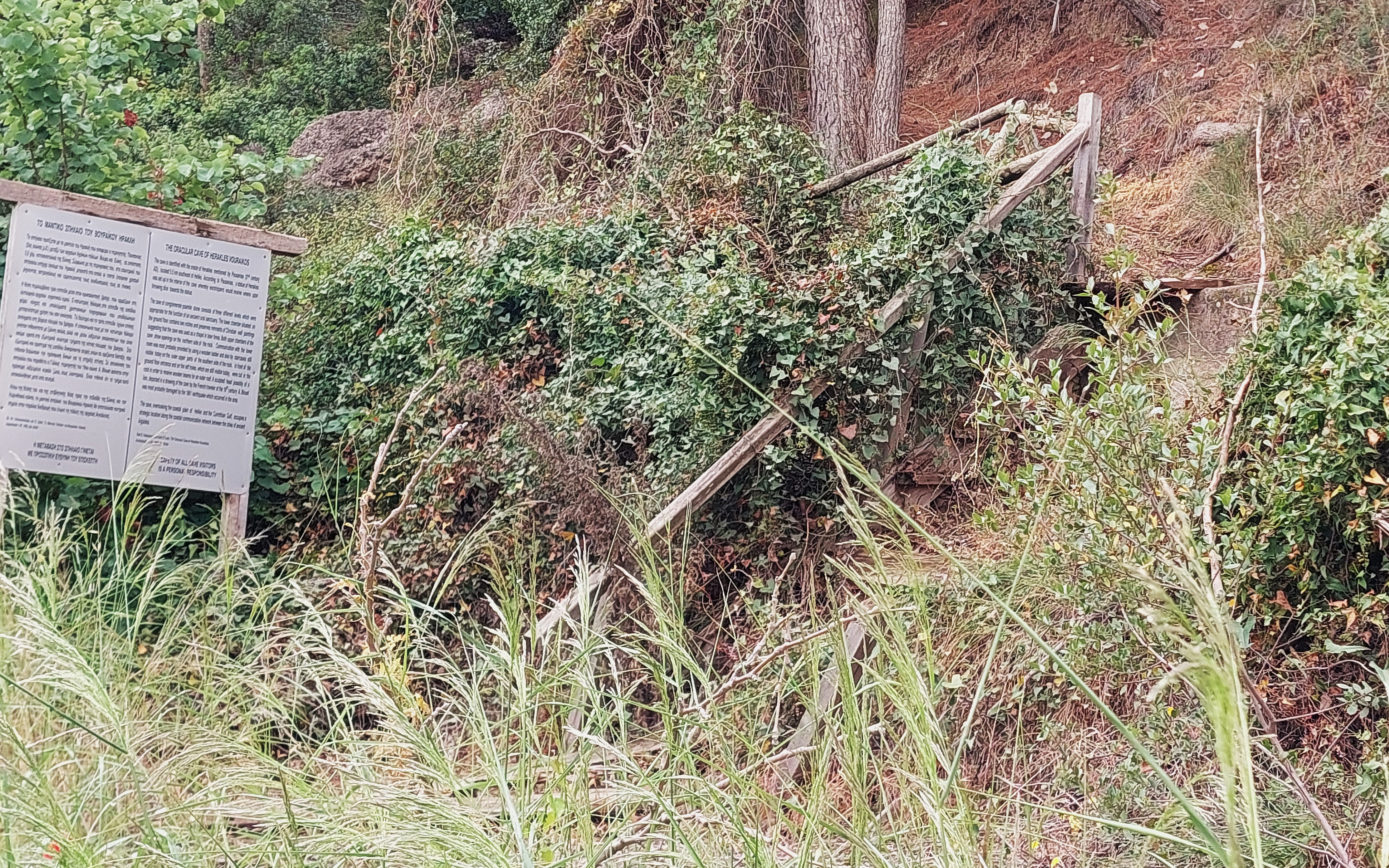
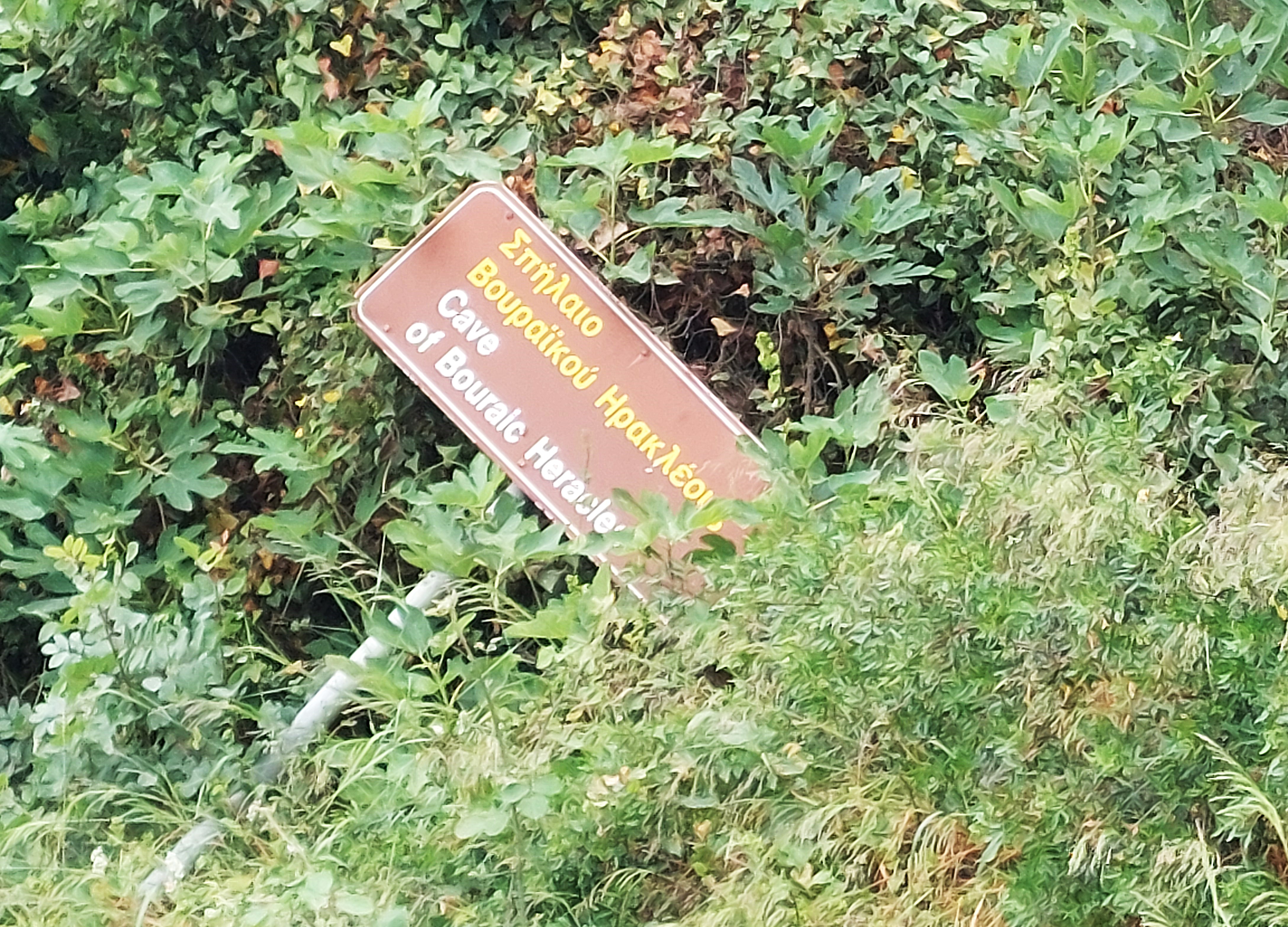
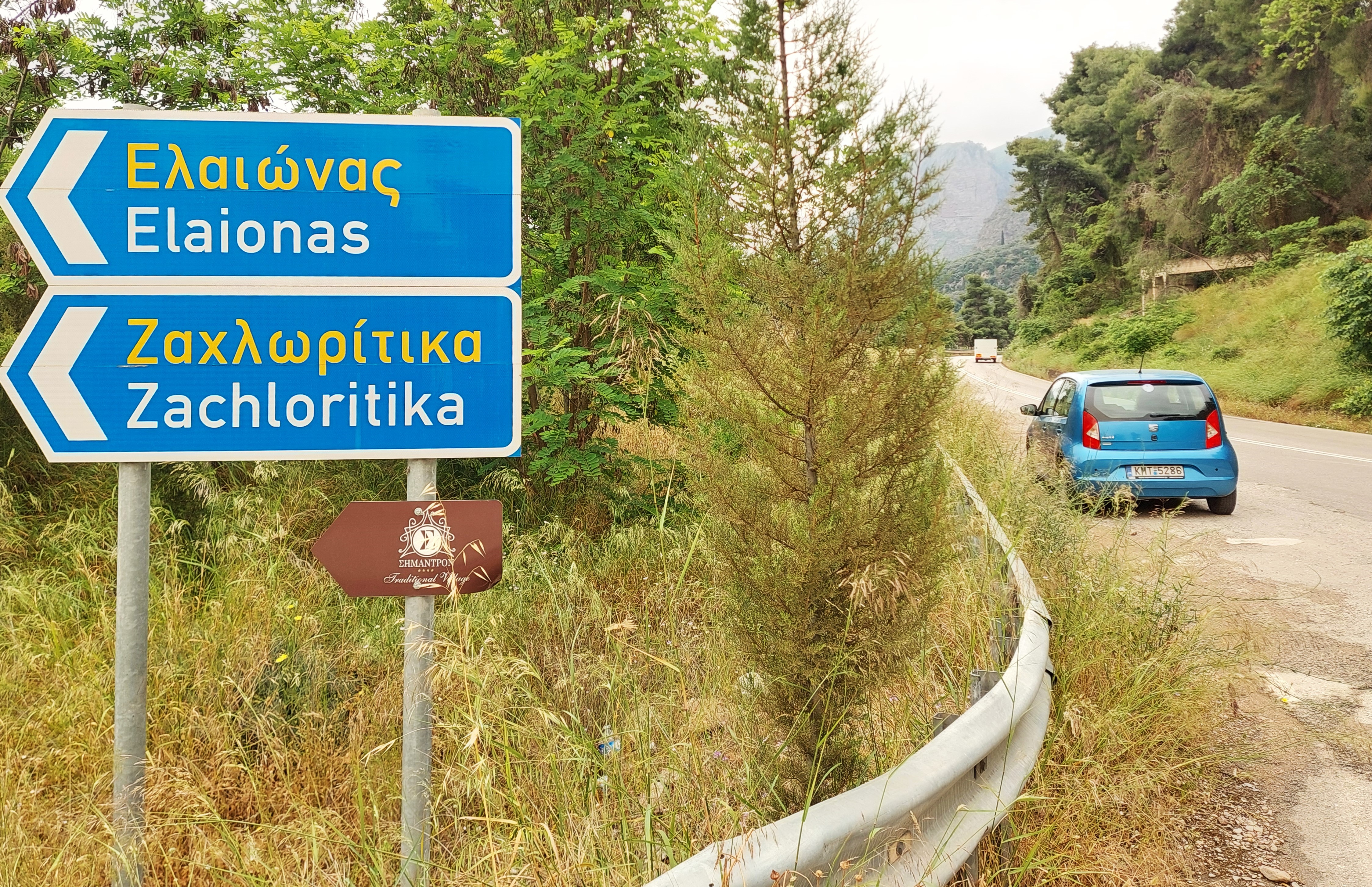
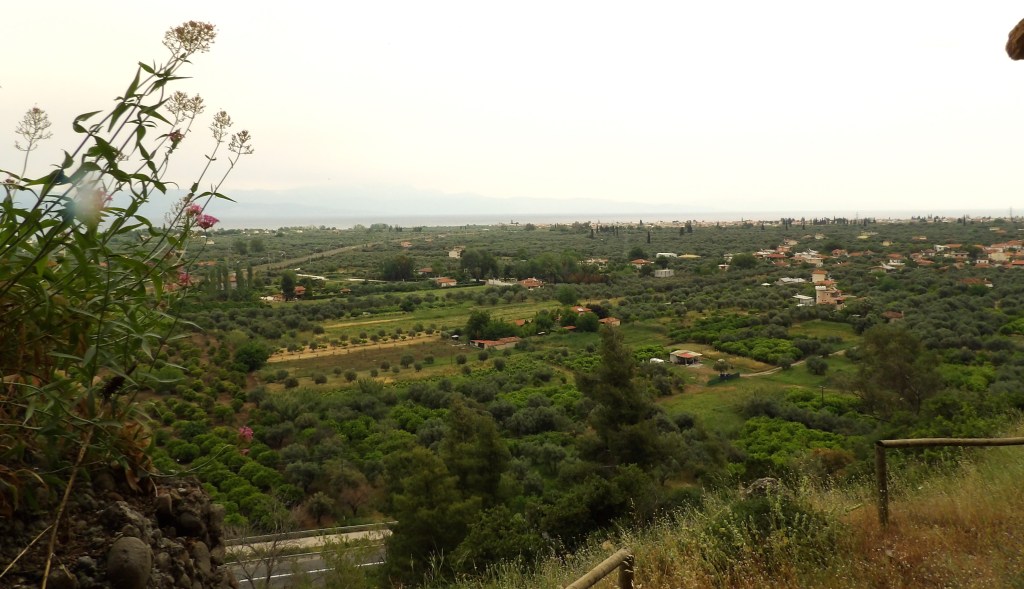
The path to the cave had disintegrated to such an extent that Leashia thought better of it and left me to scramble my way up to the cave while she waited at the bottom of the hill for my return. It only took me ten minutes to get to the cave. The cave itself was pretty unremarkable but bizarrely there was an information board inside in English. However I was elated that I had found it at last and the views were pretty good. The cave has been referenced by Pausanias and remnants of wall paintings suggest it’s been used as a chapel in the past. I am glad to report that Leashia was still waiting for me on my return.

Rack and Pinion Railway

This amazing railway takes you through a stunning gorge. It runs between Diakofto on the coast to Kalavryta in the mountains. It’s a journey to not be missed. I have more information about the journey HERE.
Ancient Aigeira

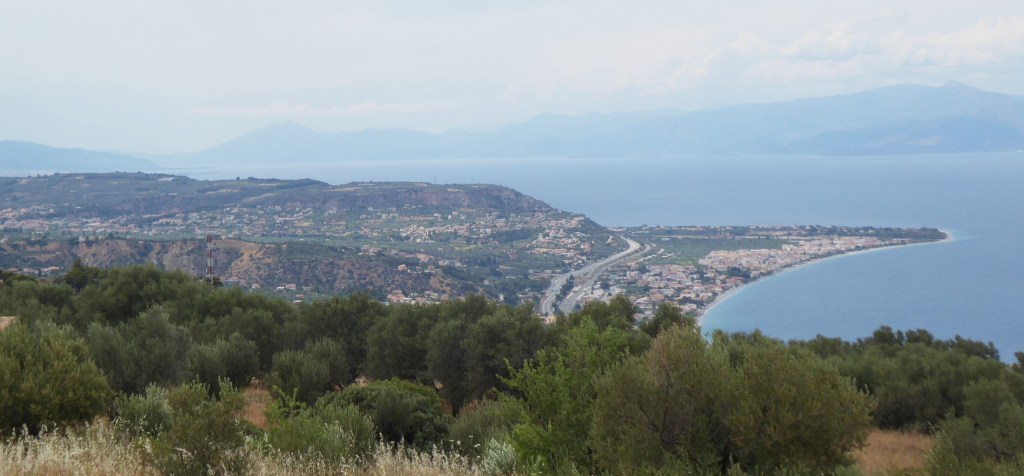
You will find the ruins high above the modern town of Aigeira. The ancient theatre is the most obvious feature and in a stunning location. The site was locked when we visitred but it was easy to enter through a gap in the fence and have a mooch. The views of the mountains to the south and towards the coast in the north are stunning. There are also the sparse remains of a Mycaean Citaldel nearby.

Taxiarches Monastery

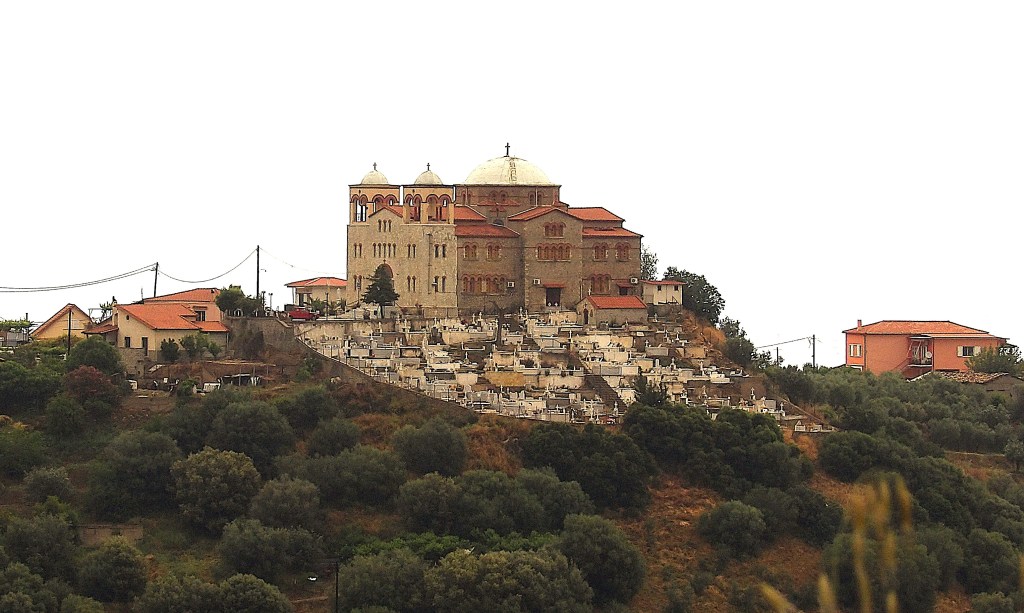
A 20 minute drive south of Aigio is Taxiarches Monastery high in the mountains. The drive to get there is spectacular and takes you through the hill town of Mavriki which is dominated by an enormous Church.
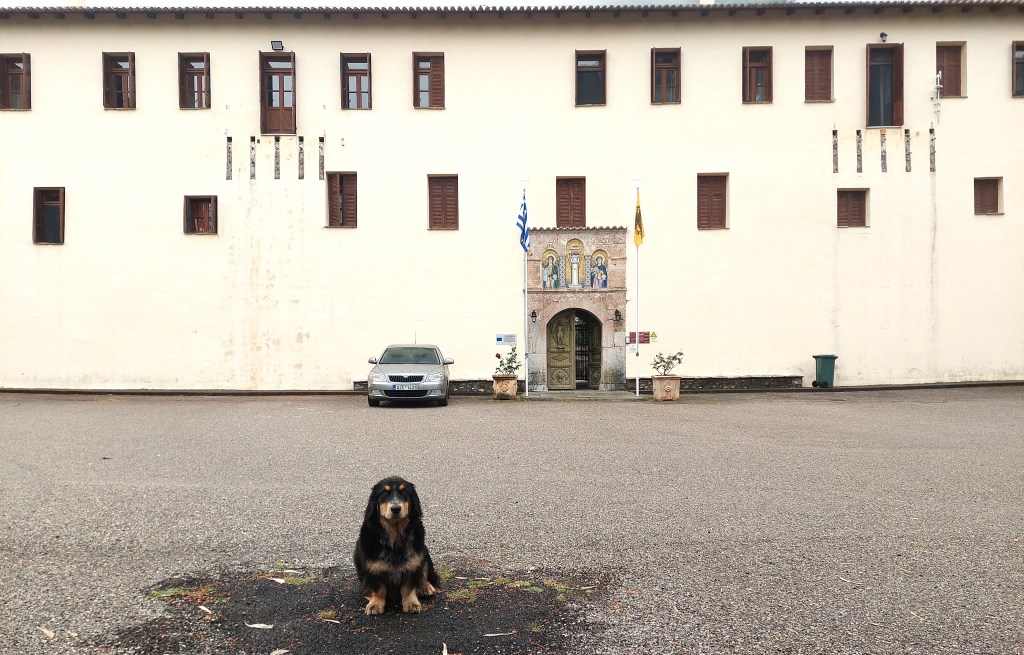
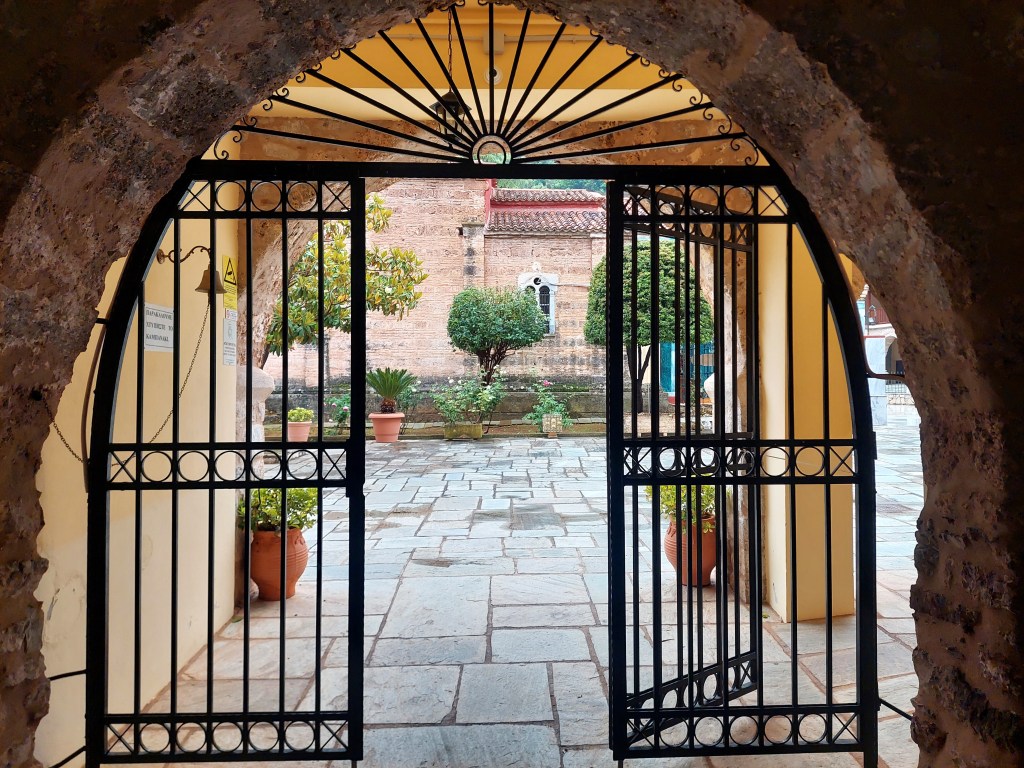
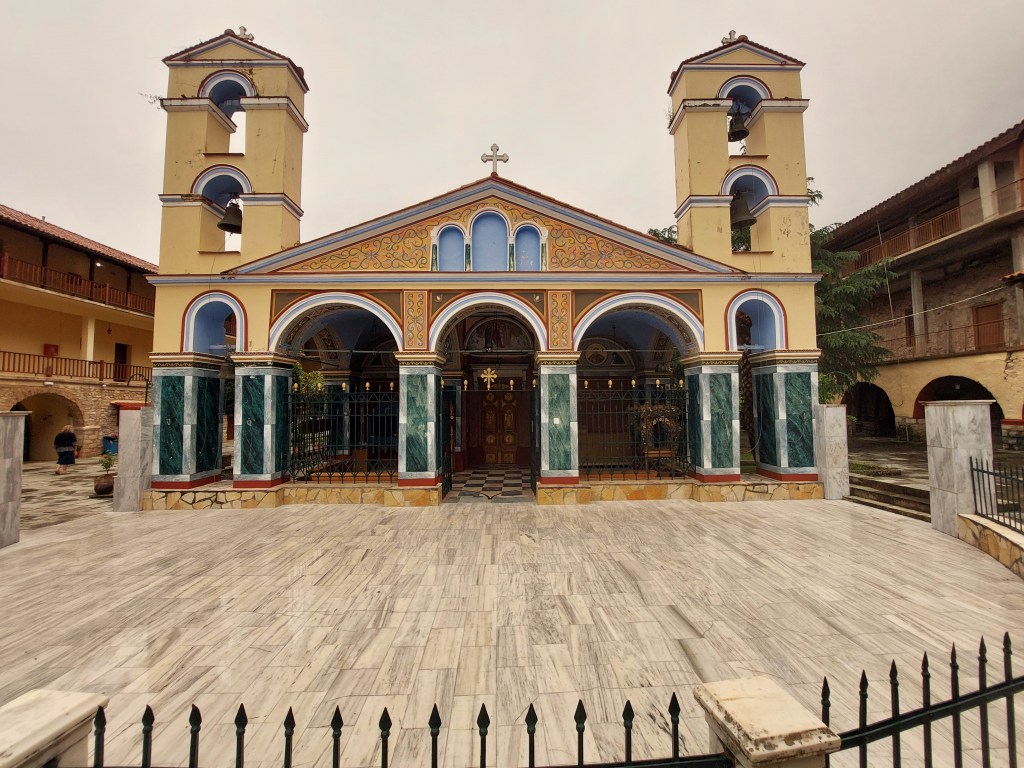
The monastery is quite plain on the outside, we were greeted by a couple of friendly dogs before we headed through the gate. The inner courtyard was really attractive with a very impressive church in the centre which was unfortunately locked so we were not able to peek inside.
Leonidas Monastery
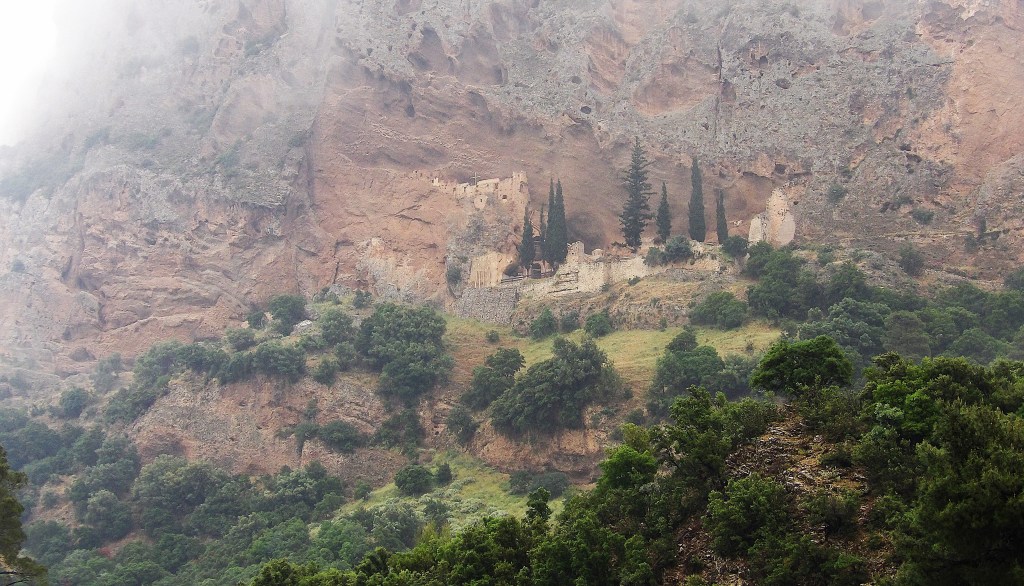
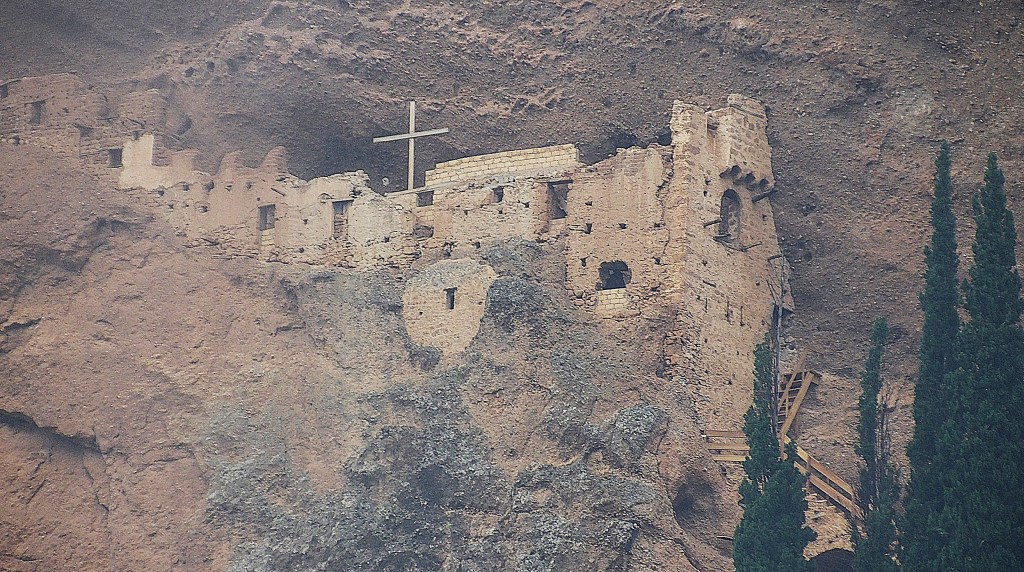
High above Taxiarches is Leonidas Monastery which is up a very dodgy dirt track. It was raining the day we were here and our little hire car was not really up to it so we had to content ourselves with views of the monastery through the mist.
Quick Links:
 Gruntie's Travels