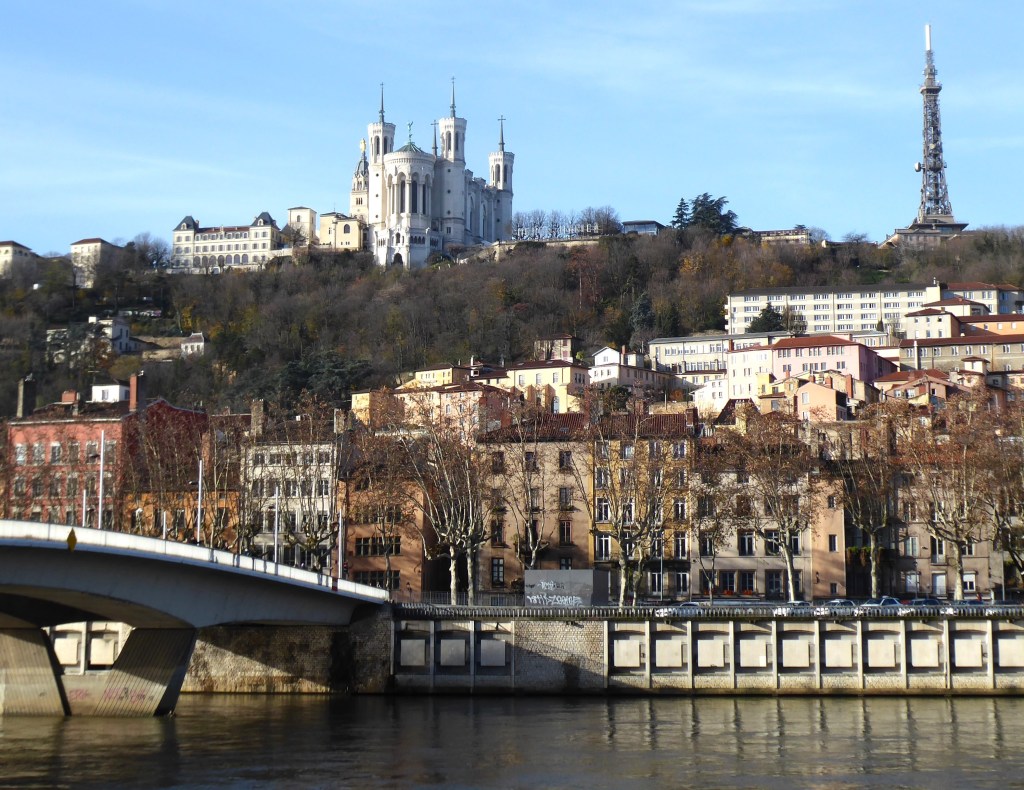
The Unesco Listed Old Town is situated between Fourvière Hill, [you can’t miss this as it has the striking Basilica on the top] and the River Saône to the east. Much of the old town is Renaissance and there are cobbled streets, wonderful buildings and the hidden Traboules to discover. There are three main disctricts- Saint-Paul in north, Saint-Jean in the centre and Saint-Georges in the south. I would recommend a free walking tour as an introduction to the Old Town. A boat trip on the Saône is also a great way to get another perpective of the city.

Saint-Jean District
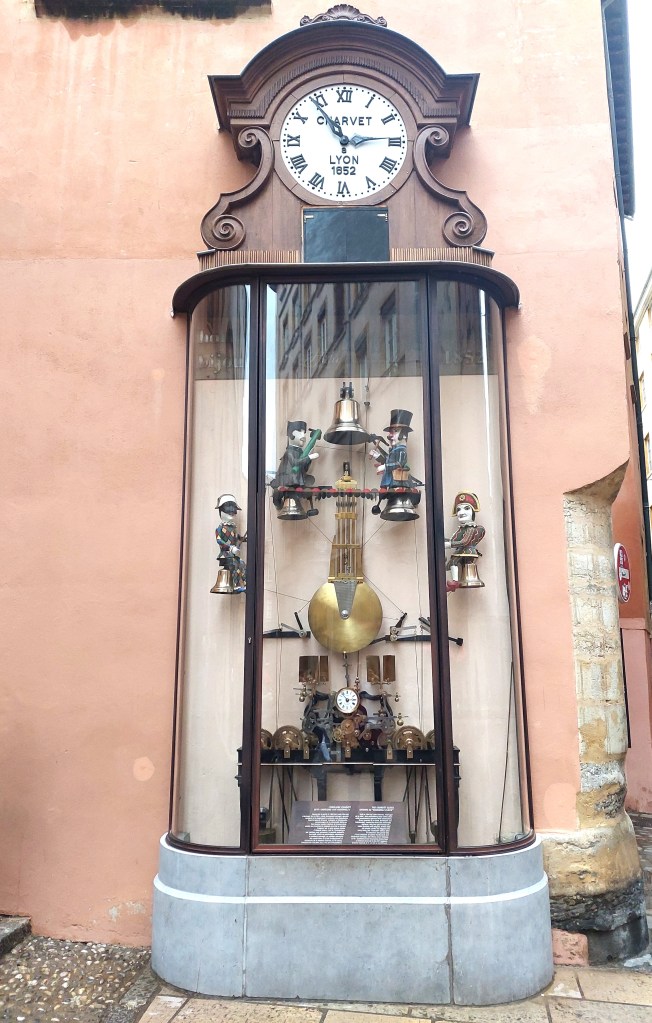
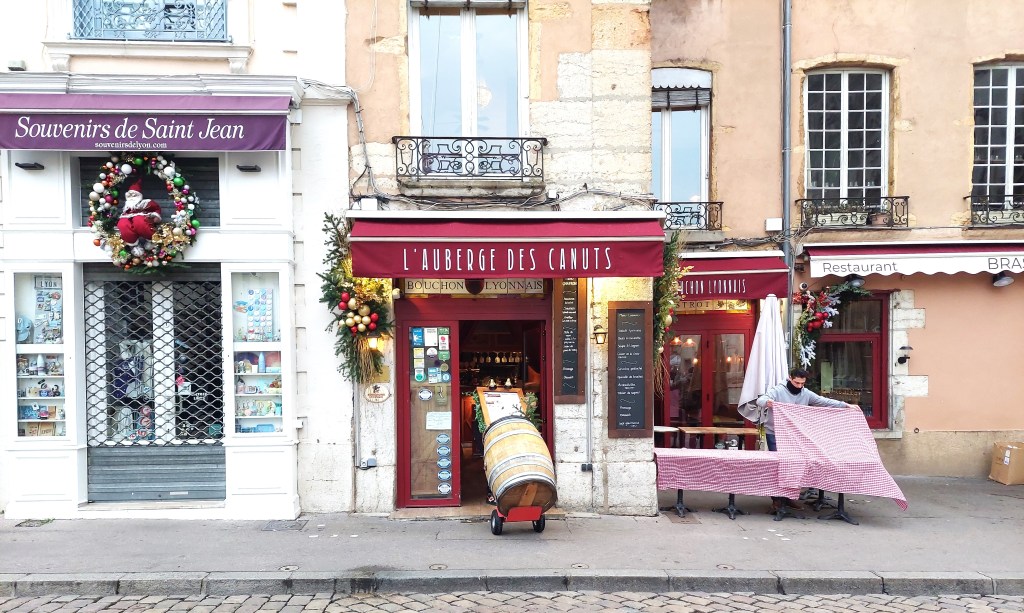
Wandering around the cobbled streets of Saint-Jean is a delight although it can get very busy with tourists. Start at the Cathedral and wander!
Saint -Jean Cathedral
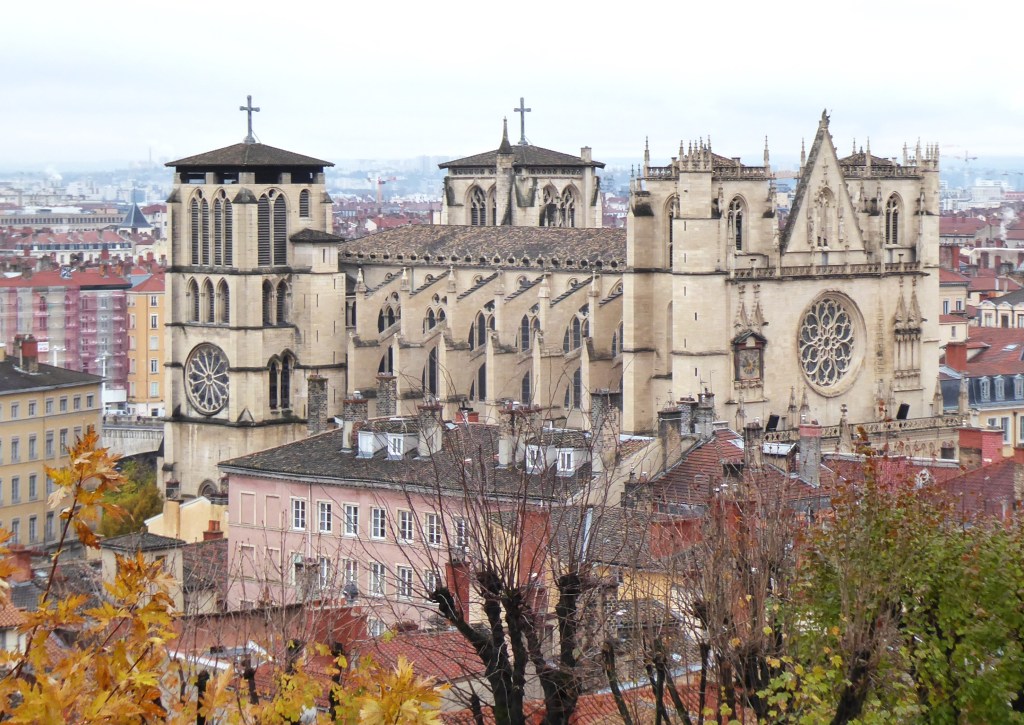
The Catholic Cathedral dominates Place Saint-Jean. It took nearly 300 years to build and was finally completed in 1476. It is well known for its 14th Century astronomical clock which shows the date and position of the sun, earth, moon and stars. On my visit in 2023 the clock was undergoing restoration/ repair after it was vandalised in 2013 by a moron. The 17th Century fountain of Saint Jean is in the centre of the square and is where many walking tours start.


Palais de Justice
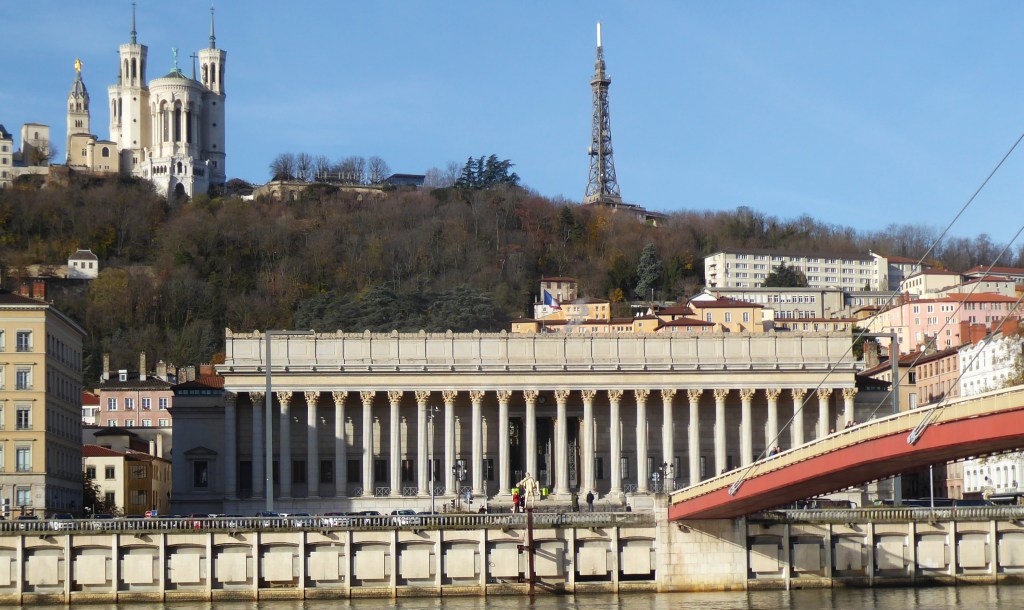
The Neo Classical Palais near the Passerelle du Palais de Justice footbridge over the Saône was completed in 1835. The 24 columns on its front represent the 24 hours of the day that justice never sleeps. It was here in 1987 that Klaus Barbie the ‘butcher of Lyon’ was convicted and sentenced to life imprisonment for crimes against humanity he committed as leader of the local Gestapo during the Second World war.

The statue opposite the Palais by the river is called The weight of oneself and depicts a man apparently saving someone from the water but who on closer inspection is identical to the saviour.
Traboules
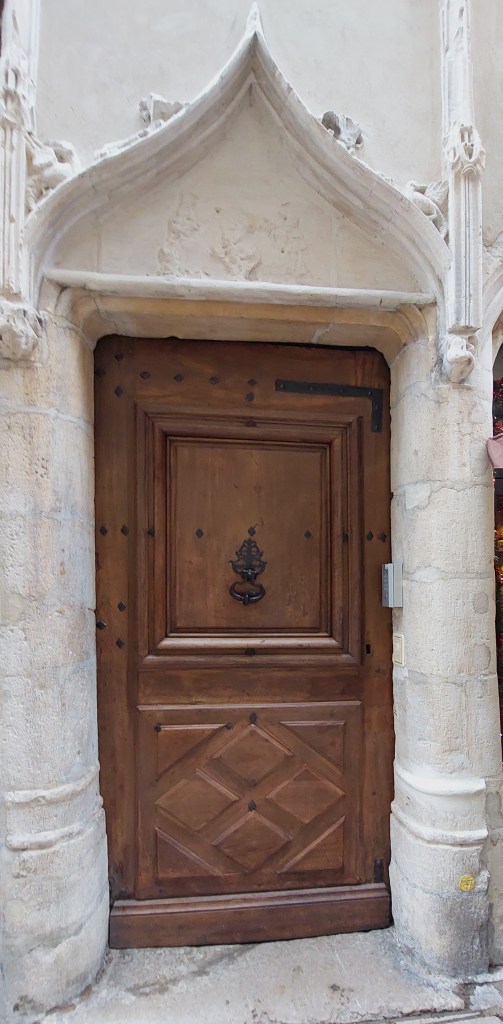
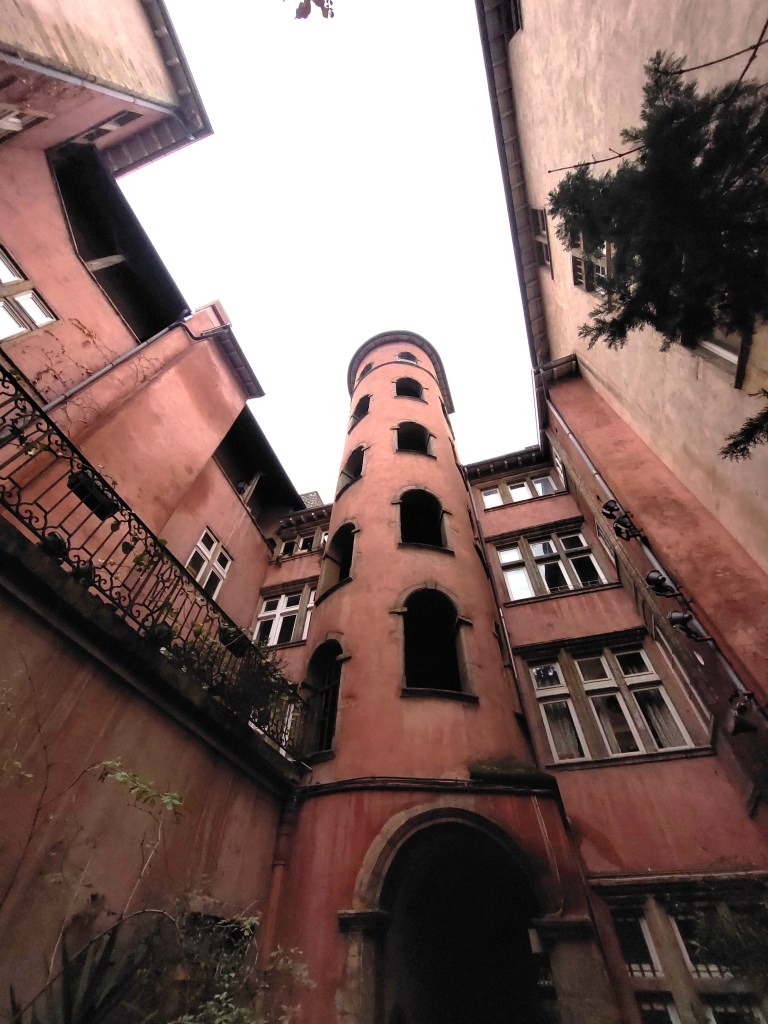

Ooh- The traboules were possibly my favritist part of Old Lyon. They are secret passageways that originally allowed the residents easy passage to the river for water and originated in the 4th Century.
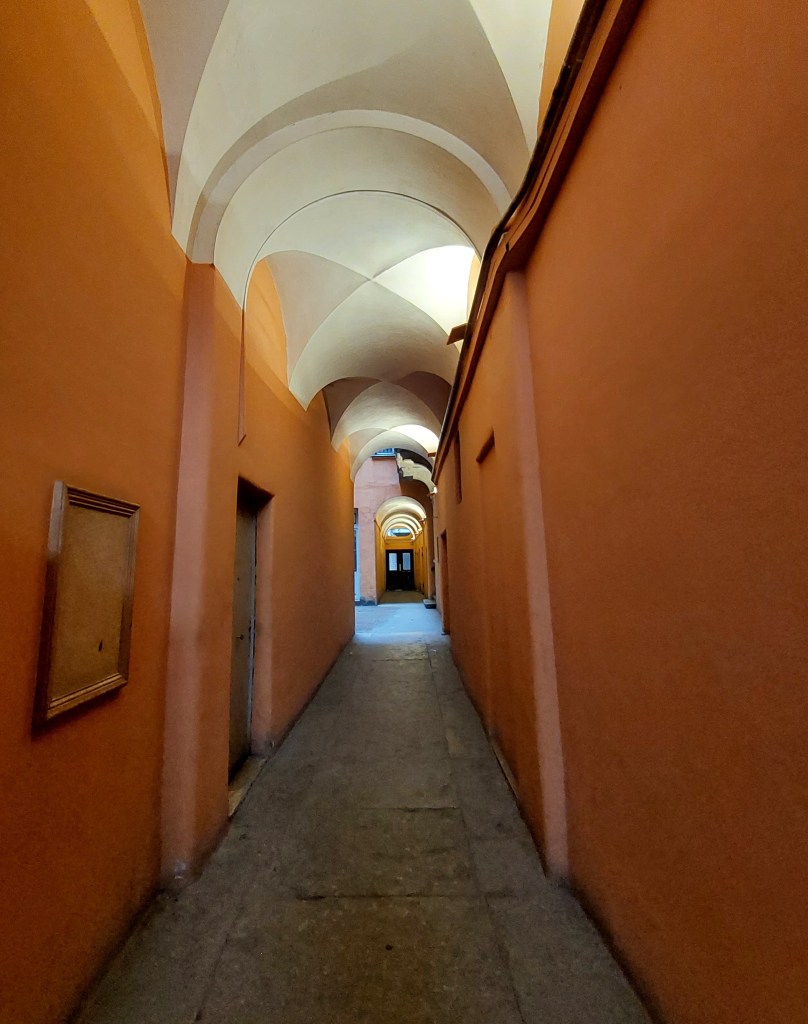
In the Second World war they were used by the resistance as a means to hide from, and piss off the occupying Germans. There were originally around 400 Traboules and now there are around 40 that are still accessible. They are all unique, some are passageways through to another street, some lead to courtyards, others are dead ends.
They are dotted around the Saint-Jean District and there are more to be found in La Croix-Rousse [the arty quarter] and Presqu’île [inbetween the two rivers]. The free walking tour helped us how to identify them and we revisited some in the early morning before the tourists arrived. The entrance to a traboule looks like a normal entrance to a building but if you press the bottom doorbell, if you are lucky you may find that the door opens to another world- a bit like Narnia, sort of.

Saint-Georges District
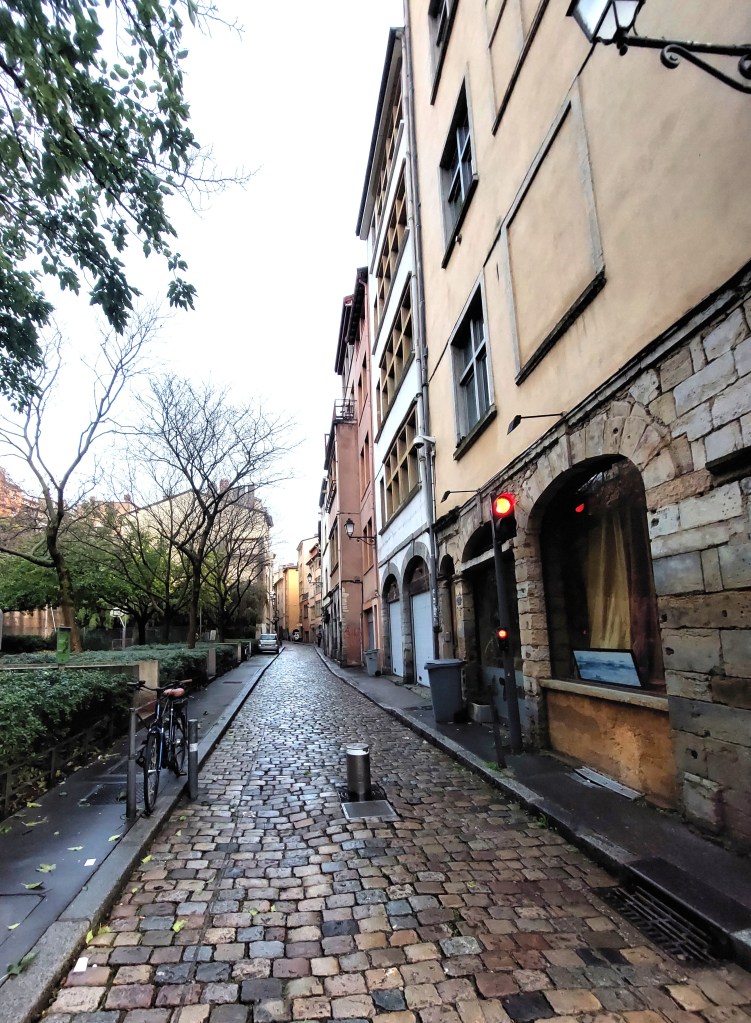
Saint-Georges has a more laid back feel than Saint-Jean and it’s a nice place to explore and to get away from the crowds.
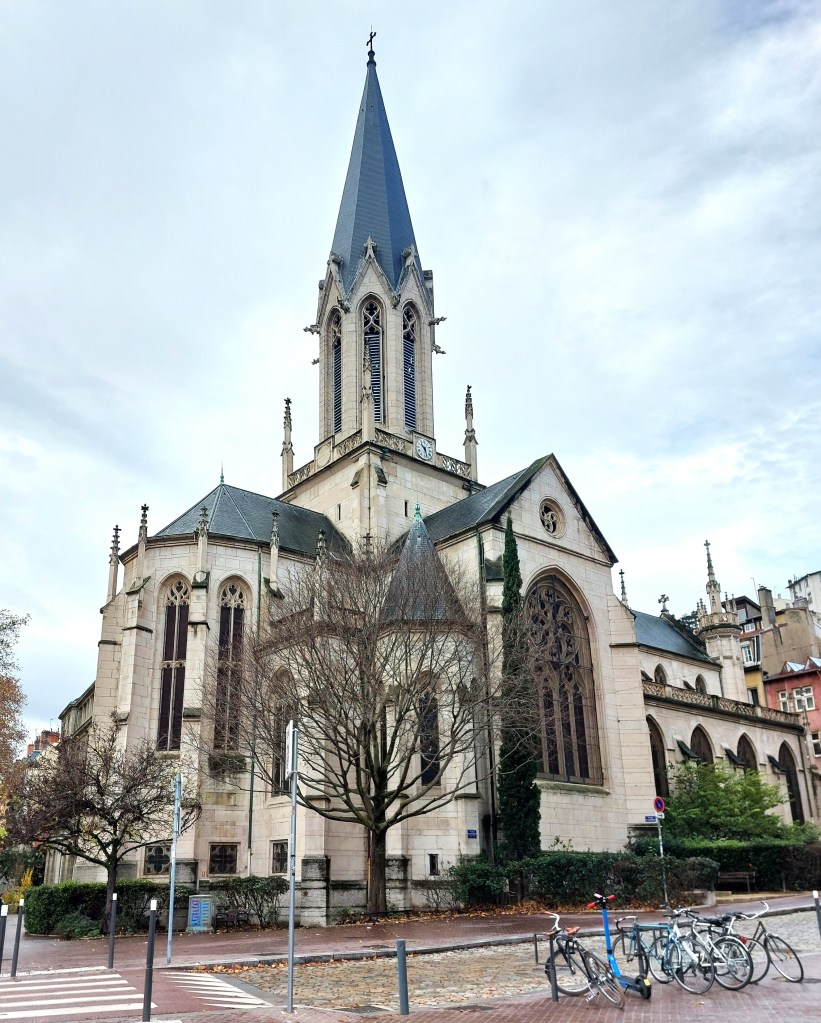
The current Church of Saint-Georges on the bank of the Saône was completed in 1848 but there have been churches on this site since 550 AD.
Saint-Paul District
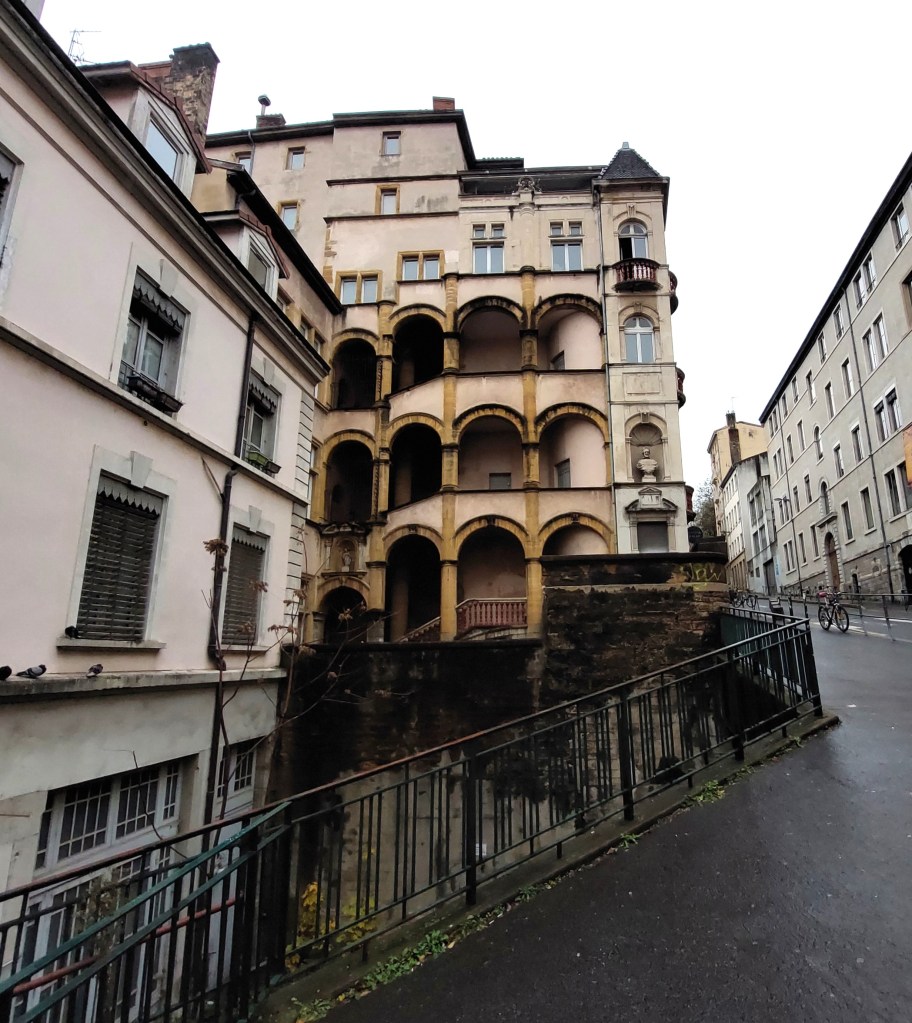
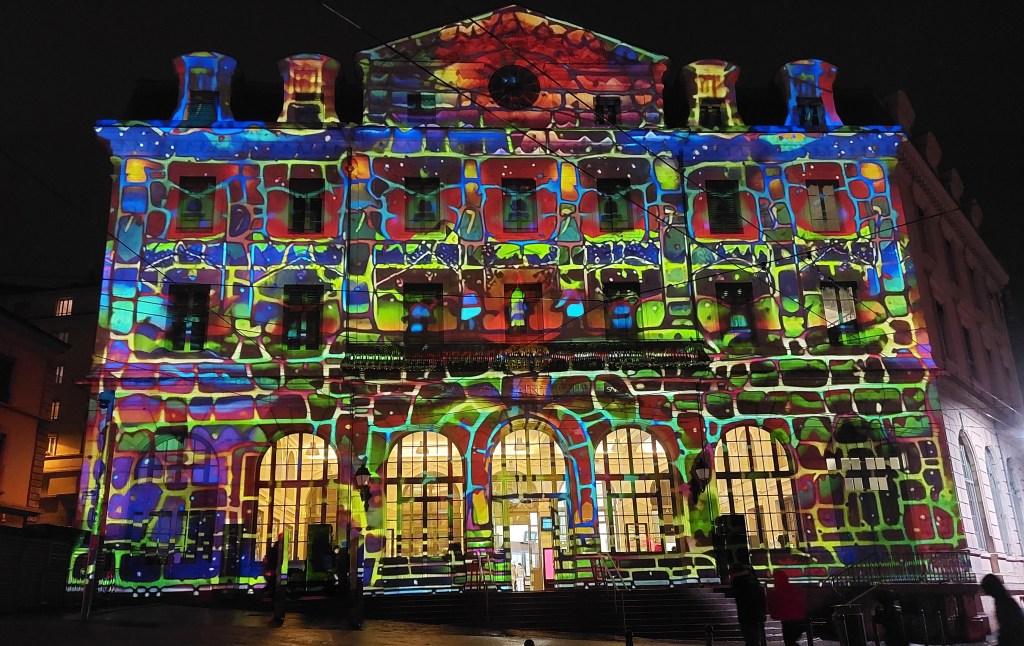
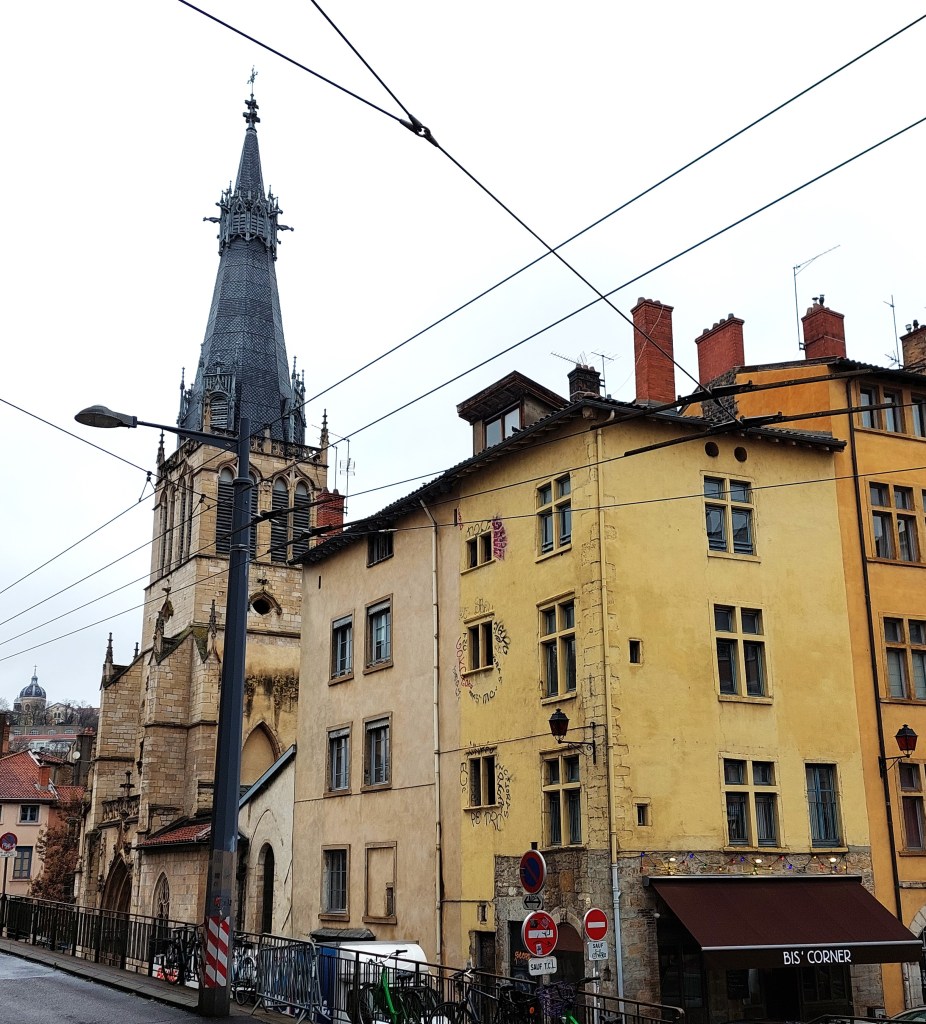
Distinctly untouristy but still worthy of a visit. The Saint-Paul district has a fine church and attractive railway station as well as a Puppet Theatre. You can also walk from here up the hill to Fourvière where you will find the Basilica and the Ancient Roman Theaters.
Fourvière District
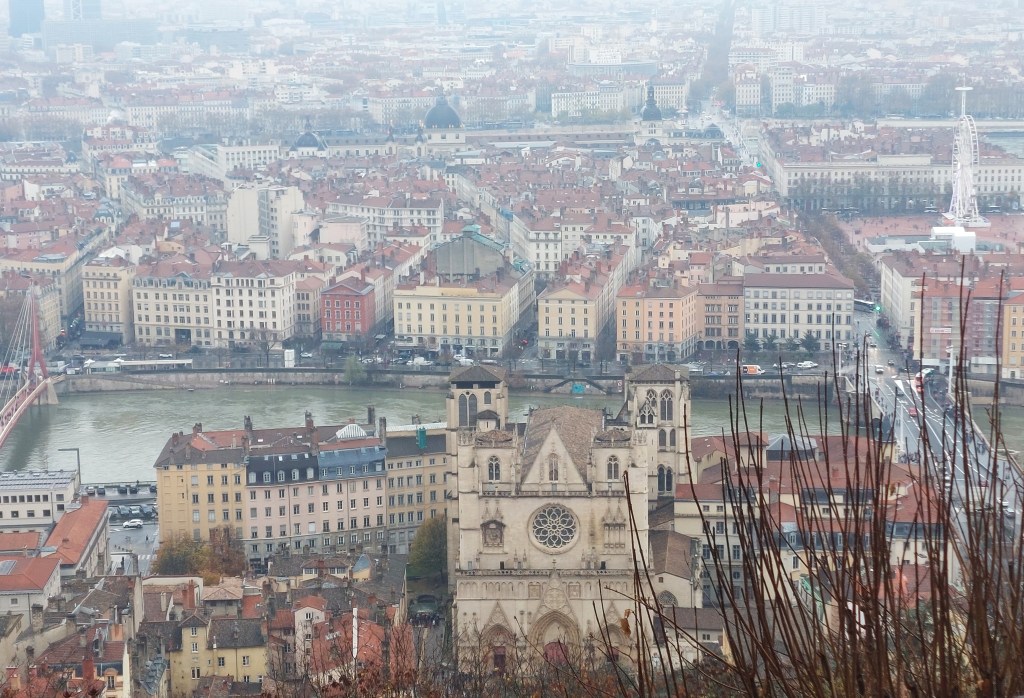
If your leggies are not up to it you can hop on the funicular at Vieux Lyon station which is the easy and fun way to the top of Fourvière Hill. The views from the Basilica over Lyon are wonderful. On a clear day you can see Mont Blanc [so I’m told]. There are a few overpriced places to eat next to the Basilica which we avoided.
The Basilica

The Basilique Notre-Dame de Fourvière sits proudly on the top of Fourvière Hill overlooking the city on the site of a Roman Forum. The Basilica was built in the 19th Century and work on the interior finally completed in the 1960’s. It is dedicated to the Virgin Mary who is credited with saving the city on several occasions including the plague in 1643 and the Prussian invasion in 1870, but not so much the covid epidemic of 2020 [thanks to Paul from the Walking Tour for that quip!]. You can see a golden statue of Mary on top of the bell tower.

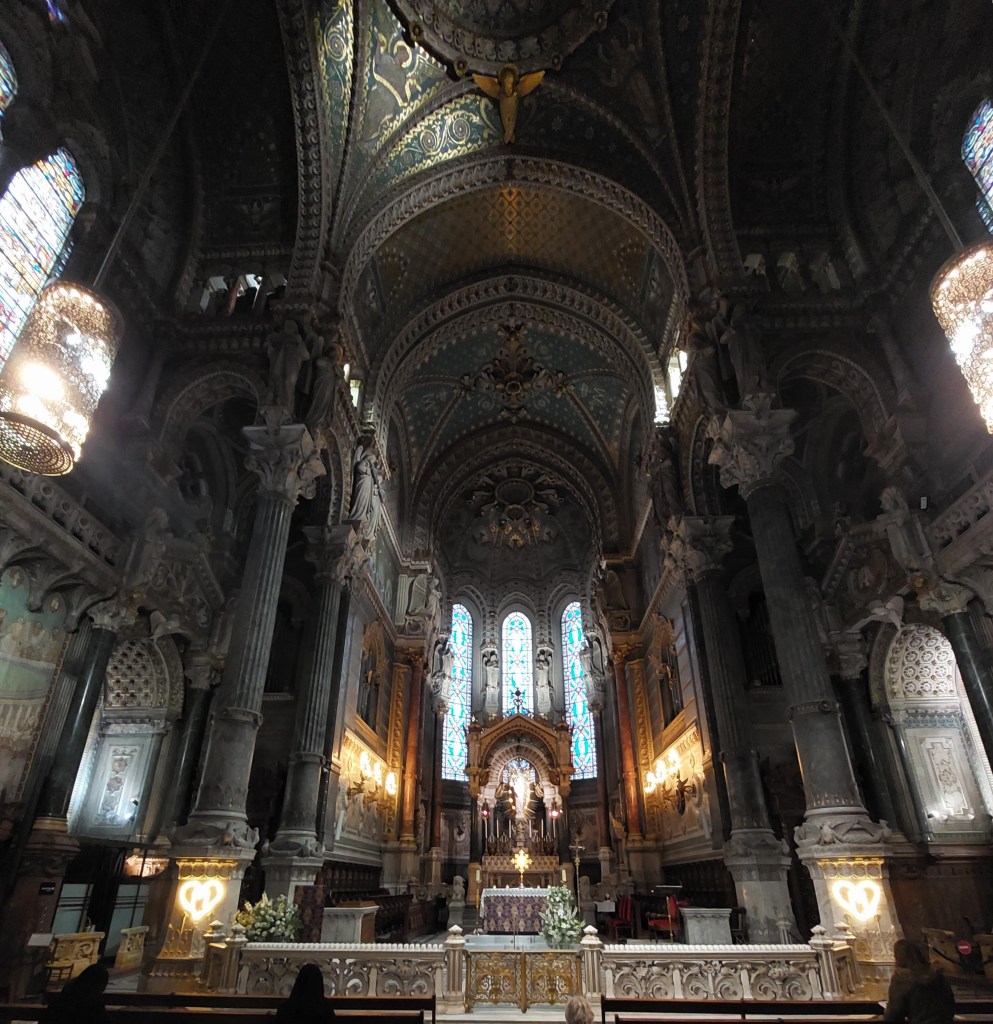
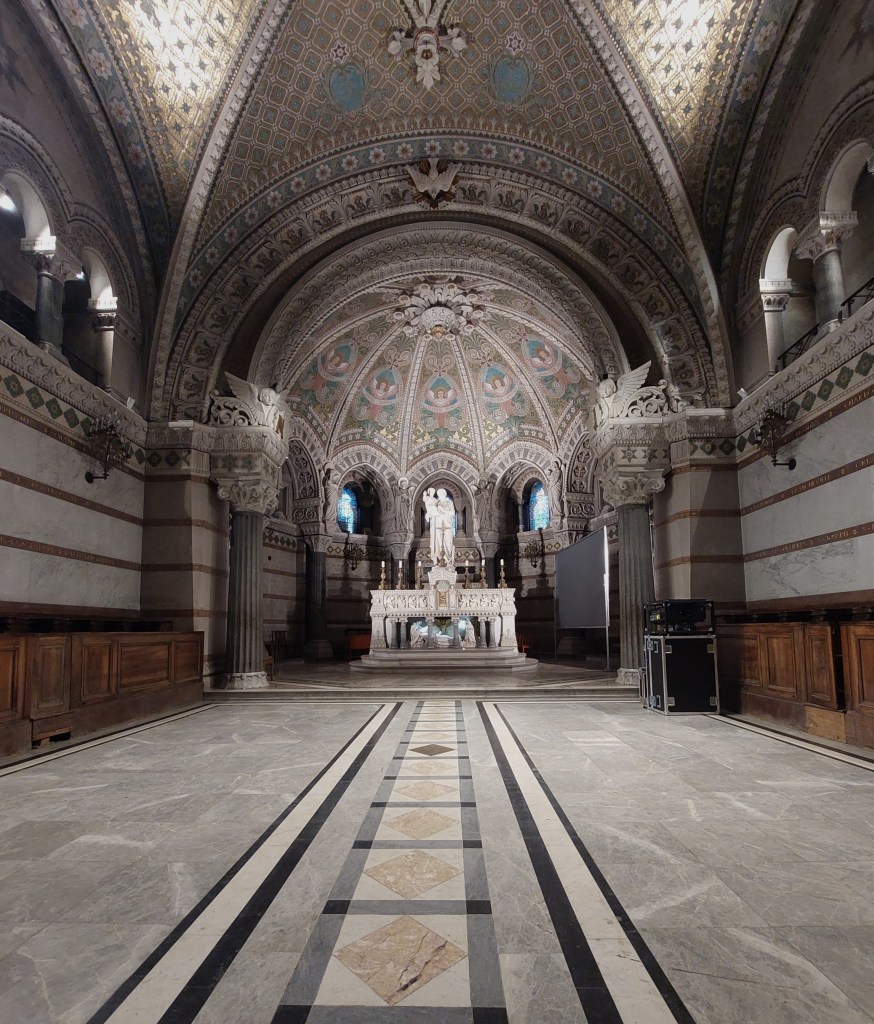
The design was inspired by Romanesque and Byzyantine architecture and is pretty amazing to behold [inside and outside]. It is actually two churches on top of one another, the church underneath is less fussy but still impressive and enormous.
The area to the west of the Saône river on Fourvière Hill was the original site of the City of Lugdunum, founded by the Romans in 43BC.
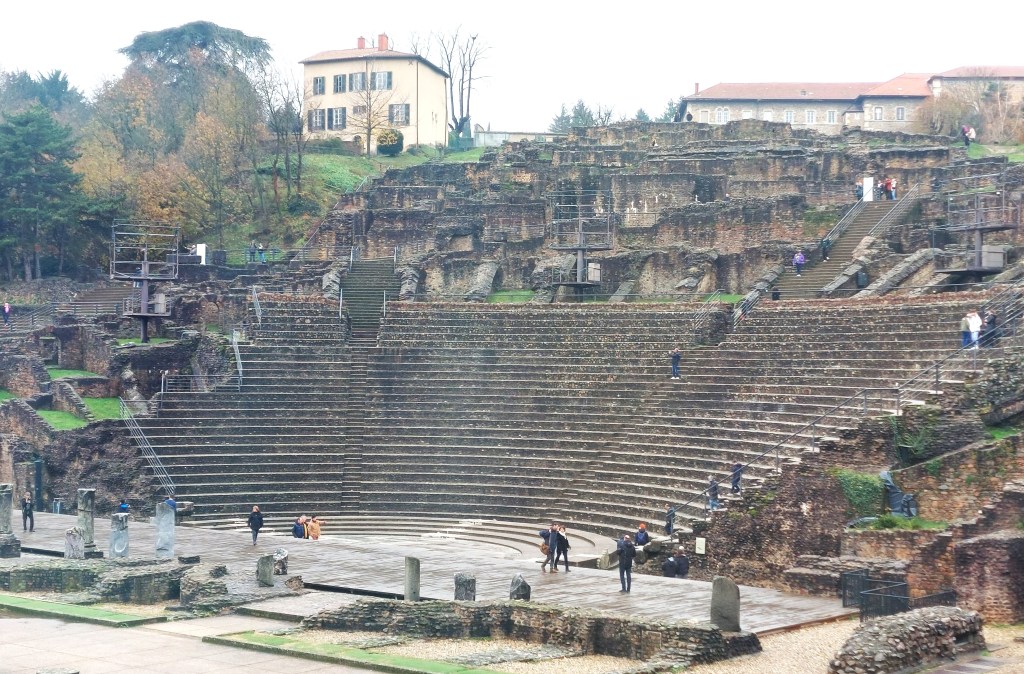
There are the remains of two Roman amphitheatres and there’s another funicular line that takes you there from Vieux Lyon, [you get off at Minimes]. The Grand Theatre was started in 15BC and finally completed in the 2nd century and could by then hold 10,000 spectators. Although its scale is impressive it’s clear on closer inspection that much of the terracing has been rebuilt. The smaller theatre or Odeon is next to it and could hold around 3000 spectators.

Situated next to the theatres is the wonderful Lugdunum Museum [also known as Gallo-Roman Museum of Lyon-Fourvière]. You can visit the theatres for free but there is [worth while] fee for the museum. I have more info on this museum on my separate museums page.
Quick Links:
 Gruntie's Travels