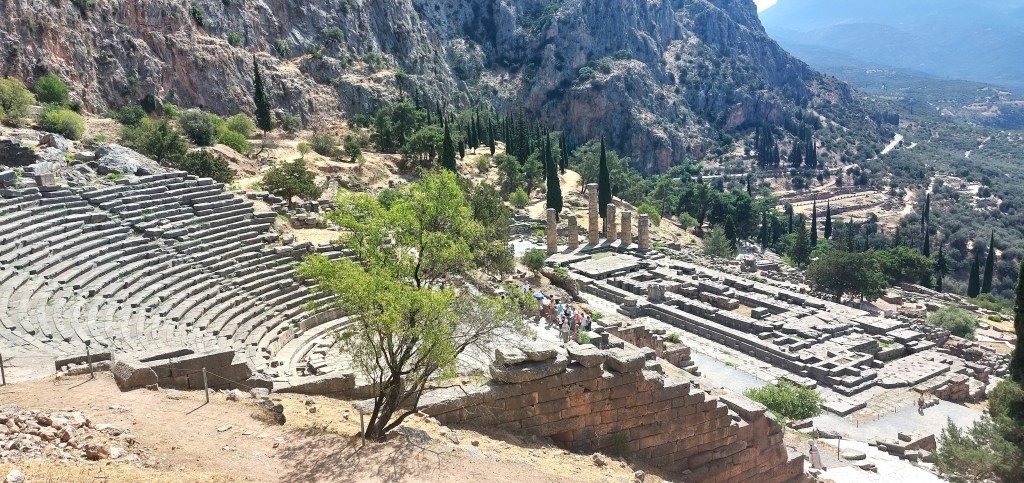
The ancient sacred site of Delphi dates back to the 8th century BC although there is evidence of human occupation as early as the Neolithic period. Delphi is on the north side of the Corinthian Gulf on the Greek mainland. Its setting on the side of a mountain overlooking the valley is wonderful. You could stay in Modern Delphi just down the road but apart from the views and convenience it’s incredibly touristy and expensive. We decided to stay in Galaxidi about 40 minutes away which was ideal.
Delphi is possibly named after the Greek word for dolphin. Legend says that Apollo visited the site in the shape of a dolphin and defeated the serpent Python who was the child of Gaia, the first oracle. How he made it up the mountain with no legs is anyone’s guess. It was also the site of the Pythian Games named after Pythia, the most well known of the oracles at Delphi. For more info on the history of Delphi click HERE.

The main site – The Sanctuary of Apollo [Sacred Precinct] is on the side of the mountain above the road where you will probably park if you are coming by car. The museum is 10 minutes walk away from the Sanctuary entrance and is where you will find a small cafe, shop and toilets. Below the main road is the Marmaria, and on the side of the road above the Marmaria is The Castalian Spring.
If you are going on a hot day do be prepared for a hard walk and take snacks and water with you. You will need at least a couple of hours [possibly more] to explore the main site.
The Sanctuary of Apollo
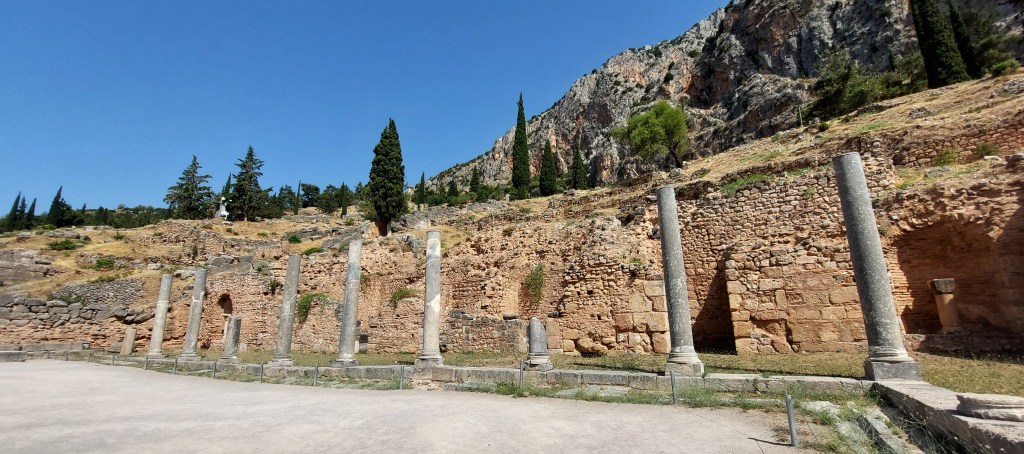
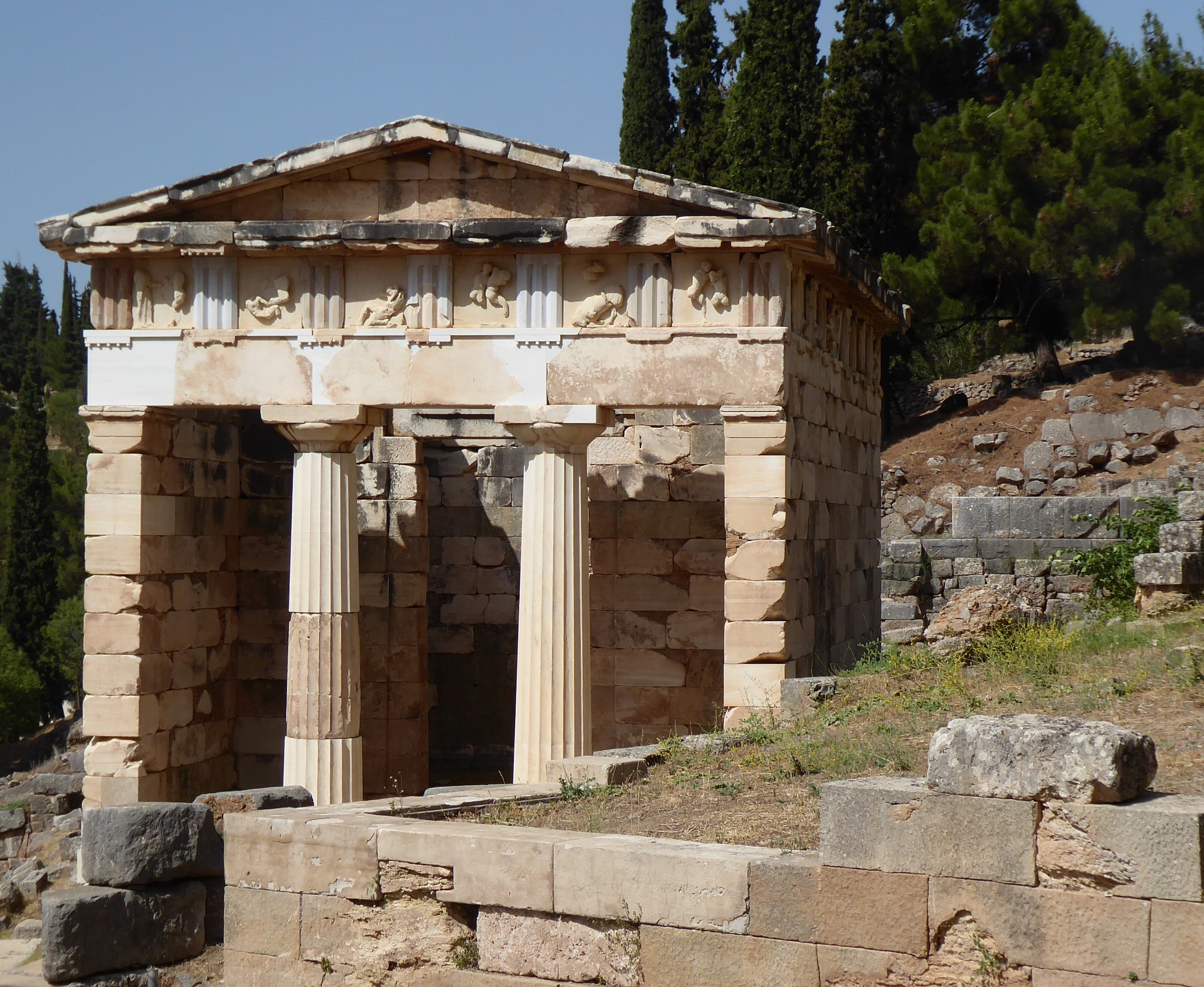
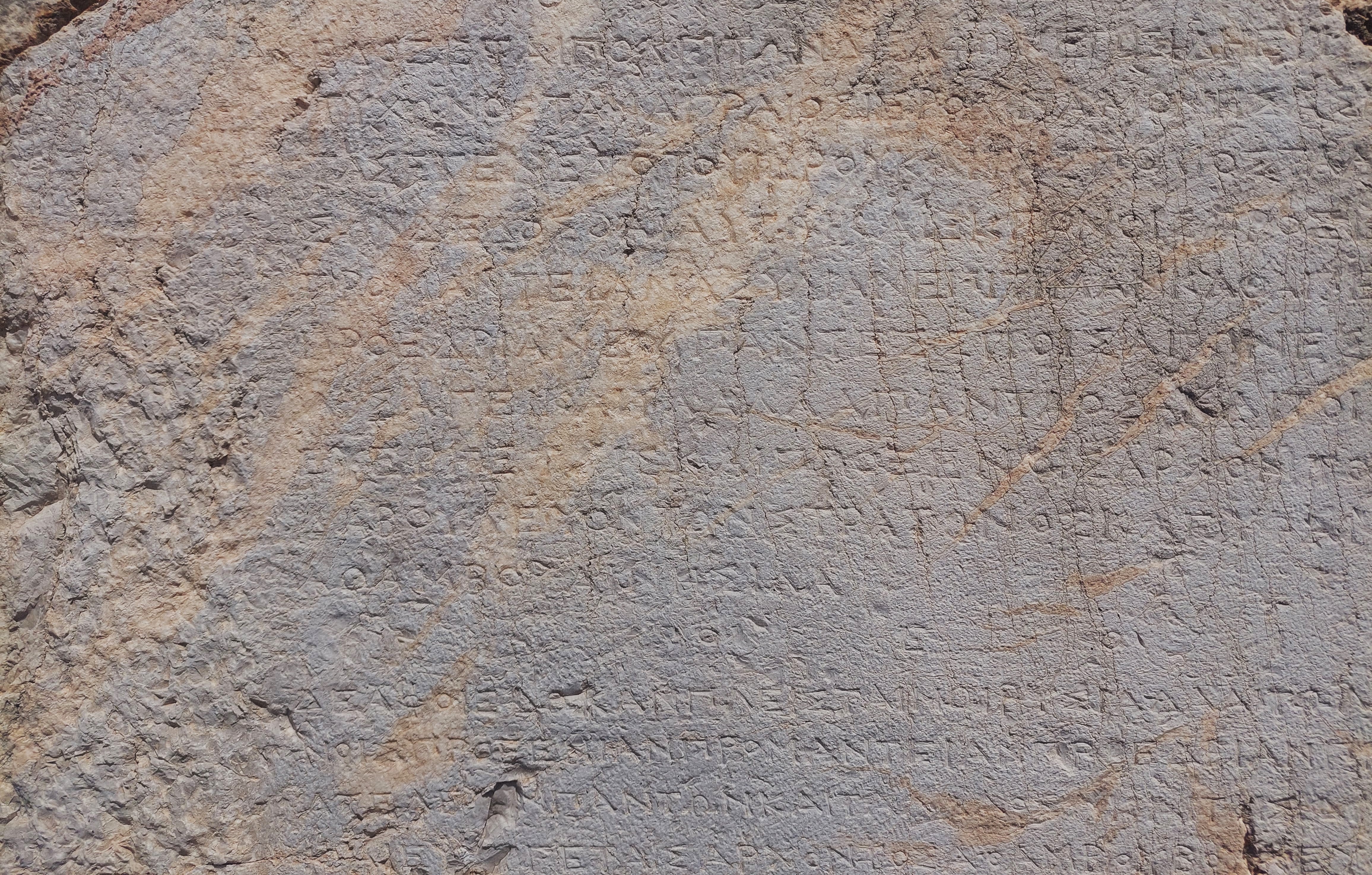
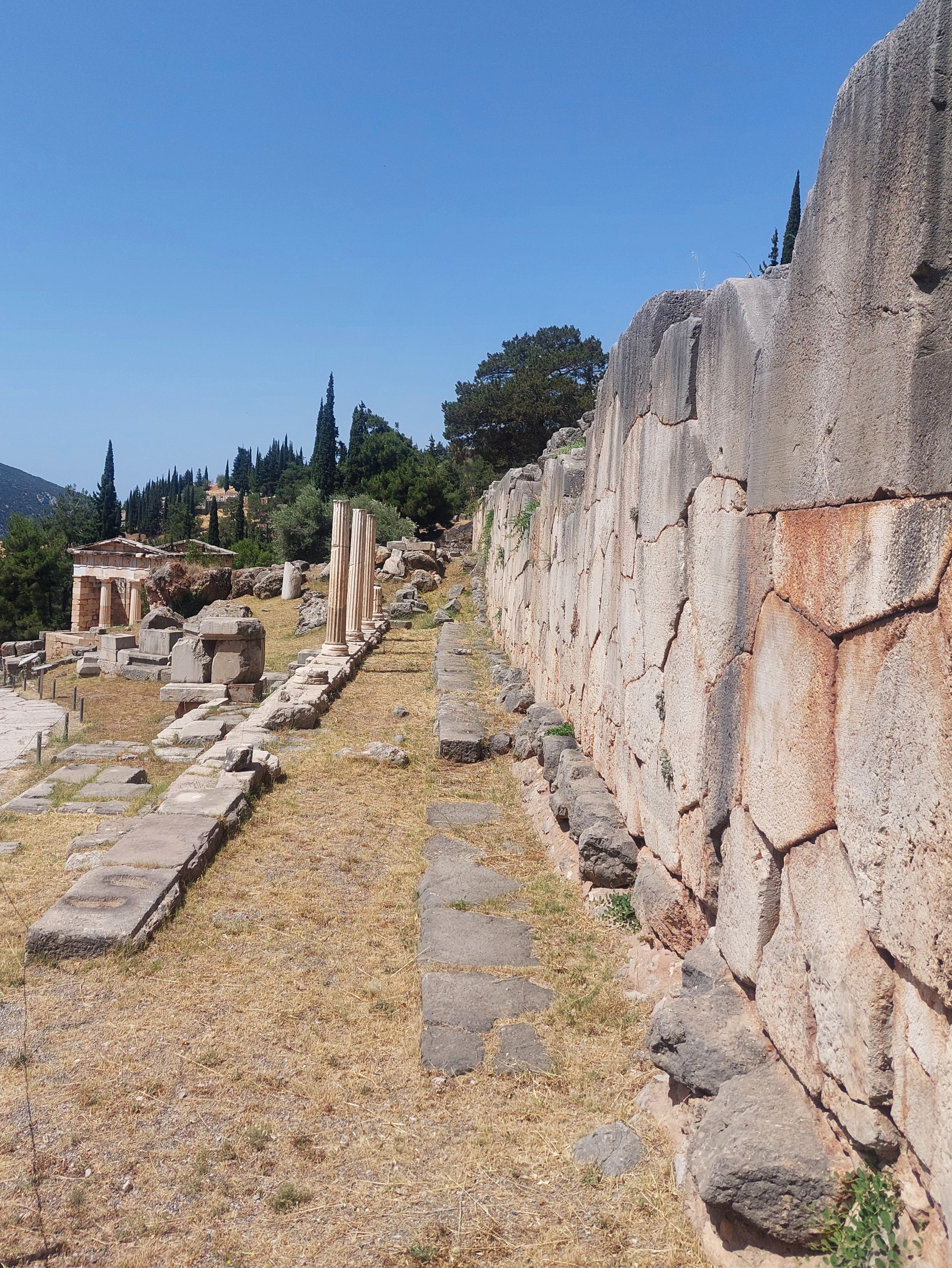
You enter the site along the Sacred Way, a path which snakes its way from the Roman Agora up the mountain to the Stadium at the top. The path used to be lined with thousands of statues, only the bases remain today. One of the first features you pass is the Monument of the Admirals which was erected by the Spartans to celebrate their victory over the Athenians. There are several Treasuries lining the path of lower part of Delphi. These were small buildings where offerings were stored for Apollo. The most notable treasury is that of the Athenians which was reconstructed in the early 19th century. You soon reach the Polygonal Wall which if you look closely is covered with inscriptions.
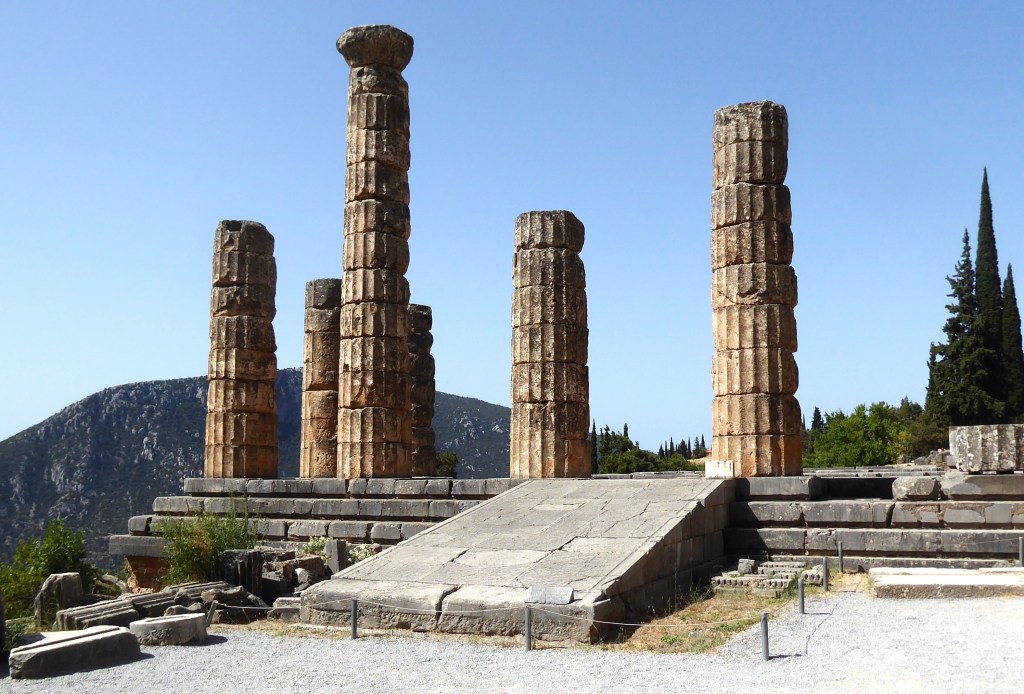
As you continue uphill along the Sacred Way you will approach The Temple of Apollo. Only the foundations remain, so the six Doric columns that you can see have been reconstructed by the original excavators.
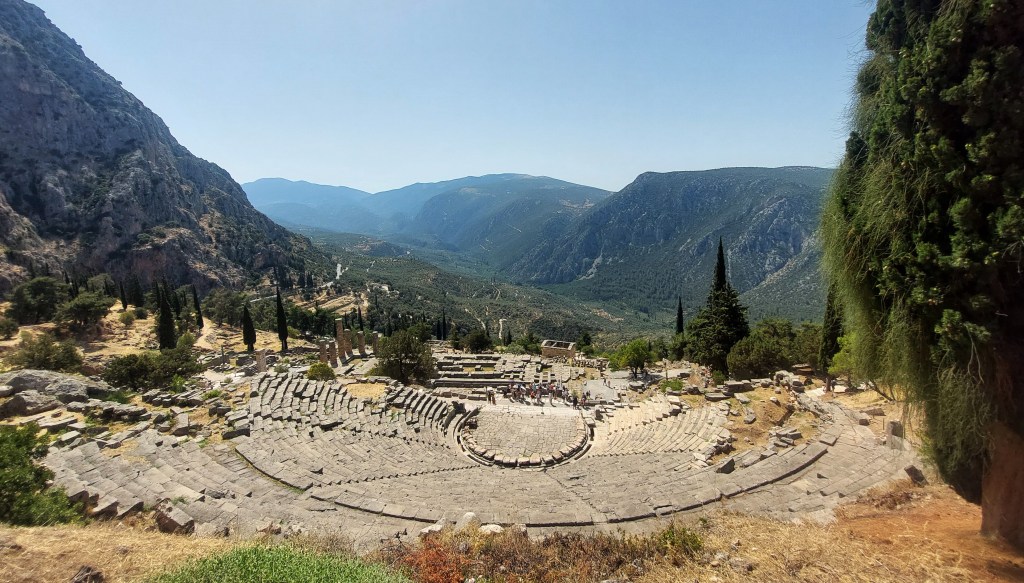
Above the the temple is possibly the most impressive feature of Delphi – The Theatre. It was built in the 4th Century BC and could hold around 5000 people. The views over the site from here are wonderful.
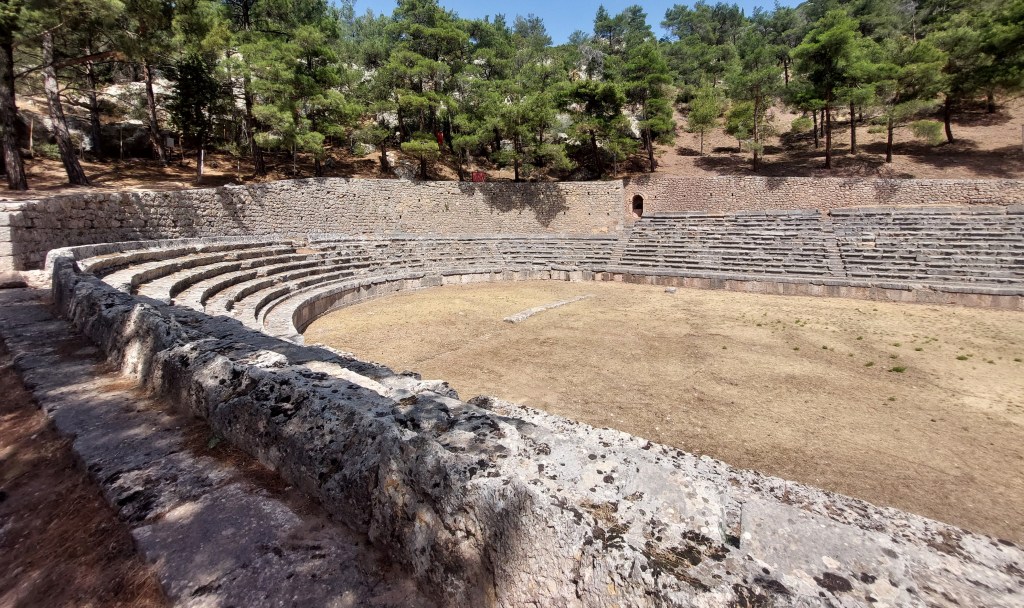
The Stadium where the Pythian Games were held is at the very top of the site and you may be a bit puffed and sweaty by the time you get there. It’s worth the effort though as it’s an impressive spectacle and could hold around 7000 people back in the day.

After you have seen the stadium it’s time to head back to the main entrance [thankfully all downhill] and then turn right to walk along the path to the museum.
The Museum
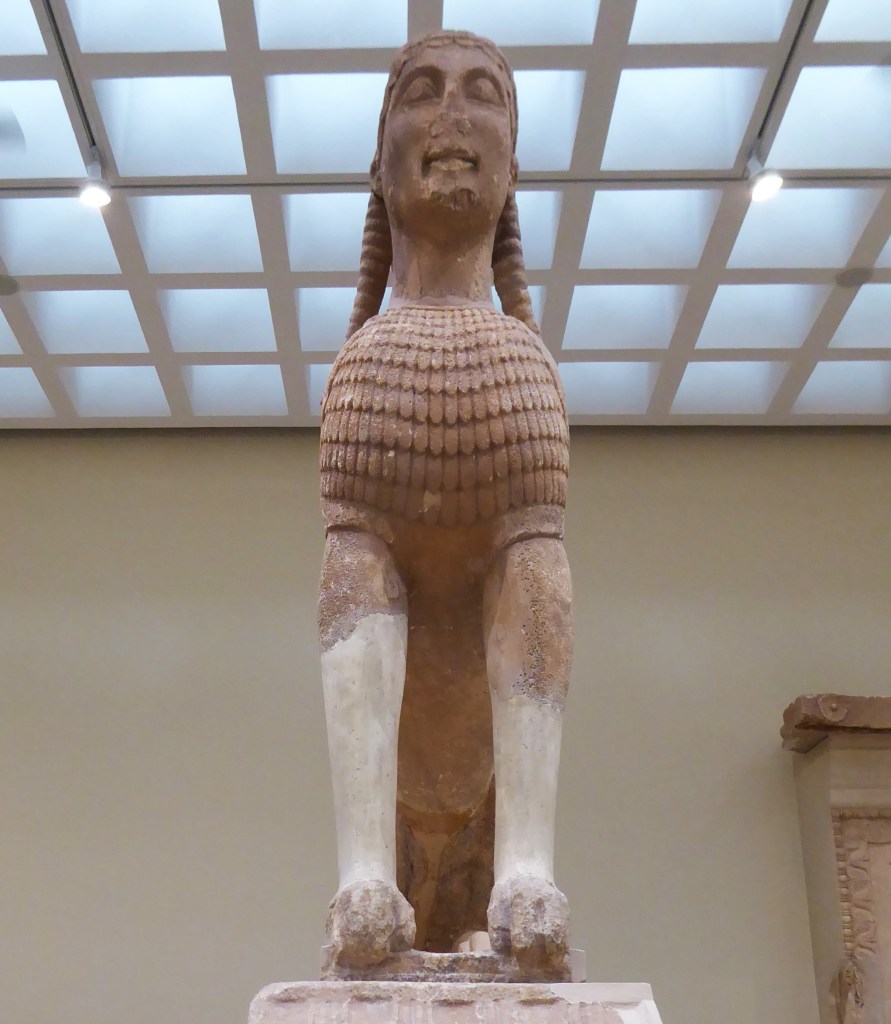
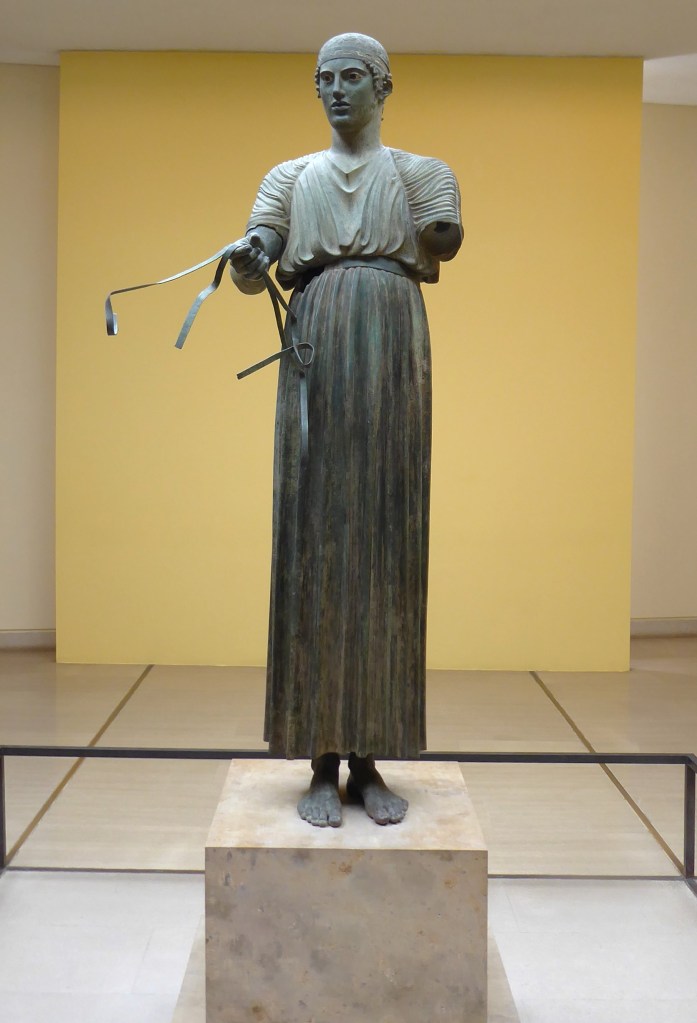
The museum is excellent and airconditioned and is included in the ticket price. You have to go anti clockwise and when we visited tour groups made viewing the exhibits or actually getting into the rooms a real challenge! We decided to go around a second time and this worked well as most of the tour groups had gone by then. There are a wealth of items on display, the most well known being the statue of the Sphinx of the Naxians and the stunning bronze statue of The Charioteer with the piercing eyes.
The Marmaria
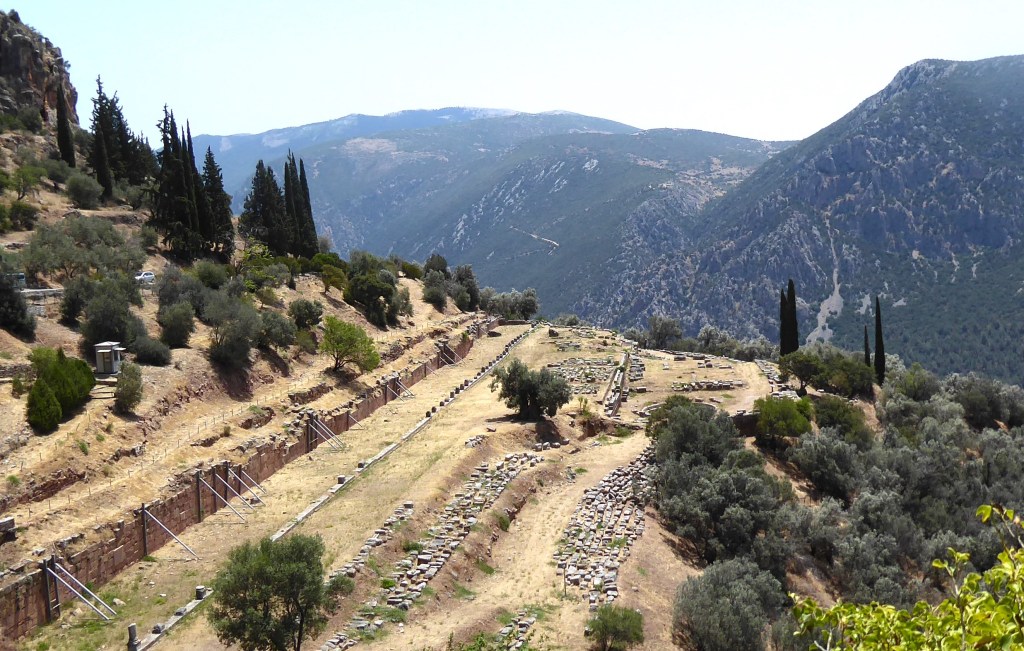
Below the main road [on the other side to the main site] is the Marmaria. Here are the remains of a Tholos rotunda and gymnasium dating mostly from around the 4th century BC. The site was closed to visitors when we were there but you can see it clearly from the road.
The Castalian Spring
On the side of the main road near the Marmaria is the Castalian Spring. It is said that it was here that Apollo killed the python in his lair. Visitors would cleanse themselves and quench their thirst here before consulting the oracle. When we visited in the height of the summer the spring was barely more of a dribble.

Quick Links:
 Gruntie's Travels